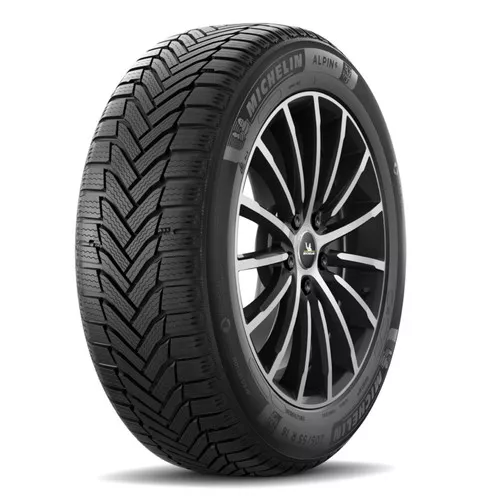
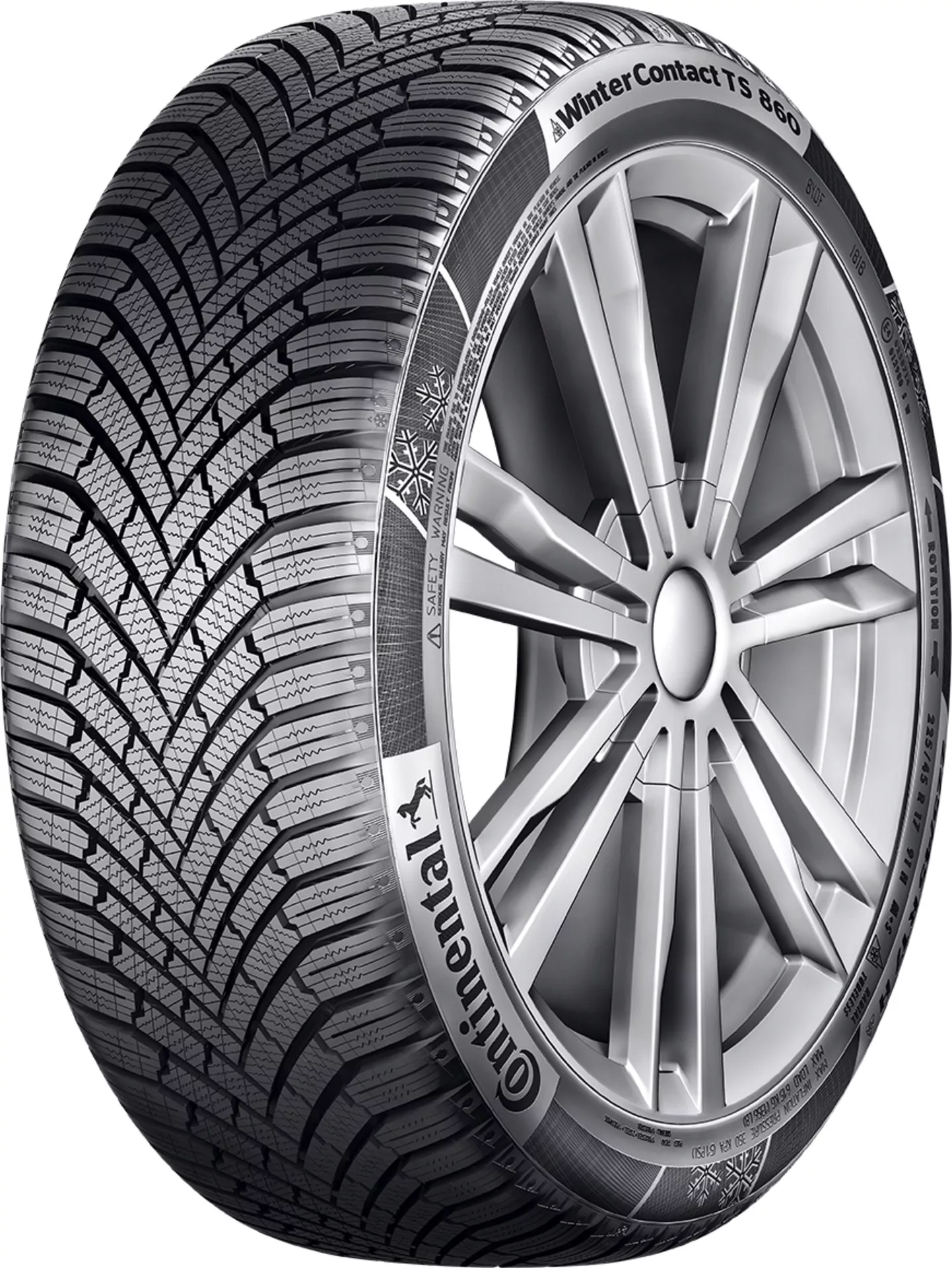
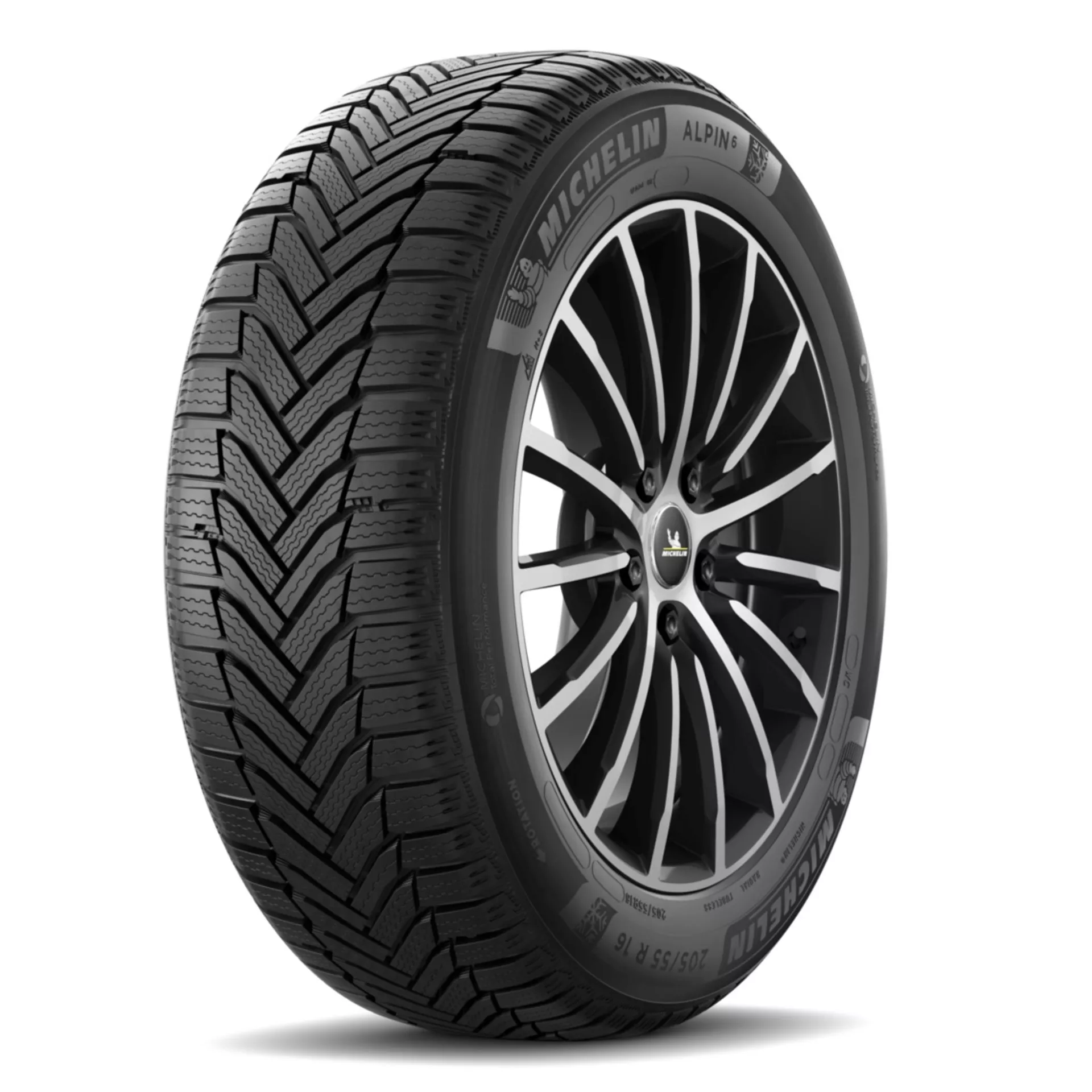
Continental grips harder in wet corners; Michelin lasts longer and runs quieter all winter.
Both the Continental WinterContact TS 860 and the Michelin ALPIN 6 are established premium winter tyres that have since been replaced by newer generations — the Continental WinterContact TS 870 and the Michelin ALPIN 7 respectively — but both remain widely available and actively compared. They share a similar price bracket and premium positioning, yet they have meaningfully different personalities. The Continental is built around confident wet and snow handling, prioritising grip and safety in active conditions. The Michelin takes a longer view, emphasising longevity, low noise, and balanced all-round behaviour over the full life of the tyre — Michelin positions it around safety that lasts, not just safety on day one. Across seven direct comparisons, the Michelin edges it four wins to three, though the margin in several tests is close.
WinterContact TS 860
ALPIN 6


Averaged from 4 tests
Continental WinterContact TS 860
Michelin ALPIN 6
Continental WinterContact TS 860
Michelin ALPIN 6
Continental WinterContact TS 860
Michelin ALPIN 6
Continental WinterContact TS 860
Michelin ALPIN 6
Continental WinterContact TS 860
Michelin ALPIN 6Wet performance is where the Continental makes its strongest case. It carries some of the highest wet handling scores of any tyre in its test portfolio, and its aquaplaning resistance — both longitudinal and cross — is a genuine strength that the Michelin cannot fully match. The ALPIN 6 has been flagged for minor weaknesses in cross-aquaplaning across multiple test programmes, a limitation that matters on standing water at motorway speeds. That said, the average wet braking distance across two shared measured tests tells a different story: the Michelin averaged 23 metres against the Continental's 24 metres — a small but consistent edge in stopping power on wet tarmac. In the Autobild large-scale 225/45 R17 test, that specific gap was 31.5 metres for the Continental versus 30.4 metres for the Michelin. The nuance here is that the Continental handles wet corners better at the limit, while the Michelin brakes shorter in a straight line on wet surfaces.
Continental WinterContact TS 860
Michelin ALPIN 6
Continental WinterContact TS 860
Michelin ALPIN 6On dry roads both tyres perform creditably for winter rubber, but the character differs. The WinterContact TS 860 delivers confident, planted dry handling with strong subjective feedback — owners on Audis, Ford Focuses, and Romanian mountain roads consistently report reassuring dry grip. The Michelin ALPIN 6 actually scores higher in objective dry handling evaluations, and its dry steering reaction has been rated sharply precise in independent testing, making it feel more composed when driven briskly on a clear winter's day. In the one measured dry braking test available between these two, the Continental stopped in 15.4 metres against 15.7 metres for the Michelin — a difference so small it is largely irrelevant in real-world driving. Both are safe and capable on dry winter roads; neither will leave you wanting.
Continental WinterContact TS 860
Michelin ALPIN 6
Continental WinterContact TS 860
Michelin ALPIN 6
Continental WinterContact TS 860
Michelin ALPIN 6
Continental WinterContact TS 860
Michelin ALPIN 6On snow the Continental WinterContact TS 860 is a capable performer, with strong snow circle cornering scores and snow braking that has impressed testers. Real owners who've used it through full Romanian winters, across mixed terrain including country and gravel roads, describe genuinely confidence-inspiring snow behaviour. The Michelin ALPIN 6 has excellent ice braking credentials — scoring 93 in that specific category — and strong snow acceleration, which gives it a particularly planted feel when pulling away from junctions on compacted snow. In the Autobild braking comparison, snow stopping distances were essentially identical: 24.5 metres for the Continental against 24.7 metres for the Michelin. Early ADAC testing specifically praised the Michelin for ice performance, a metric where the Continental's advantage is less pronounced. For mixed ice and snow conditions, the Michelin's ice credentials give it a meaningful edge; on general snow handling, they are evenly matched.
Continental WinterContact TS 860
Michelin ALPIN 6
Continental WinterContact TS 860
Michelin ALPIN 6
Continental WinterContact TS 860
Michelin ALPIN 6
Continental WinterContact TS 860
Michelin ALPIN 6
Continental WinterContact TS 860
Michelin ALPIN 6The Michelin ALPIN 6 is the more refined tyre to live with day to day. Its noise score is meaningfully better than the Continental's, and owners consistently highlight low cabin noise as a standout quality — it is one of the most frequently praised attributes in over 126 verified user ratings. Ride comfort is also rated as good, and the tyre's low rolling resistance contributes to fuel savings over a winter season. Where the Michelin truly stands apart is mileage: its predicted tread life is exceptional, scoring among the best of any winter tyre tested, and ADAC has repeatedly awarded it top marks for wear. An owner who switched specifically from the Continental TS 860 cited longevity as the decisive reason for changing. The WinterContact TS 860, by contrast, has drawn criticism for faster-than-expected wear — one owner recorded a 4mm tread loss in just 6,000 kilometres — and multiple reviewers note it is better suited to drivers who can accept a shorter replacement cycle in exchange for its wet-road confidence.
Continental WinterContact TS 860
Michelin ALPIN 6
Michelin ALPIN 6
Continental WinterContact TS 860
Michelin ALPIN 6These two tyres suit genuinely different priorities. If wet-road handling confidence, strong aquaplaning resistance, and sharp limit behaviour in slippery conditions are your primary concerns, the Continental WinterContact TS 860 is the more capable choice in those specific areas — it is a tyre built to perform when conditions are actively challenging. But if you cover high annual mileage, value a quieter cabin, want lower fuel consumption, and need a tyre that holds its capability well into its second or third winter season, the Michelin ALPIN 6 makes a compelling economic and comfort case that the Continental simply cannot match. With both tyres now superseded by newer generations, availability in specific sizes may be a deciding factor — but where both are listed and similarly priced, a high-mileage driver should look very hard at the Michelin before defaulting to the Continental.
Compare prices across all available dimensions for these tyres.
VS
VS
VS
VS
VS
VS
VS
VS
VS
VS
Continental WinterContact TS 860 vs Hankook Winter i*cept RS2 W452
Continental WinterContact TS 860 vs Goodyear UltraGrip 9
Continental WinterContact TS 860 vs Nokian WR D4
Continental WinterContact TS 860 vs Dunlop Winter Sport 5
Michelin ALPIN 6 vs Bridgestone Blizzak LM-005
Michelin ALPIN 6 vs Continental WinterContact TS 870
Michelin ALPIN 6 vs Dunlop Winter Sport 5
Michelin ALPIN 6 vs Vredestein Wintrac Pro