Comparison: Vredestein Wintrac vs. Yokohama BluEarth-Winter V906 (2026)
Also compare with
Vredestein is the well-rounded wet-weather winner; Yokohama suits dry winter roads only.
The Vredestein Wintrac and the Yokohama BluEarth-Winter V906 — successor to the W.drive V905 — are both pitched at drivers who want a capable, road-focused winter tyre. On paper they share a winter remit; in practice their characters diverge considerably. The Wintrac, replacing the Snowtrac 5, is the more rounded, comfort-oriented choice with notably strong wet credentials. The BluEarth-Winter V906 positions itself around dry precision and confident cleared-road handling, but it carries real weaknesses in wet and winter conditions that limit its overall case. Across four head-to-head tests, the Vredestein wins three.
 Wintrac
 BluEarth-Winter V906


These tyres were not tested together. The comparison below is inferred from separate tests by normalizing both tyres against 25 shared benchmark tyres, so treat it as an estimate.
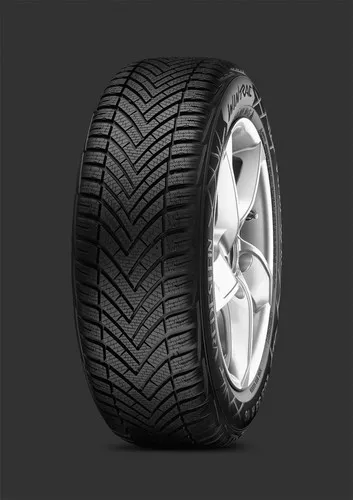
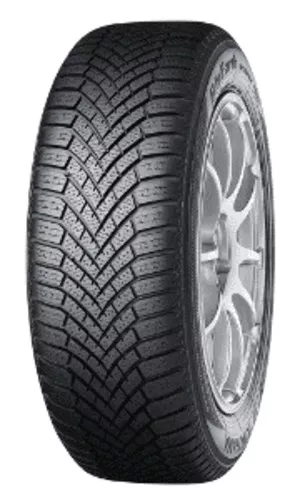 Vredestein WintracYokohama BluEarth-Winter V906Vredestein WintracYokohama BluEarth-Winter V906Vredestein WintracYokohama BluEarth-Winter V906Vredestein WintracYokohama BluEarth-Winter V906Vredestein WintracYokohama BluEarth-Winter V906
On dry roads, the Yokohama makes its most convincing argument. ADAC testers praised its safe and precise dry handling, and in the ADAC 2022 SUV test it finished fifth overall against the Wintrac's tenth — its single head-to-head win. The V906's robust bead construction and directional tread are specifically engineered for responsive dry-road behaviour, and the feedback reflects that. The Wintrac is no slouch in dry braking — its scores here are genuinely competitive — but testers have consistently flagged mild weaknesses in dry dynamics more broadly, particularly in lateral response. The Yokohama has the edge in dry composure; the Vredestein holds its own in straight-line stops.
Vredestein WintracYokohama BluEarth-Winter V906Vredestein WintracYokohama BluEarth-Winter V906Vredestein WintracYokohama BluEarth-Winter V906Vredestein WintracYokohama BluEarth-Winter V906Vredestein WintracYokohama BluEarth-Winter V906Vredestein WintracYokohama BluEarth-Winter V906Wet performance is where the gap between these two becomes significant. In the Autobild 2021 braking test — the only head-to-head with measured distances — the Wintrac stopped from 80 km/h in 33.5 metres against the V906's 35.9 metres on wet tarmac, a meaningful 2.4-metre advantage in a real-world safety scenario. This pattern holds across all wet metrics: the Vredestein's aquaplaning resistance, wet handling, and wet safety margins consistently outclass the Yokohama. ADAC described the V906's wet performance as merely adequate, while the Wintrac earned specific praise for its aquaplaning reserves and balanced wet dynamics. Real owners back this up — one SEAT Cupra driver on country roads reported strong confidence in wet and icy conditions. The Yokohama's wet performance is simply not at the level its winter positioning suggests.
Vredestein WintracYokohama BluEarth-Winter V906Vredestein WintracYokohama BluEarth-Winter V906Vredestein WintracYokohama BluEarth-Winter V906Vredestein WintracYokohama BluEarth-Winter V906Vredestein WintracYokohama BluEarth-Winter V906Snow is the one area where the Yokohama finds partial redemption. In the same Autobild 2021 braking test, the V906 stopped on snow in 29.2 metres versus the Wintrac's 30.3 metres — a marginal advantage. Its Adaptive 3D Sipes and V-shaped groove pattern are genuinely designed for traction on snow and slush, and Yokohama's own positioning highlights snow, ice and wet confidence as core strengths. However, ADAC's broader 2024 evaluation flagged the V906 for weaknesses in winter driving behaviour overall, limiting the scope of that snow-braking advantage. The Wintrac's snow scores are stronger in aggregate, and in the ADAC 2021 195/65 R16 test it placed fourth against the Yokohama's eleventh. The V906 can stop on snow; the Wintrac is the more consistent all-round winter performer.
Vredestein WintracYokohama BluEarth-Winter V906Vredestein WintracYokohama BluEarth-Winter V906Vredestein WintracYokohama BluEarth-Winter V906Vredestein WintracYokohama BluEarth-Winter V906Vredestein WintracYokohama BluEarth-Winter V906Away from grip metrics, the Wintrac pulls well clear. Its interior noise, rolling resistance, and ride comfort scores are all substantially higher than the Yokohama's — and this shows in real-world use. Owners consistently mention quiet operation as a stand-out trait, and the low rolling resistance translates to meaningful fuel savings over a winter season. The V906 carries a higher weight penalty, noted by ADAC, and its rolling resistance score reflects genuinely poor efficiency — a significant everyday ownership consideration. For drivers who cover real kilometres in winter and care about cabin comfort and running costs, the Vredestein is the more liveable tyre by a clear margin.
Vredestein WintracYokohama BluEarth-Winter V906Vredestein WintracYokohama BluEarth-Winter V906Vredestein WintracYokohama BluEarth-Winter V906Vredestein WintracYokohama BluEarth-Winter V906The Vredestein Wintrac is the rational choice for the vast majority of winter drivers — it wins three of four direct comparisons, stops shorter on wet roads, handles winter conditions more consistently, and is significantly quieter and more efficient to run. The only meaningful concession is marginally softer dry dynamics. The Yokohama BluEarth-Winter V906 is for a narrower audience: drivers in regions with predominantly cold-but-dry winters, who prioritise cleared-road handling above wet and snow capability. Its efficiency and mileage scores are poor enough that even those drivers should weigh the running costs carefully. For most winter conditions in Central and Northern Europe, the Wintrac is the better-rounded, more confident choice.
Compare prices across all available dimensions for these tyres.
 VS
VS
 VSVSVS
 VSVS
VSVS VSVS
VSVS VSVS
VSVS Vredestein Wintrac vs Viking WinTech
 Vredestein Wintrac vs Kleber Quadraxer 3
 Vredestein Wintrac vs Nexen N blue HD Plus
 Vredestein Wintrac vs Linglong ComfortMaster
 Yokohama BluEarth-Winter V906 vs Nokian WR Snowproof
 Yokohama BluEarth-Winter V906 vs Falken EuroWinter HS01Yokohama BluEarth-Winter V906 vs Kleber KRISALP HP3Yokohama BluEarth-Winter V906 vs Continental WinterContact TS 870