Comparison: Pirelli Cinturato P7 C2 vs. Michelin Primacy 5 (2026)
Also compare with
Pirelli brings sharper grip and steering feel; Michelin counters with lower running costs and longer life.
On paper this looks lopsided in Pirelli's favour — an 88/100 rating against Michelin's 86/100, and dry-handling scores that dwarf the Primacy 5's. But the one head-to-head test in our database tells a more interesting story: at Aftonbladet 2025, in a 10-tyre field, the Michelin Primacy 5 won outright while the Pirelli Cinturato P7 C2 finished a still-excellent 3rd. That result hints at the real character split here: the Pirelli is the sharper, grippier all-rounder built for driver engagement, while the Michelin is an efficiency-and-safety specialist that Michelin itself markets around 'everyday confidence' and 'safety made to last.'
The Cinturato P7 C2 is Pirelli's updated take on a nameplate with real pedigree, succeeding the original Pirelli P7 Cinturato and already handing over to the newer Pirelli Cinturato (C3). It's widely fitted as original equipment by premium manufacturers — which tracks with testers repeatedly praising its direct steering response and stable, planted feel on both wet and dry roads. The Primacy 5, meanwhile, is Michelin's successor to the well-regarded Michelin Primacy 4+, built around EverGrip and EverTread technology and explicitly tuned to push mileage and wet consistency further than its predecessor, with Michelin claiming an 18% mileage improvement and a 4% shorter wet braking distance versus the outgoing model.
The single biggest difference in character: the Pirelli is tuned first for grip and handling precision, with efficiency treated as a bonus; the Michelin is tuned first for economy, longevity and reassuring, predictable manners, with outright grip a secondary concern. That split shows up in almost every test category that follows.
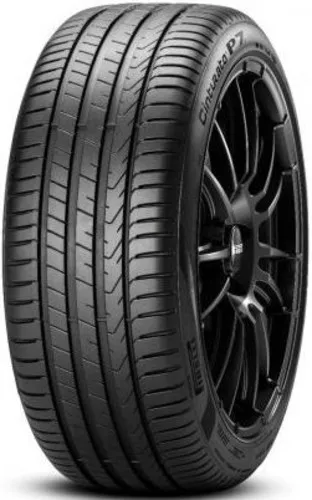
 Cinturato P7 C2
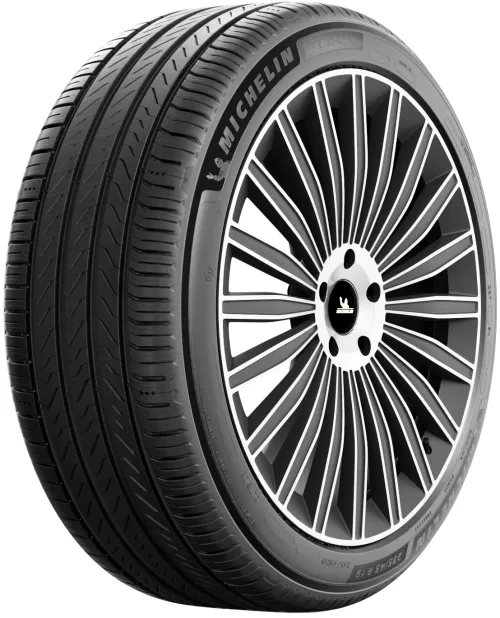
 Primacy 5


These tyres were not tested together in the same test. The scores below are aggregated from different independent tests, so direct comparison should be taken with caution.
 Pirelli Cinturato P7 C2Michelin Primacy 5Pirelli Cinturato P7 C2Michelin Primacy 5Pirelli Cinturato P7 C2Michelin Primacy 5Pirelli Cinturato P7 C2Michelin Primacy 5
The gap in dry performance is the starkest number in this whole comparison. Pirelli's dry-braking score sits at 92.3 against Michelin's 70, and the detailed averages tell the same story: the Cinturato P7 C2 posts a dry-handling-objective average of 96 and a dry-braking average of 92.3, while the Primacy 5 manages 85 and 70 respectively on those same measures. Testers are consistent about why — Autobild praised the Pirelli's 'direktes Lenkansprechen mit guter Rückmeldung' (direct steering response with good feedback), and ADAC rated it clearly strong on dry tarmac, while Die Reifentester flagged the Primacy 5 as the weakest dry-braking summer tyre in its own field at 37.23m and noted a tendency toward understeer in both wet and dry handling.
This isn't a marginal difference you'd only notice on a track day. Autoexpress clocked the Primacy 5 a full 1.4 seconds off the winning tyre in dry handling and specifically called out its soft steering response — the kind of vagueness that makes a car feel less connected to the road in everyday spirited driving, not just at the limit. Automotorsport's testers went further, describing the Michelin as 'etwas instabil beim schnellen Ausweichen' (somewhat unstable during quick evasive manoeuvres) and citing longer dry braking distances on asphalt. The Pirelli's own weak points here are minor by comparison — Autobild noted 'leicht verlängerte Trockenbremswege' relative to its otherwise strong showing, but nothing close to the Primacy 5's structural dry-handling deficit.
The mechanism behind this is straightforward: the Cinturato P7 C2's compound and construction are tuned to prioritise contact-patch precision and steering feel, which is exactly what you'd expect from a tyre so often chosen as OE fitment by driving-focused premium brands. The Primacy 5's dry manners, by contrast, are a byproduct of a design brief centred on rolling resistance and mileage — ADAC explicitly praised its class-leading environmental score and lowest rolling resistance in its field, but that same tuning philosophy is what costs it composure when you actually push the front end hard into a corner.
Pirelli Cinturato P7 C2Michelin Primacy 5Pirelli Cinturato P7 C2Michelin Primacy 5Pirelli Cinturato P7 C2Michelin Primacy 5Pirelli Cinturato P7 C2Michelin Primacy 5Pirelli Cinturato P7 C2Michelin Primacy 5Pirelli Cinturato P7 C2Michelin Primacy 5Wet weather narrows the gap considerably, and here the story gets more nuanced. Pirelli's wet-braking score of 80.1 and Michelin's 81 are essentially a wash, and the Primacy 5's own detail averages — an 84 for wet-handling-objective and a strong 85 for aquaplaning-longitudinal — show Michelin's marketing claim of improved wet performance largely holds up in testing. Die Reifentester measured the Primacy 5's wet braking at a genuinely strong 34.9m, and TYRE REVIEWS logged straight-line aquaplaning at 76.97 km/h with praise for its 'safe, stable balance.' Automotorsport went as far as calling the Michelin's wet-road behaviour 'sehr ausgewogenes, sicheres Fahrverhalten' with generous cornering reserves — arguably its single strongest showing in this entire comparison.
The Pirelli counters with an even higher ceiling on the objective side: its wet-handling-objective average of 98.5 is the standout number across both tyres' entire data sets, and testers at aftonbladet specifically praised its 'grip and handling on wet roads.' Tyre Reviews called it 'excellent in the dry and wet' with a well-balanced overall character. Where the Cinturato P7 C2 shows a genuine soft spot is aquaplaning resistance — Tyre Reviews rated it only 'average' here, and ADAC flagged 'Schwächen auf nasser Fahrbahn' as one of its few real criticisms, a mild contradiction of its otherwise strong wet-handling numbers.
Put together, this is less a case of one tyre dominating and more a case of two different wet-weather philosophies: the Michelin is engineered to be quietly, consistently safe even as it wears — backed by Michelin's claim that wet braking performance holds up from first mile to last — while the Pirelli delivers a sharper, more responsive wet-handling experience with slightly more variable aquaplaning security. For most daily driving in the rain, both are genuinely capable; the difference will mostly be felt by drivers who push harder into standing water at speed, where the Michelin's more consistent aquaplaning numbers give it a slight edge.
Pirelli Cinturato P7 C2Michelin Primacy 5Pirelli Cinturato P7 C2Michelin Primacy 5Pirelli Cinturato P7 C2Michelin Primacy 5Pirelli Cinturato P7 C2Michelin Primacy 5Comfort actually favours Pirelli on the scoreboard — 88.7 versus Michelin's 85.1 — which might surprise anyone assuming the efficiency-focused Primacy 5 would be the plusher ride. Autobild specifically called out the Cinturato P7 C2's 'besonders guter Komfort' (particularly good comfort) alongside its dry and wet stability, and real owners back this up: a BMW 3 Series driver described it as 'very comfortable for everyday real life, a super super super tire,' while another owner on a BMW X3 called it 'a well rounded, very comfy tyre' fitted as original equipment, adding they'd happily refit it. The Michelin isn't uncomfortable by any means — TYRE REVIEWS measured it at a hushed 70.9 dB and called it a genuinely quiet, comfortable road tyre — but Automotorsport did flag a specific 'Komfortschwäche durch geringe Eigendämpfung' (a comfort shortfall from limited internal damping), suggesting the ride can transmit sharper impacts than its headline comfort score implies.
Running costs flip the picture decisively in Michelin's favour, and this is really where the Primacy 5 earns its keep. Its rolling-resistance score of 86.5 dwarfs the Pirelli's 69.3, and multiple independent testers confirm this in practice — ADAC named it the lowest-rolling-resistance tyre in its field, Autoexpress called it 'the most economical tyre in the test,' and Die Reifentester tied it with Bridgestone for best-in-class rolling resistance at 6.3 kg/t. Its mileage score of 85 versus the Pirelli's 64.5 points to meaningfully longer tread life too — a real factor given ADAC specifically flagged a 'leichte Schwäche beim Abrieb' (slight wear weakness) as one of the Cinturato P7 C2's few genuine criticisms. Michelin's own marketing leans hard on exactly this: EverGrip and EverTread technology aimed at maintaining wet braking performance as the tyre wears, backed by a claimed 18% mileage improvement over the Primacy 4+.
Price positioning is close, but the value calculation depends entirely on priorities. Autobild flagged the Pirelli's 'erhöhtes Preisniveau' (elevated price level) as a genuine negative, while ADAC noted the Primacy 5's own high price (€165) as a comparative weakness. Given the Michelin's clear efficiency and mileage advantage, it's likely to work out cheaper to own over its full life even if the sticker price is comparable — though one blunt owner review complains the Primacy 5 underperforms below 25°C and wishes they'd bought something else for comfort, a reminder that Michelin's efficiency-first tuning doesn't universally delight every driver, especially in cooler climates.
Pirelli Cinturato P7 C2Michelin Primacy 5Pirelli Cinturato P7 C2Michelin Primacy 5This isn't a case of one tyre simply beating the other — the data describes two distinct philosophies aimed at different priorities, and the one mutual test we have (a Michelin win with Pirelli close behind in 3rd) actually reflects that closeness rather than settling it. If you want the sharper, more engaging drive — precise steering, higher outright grip, and a tyre so trusted by premium manufacturers that it's frequently chosen as original equipment — the Cinturato P7 C2 is the clear pick, and its comfort scores mean you don't have to sacrifice a smooth ride to get that sportier edge. Real owner reviews consistently back this combination up: confident, comfortable, and capable, with only average aquaplaning resistance and a higher price as genuine drawbacks.
If your priorities are minimising running costs, maximising tread life, and wanting a tyre that stays composed and safe as it wears rather than one that rewards a spirited driving style, the Primacy 5 is the more rational choice — its rolling-resistance and mileage advantages are substantial and independently verified across multiple testers, and its wet-weather manners genuinely improve on the well-regarded Primacy 4+. Just go in aware of its real weakness: dry handling and steering feel are noticeably softer than the class leaders, which matters if you drive with any enthusiasm rather than purely commuting.
In short: enthusiast drivers, premium saloon and coupe owners, and anyone who values steering feedback over fuel savings should choose the Pirelli. High-mileage drivers, family car owners focused on total cost of ownership, and anyone prioritising a quiet, efficient, low-maintenance tyre should choose the Michelin. Both are genuinely excellent premium tyres — this is a case of matching character to priorities rather than picking a clear overall winner.
Compare prices across all available dimensions for these tyres.
| Organization | Season | Year | Dimension | |
|---|---|---|---|---|
 Aftonbladet Aftonbladet | Summer | 2025 | 225/45 R17 | View |
 VS
VS VSVSVS
 VSVSVSVS
 VSVSPirelli Cinturato P7 C2 vs Bridgestone Turanza T005Pirelli Cinturato P7 C2 vs Bridgestone Potenza SportPirelli Cinturato P7 C2 vs Bridgestone Turanza 6Michelin Primacy 5 vs Bridgestone Turanza T005Michelin Primacy 5 vs Bridgestone Turanza 6Michelin Primacy 5 vs Hankook Ventus Prime 4Michelin Primacy 5 vs Continental PremiumContact 6






