Michelin leads in refinement and wet safety; Hankook fights back with class-leading dry grip.
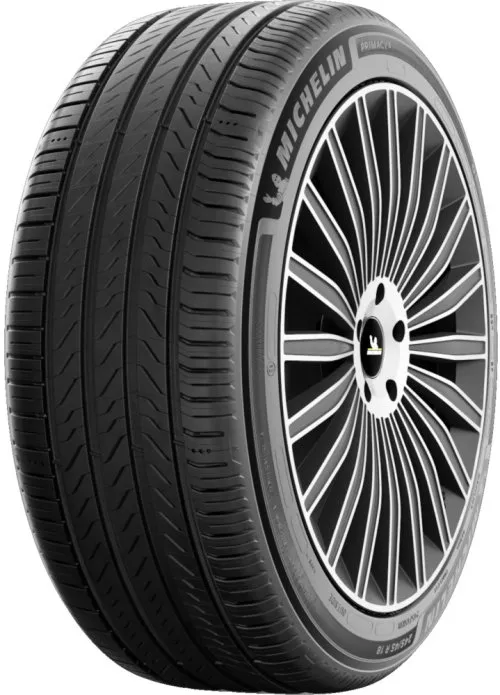
The Michelin Primacy 5 and the Hankook Ventus Prime 4 represent two fundamentally different philosophies of what a premium summer tyre should be. The Primacy 5, successor to the Primacy 4+, sits at the heart of Michelin's touring range and is built around a promise of longevity, wet safety and low environmental impact. Michelin claims an 18% improvement in mileage over its predecessor and a 4% gain in wet braking when new, and the tyre is positioned explicitly for drivers who want consistent, dependable performance across the entire tread life — not just when the rubber is fresh. With 82 sizes spanning R16 to R21, it targets family saloons, executive cars and SUVs where confidence and refinement are the priorities.
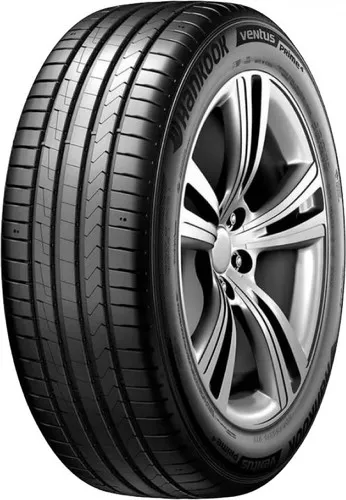
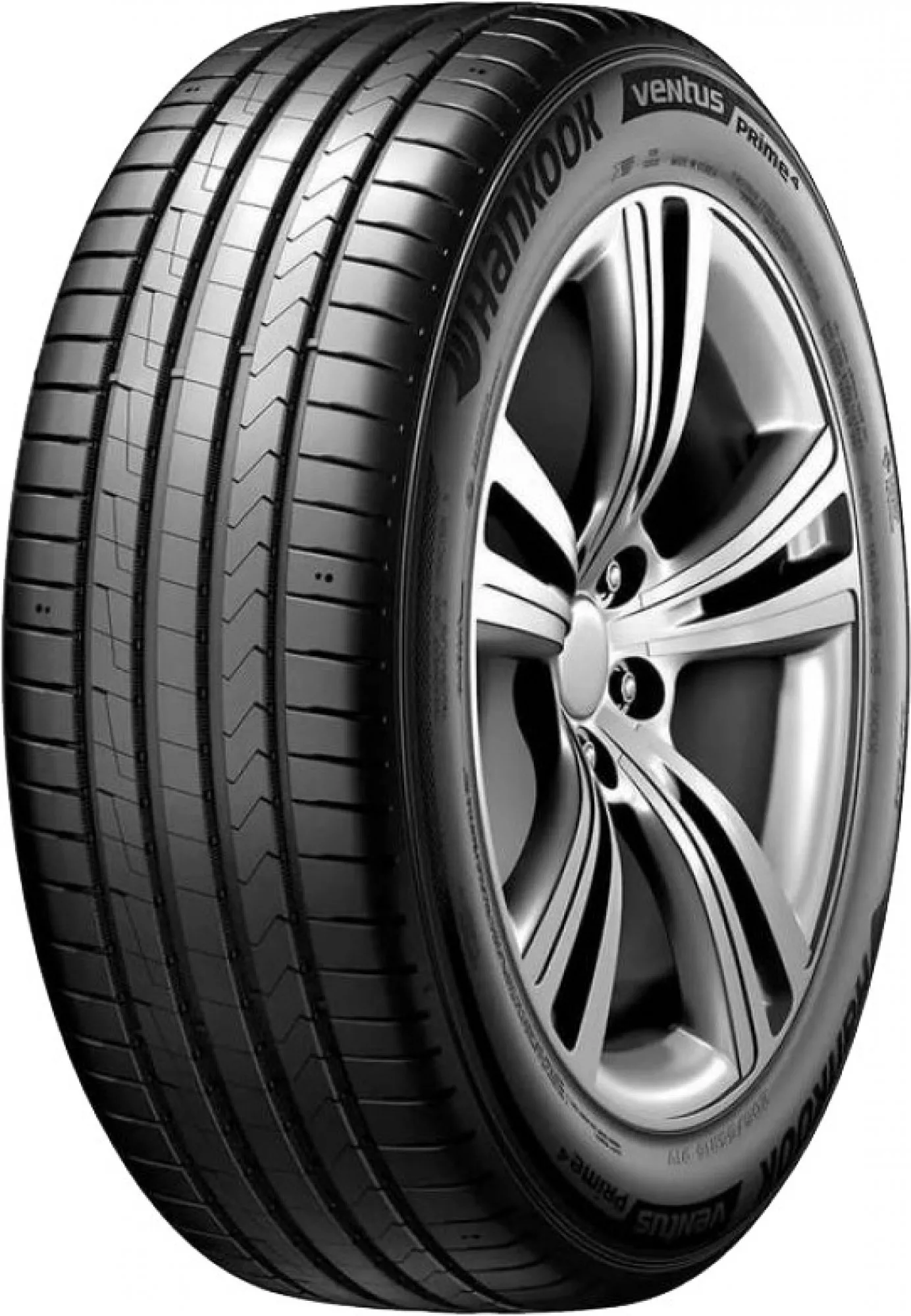
The Hankook Ventus Prime 4, which succeeds the Ventus Prime3 K125, takes a sharper, more dynamics-oriented approach to the same premium summer brief. Its 97-size range from R13 to R22 signals broader accessibility, and its engineering emphasis falls on dry-road performance: short braking distances, responsive handling and athletic composure in corners. It positions itself as value-premium — a tyre that delivers genuine grip credentials without demanding the price premium of the traditional European marques. Where the Michelin asks you to think about the next 50,000 kilometres, the Hankook wants to impress you on the next fast roundabout.
The single most important difference between these two tyres is this: the Michelin Primacy 5 is a world-class comfort, efficiency and wet-safety tyre that carries a real and measurable weakness in dry braking, while the Hankook Ventus Prime 4 is an impressive dry-weather performer whose noise levels, rolling resistance and aquaplaning resistance fall noticeably short of its French rival. In all three direct comparison tests where they met, Michelin finished ahead — but Hankook's dry-grip credentials cannot be dismissed. The question is which trade-off you can live with.
Primacy 5
Ventus Prime 4


Averaged from 2 tests
Michelin Primacy 5
Hankook Ventus Prime 4
Michelin Primacy 5
Hankook Ventus Prime 4
Michelin Primacy 5
Hankook Ventus Prime 4
Michelin Primacy 5
Hankook Ventus Prime 4Wet performance is the arena where the Michelin Primacy 5 makes its strongest case, and the breadth of its advantage extends well beyond braking. On wet stopping distances, the two tyres are numerically close — Michelin's wet-braking score of 82.0 versus the Hankook's 81.1 — a near dead-heat that reflects both tyres' genuine competence on a damp surface. Die Reifentester measured the Michelin at 34.9 metres in wet braking, a strong result that is consistent with its EU label performance: 98% of the Primacy 5's size range achieves an A wet-grip rating, the highest classification possible. The Hankook, by contrast, achieves A wet grip on only 54% of its sizes, with 36% rated B and a further 10% carrying C or D grades. In less common fitment sizes, this gap can be decisive.
Where the difference becomes truly significant is aquaplaning resistance. The Michelin scores 84.9 against the Hankook's 74.4 — a 10-point margin that represents a serious real-world safety gap when roads are flooded. Tyre Reviews measured the Primacy 5's straight aquaplaning speed at 76.97 km/h, a strong result underpinned by Michelin's next-generation EverGrip sculpture, which is designed to maintain water evacuation even as the tread wears. The Primacy 5's longitudinal aquaplaning score of 88.6 is among the highest in the premium segment. Multiple independent test panels praised its guter Aquaplaningschutz — good aquaplaning protection — and rated it as offering a comfortable safety margin before the tyre begins to plane. The Hankook's performance in standing water is adequate for normal conditions but measurably less reassuring in the kind of sudden summer downpour that catches motorists off guard.
In overall wet handling — the holistic feel of cornering, steering weight and stability on a wet circuit — the Hankook actually holds a slight measured edge: its wet-handling-objective score of 87.5 against the Michelin's 84.0. The AvD gave the Hankook a solid 4.4 for wet handling, while the Michelin scored a below-average 4.2 in the same test — a reminder that even a wet-specialist tyre can have handling quirks under lateral load. Automotorsport praised the Michelin for balanced, safe behaviour with good cornering reserves, but flagged occasional instability in fast avoidance manoeuvres. The practical conclusion: for the average driver in wet conditions, the Michelin's aquaplaning buffer and near-universal A wet grip rating deliver the most complete wet-weather safety package; only in lateral-grip-focused wet handling does the Hankook take a narrow lead.
Michelin Primacy 5
Hankook Ventus Prime 4
Michelin Primacy 5
Hankook Ventus Prime 4On a dry road, the Hankook Ventus Prime 4 delivers a genuine surprise. Its dry-braking score of 85.6 against the Michelin Primacy 5's 68.2 is a 17-point gap — one of the largest discipline disparities in the entire premium summer category. In practice, this translates to significantly shorter stopping distances when the sun is out. Die Reifentester's 2026 assessment measured the Michelin at 37.23 metres for dry braking, a result described as the weakest among the summer tyres in that test. At 100 km/h, a 3–4 metre deficit over a rival means the car ahead is roughly one full car length closer to your bumper when you finally stop — a gap that, in a real emergency, is the difference between a near-miss and an impact. The Hankook's dry-handling-objective score of 97.5 is exceptional by any benchmark, reflecting high lateral limits, precise turn-in and confident stability in measured handling exercises.
What complicates the narrative is that subjective dry handling assessments are more forgiving of the Michelin. The AvD 2026 test awarded it the joint-best dry handling score of 4.7 out of 5 — tied with Pirelli — suggesting that at real-world road speeds, the Primacy 5 communicates well and feels poised in corners. Its dry-handling average score of 84.3 is genuinely competitive. The weakness appears specific to peak braking friction: Michelin's compound is optimised for wet-road grip and low rolling resistance, and the trade-off shows up most starkly under threshold braking on dry tarmac. ADAC 2026 rated the Primacy 5's dry performance at just 3.2 — notably weak in a 16-tyre field — while the Hankook received 2.4 for the same test, confirming the gap is systematic, not an anomaly.
For drivers who spend the majority of their year on dry roads, the Hankook's dry advantage is the dominant factor. AUTOBILD 2024 praised its dynamic behaviour explicitly — short dry stopping distances and neutral, safe handling on both surfaces — and these are attributes the Michelin simply does not match in hard objective testing. The Primacy 5 is not dangerous in the dry, and its subjective balance is well-regarded, but any driver for whom stopping performance is the primary safety metric will find the Hankook the more reassuring tyre when the roads are bone dry.
Michelin Primacy 5
Hankook Ventus Prime 4Cabin refinement is the Michelin Primacy 5's most emphatic victory in this comparison. Its noise score of 89.3 against the Hankook's 77.3 is a 12-point gap that manifests as an immediately audible difference inside the car. Tyre Reviews measured the Primacy 5 at 70.9 dB interior noise — a genuinely quiet result — while the Motor 2026 summer test identified the Hankook Ventus Prime 4 as the loudest tyre in the entire test field at 75.5 dB. That 4.6 dB gap is not a laboratory abstraction: on a logarithmic scale, roughly doubling perceived loudness, it translates into real fatigue on a two-hour motorway journey. The Primacy 5's exterior noise score of 94 and interior score of 87 place it among the quietest summer tyres on sale; the Hankook's 78 and 77 scores, while not uncomfortable in isolation, are simply outclassed. Real-world Michelin owners reflect this — the tyre holds a 4.8/5 average across 899 verified reviews, with refinement frequently cited as a defining characteristic.
Ride comfort broadly follows the noise pattern: 85.1 for the Michelin, 80.0 for the Hankook. However, Automotorsport noted a specific nuance in the Michelin's comfort character — a slight weakness in absorbing sharp, isolated impacts due to low inherent damping in the sidewall. This means the Primacy 5 is exceptionally smooth and quiet on well-maintained surfaces, but can feel slightly less forgiving over expansion joints or broken urban tarmac than its overall score suggests. The Hankook received a reasonable 4.3 comfort score from AvD and owners describe it as civilised in daily use — one Honda Civic driver, after 8,000 km of mixed roads, called it quiet and exemplary. The gap in real-world feel is audible rather than structural.
On running costs and longevity, the Michelin Primacy 5's advantage is substantial and cumulative. Its rolling resistance score of 83.8 versus the Hankook's 75.0 reflects a fundamentally more efficient tyre: ADAC 2026 awarded the Primacy 5 the best environmental rating in the entire 16-tyre test field, and Die Reifentester measured it at just 6.3 kg/t — joint lowest in the test alongside Bridgestone. Tyre Reviews independently recorded 7.00 kg/t, its second-best result. For a driver covering 20,000 km per year, this difference adds up to a meaningful fuel saving. The mileage score of 85 vs 74.2 compounds this advantage: Michelin promises 18% greater longevity than its own predecessor, meaning a set of Primacy 5s will cover considerably more distance before needing replacement. The Michelin's higher purchase price — ADAC noted approximately €165 per tyre — is partially offset over the course of ownership through lower fuel consumption and a longer service life. The Hankook's lower entry price looks less compelling once total cost of ownership is accounted for.
Michelin Primacy 5
Hankook Ventus Prime 4
Michelin Primacy 5
Hankook Ventus Prime 4The data is unambiguous in its overall direction. Across the three direct comparison tests where the Michelin Primacy 5 and Hankook Ventus Prime 4 met — ADAC 2026, AvD 2026 and Aftonbladet 2025 — the Michelin finished ahead in every single one: 7th vs 11th in a 16-tyre ADAC field, 4th vs 8th out of 15 at AvD, and outright winner versus 6th place at Aftonbladet. The overall ratings of 86/100 versus 76/100 reflect this consistently. For the majority of European drivers who encounter mixed conditions, value low running costs, and want a quiet, refined cabin that remains safe across the entire life of the tyre, the Michelin Primacy 5 is the stronger, more complete package — and the test record confirms it.
The Hankook's case, however, is not merely about price. Its dry-braking score of 85.6 and dry-handling-objective of 97.5 represent genuine, tested performance that the Michelin's 68.2 dry-braking score cannot match. For drivers in southern or central Europe whose summers are long and dry, who live in flat terrain away from flooding risks, and for whom the feel of a short, confident stop is the primary safety priority, the Hankook Ventus Prime 4 is a rational and technically justified choice. It also offers a wider size range — R13 to R22 — making it accessible to vehicles the Michelin simply does not cover. At a lower purchase price, it delivers dry-road capability that embarrasses more expensive rivals.
The final recommendation: if your climate involves genuine rainfall, if you cover high annual mileage, or if you value the quietest possible cabin on long journeys, buy the Michelin Primacy 5. If dry roads dominate your driving, your budget is tighter, or short braking distances are your primary safety metric, the Hankook Ventus Prime 4 is a more dynamic, honest performer than its overall rating suggests. The Michelin wins the comparison — but the Hankook wins the dry road.
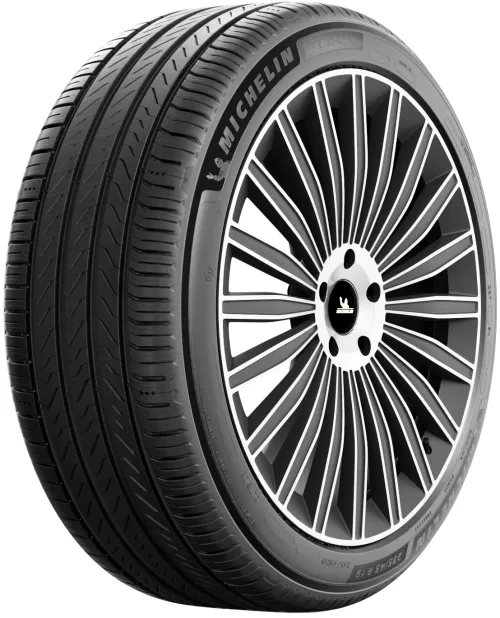
Compare prices across all available dimensions for these tyres.
VS
VS
VS
VS
VS
VS
VS
VS
VS
VS