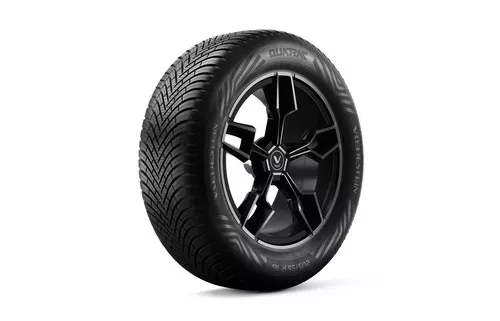
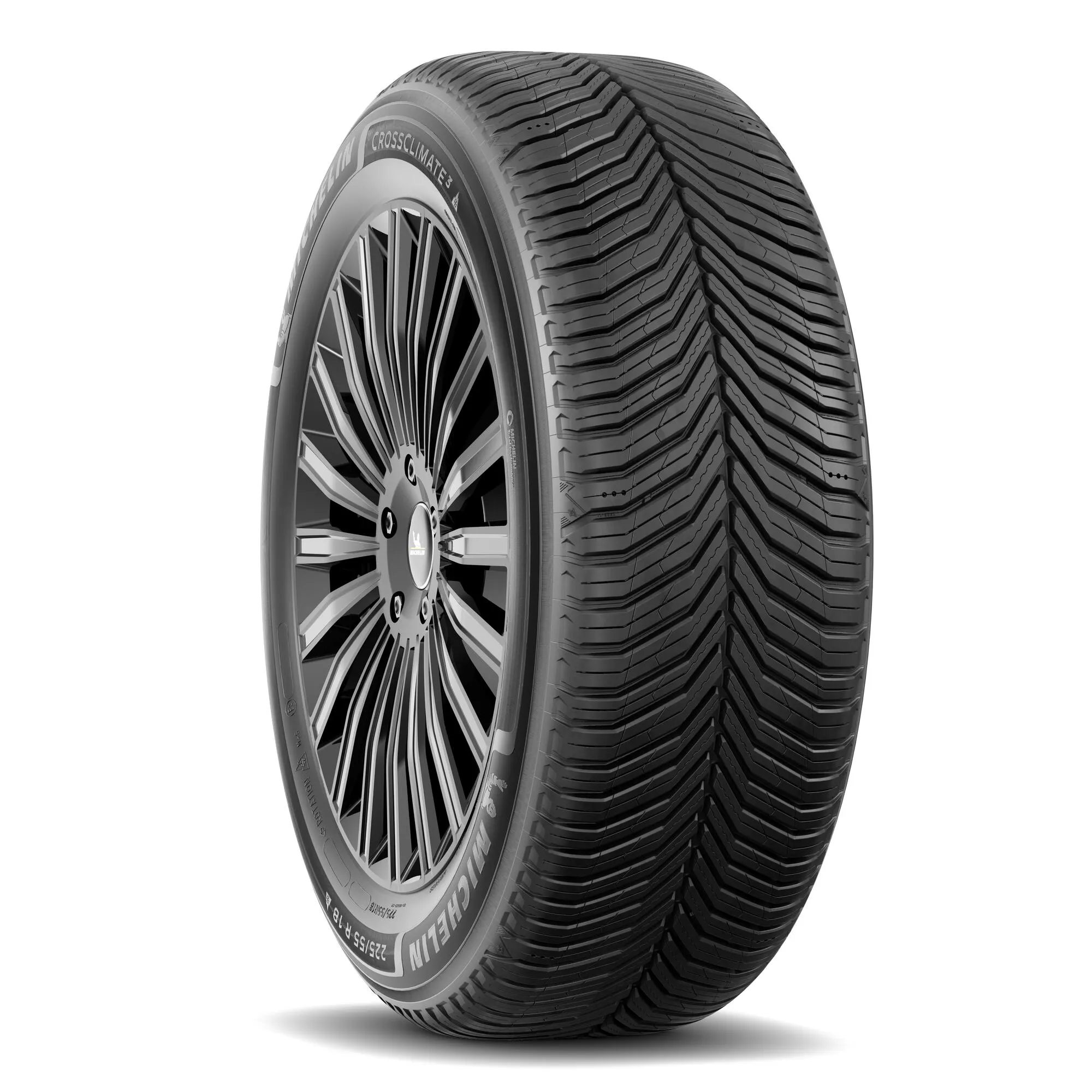
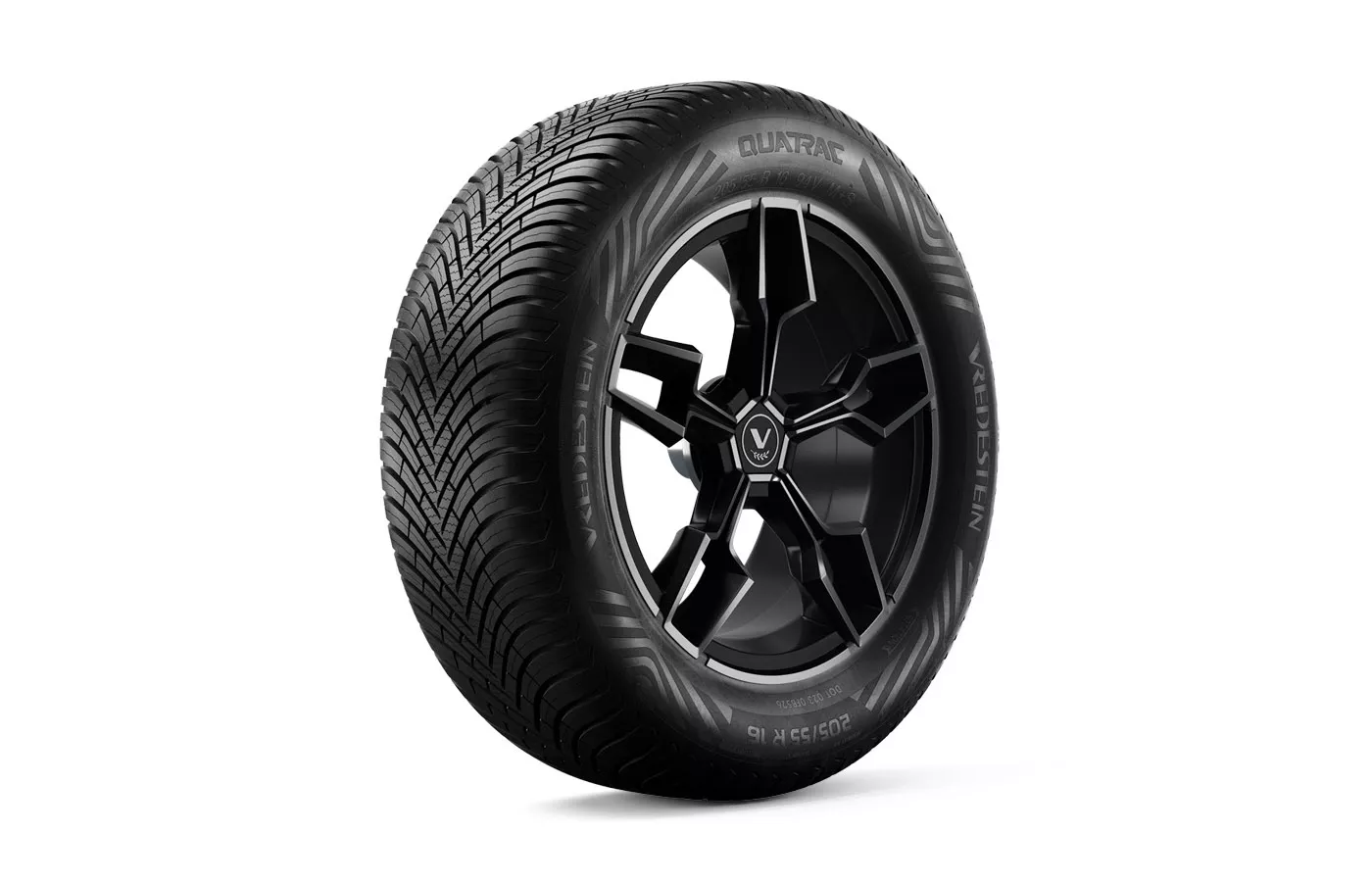
Vredestein wins wet, dry and comfort; Michelin answers with class-leading snow and mileage.
The Michelin CrossClimate 3 and the Vredestein Quatrac both chase the same holy grail — a single tyre that handles a dry August motorway run and a slushy January morning without compromise — but they arrive at very different answers. Michelin's flagship all-season, sold via Michelin, is pitched as the category benchmark for winter capability: Michelin's own marketing calls it an "all season multi-tasker" built around a Thermal Adaptive Tread Compound and V-shaped sculpture, and it holds 3PMSF certification alongside a claimed 4% improvement in wet braking over its predecessor. The Vredestein Quatrac, built in Hungary and sold through Vredestein, takes the opposite emphasis: it leans hard into wet-weather precision and dry handling, deliberately trading away some snow ability to become what Vredestein itself describes as ideal for "Central European climates."
That trade-off shows up immediately in the numbers. Vredestein's overall rating of 92/100 dwarfs the CrossClimate 3's 69/100, and in the two mutual tests where both tyres have gone head-to-head, the Quatrac won both — 2nd versus 11th of 30 in one Autobild 2025 braking test, and 4th versus 7th of 15 ("příkladné" versus a merely "dobré" verdict) in another. That's a clean sweep for Vredestein in direct competition, though it's worth noting the CrossClimate 3 isn't chasing the same brief — its whole reason for being is snow performance that "rivals dedicated winter tyres," a claim the test data actually backs up.
So this isn't simply a story of one tyre beating another. It's two different bets on what an all-season driver needs most: Michelin bets on winter security and longevity, Vredestein bets on wet and dry precision with snow capability held in reserve rather than maximised.
CrossClimate 3
Quatrac


Averaged from 2 tests
Michelin CrossClimate 3
Vredestein Quatrac
Michelin CrossClimate 3
Vredestein Quatrac
Michelin CrossClimate 3
Vredestein Quatrac
Michelin CrossClimate 3
Vredestein Quatrac
Michelin CrossClimate 3
Vredestein QuatracWet braking is where the story turns decisively toward Vredestein. In that same measured test, the Quatrac stopped from 100km/h in 43.9m against the CrossClimate 3's 49.0m — a 5.1-metre gap, more than a full car length, and exactly the kind of margin that determines whether you avoid a collision or don't. It's a striking result given Michelin markets the CrossClimate 3's V-shaped tread specifically for water evacuation and claims a 4% wet-braking improvement over its predecessor — the claim may be true in isolation, but it still leaves the tyre well behind the Quatrac in this comparison.
The broader scores confirm this isn't a one-off. Vredestein's wet performance score of 86.6 and wet-braking score of 85.6 comfortably beat Michelin's 67 and 69 respectively, and Vredestein's aquaplaning score of 82.7 versus Michelin's 69 tells a similarly one-sided story. Testers have repeatedly labelled the Quatrac a "Nässespezialist" — a wet-weather specialist — citing "sehr gute Aquaplaningreserven" and describing it as "souverän" across weather conditions. Michelin's own test record is honest about this weakness too, with Autobild 2025 noting the CrossClimate 3 is "etwas schwächer bei Nässe" (somewhat weaker in wet conditions) even while praising its winter talents elsewhere.
Owner feedback partially complicates this picture — several CrossClimate 3 reviewers specifically praise wet grip, with one describing feeling "safer as grip the road better in wet conditions." That's not necessarily a contradiction: Michelin's wet performance is genuinely acceptable in isolation, just not competitive with a specialist like the Quatrac. For drivers who log serious motorway miles in rain, or who live somewhere aquaplaning risk is a real concern, the Vredestein's advantage here is large enough to be the deciding factor on its own.
Michelin CrossClimate 3
Vredestein Quatrac
Michelin CrossClimate 3
Vredestein QuatracIn the single measured braking test where both tyres appear side by side — Autobild's 2025 225/40 R18 trial — the gap is razor-thin: the Quatrac stopped in 40.3m, the CrossClimate 3 in 40.4m, a difference of just 10cm and functionally a dead heat from 100km/h. On outright straight-line dry stopping power, there is no meaningful separation between these two.
Where they diverge sharply is in handling character. Vredestein's average dry-handling-objective score of 98 is exceptional — about as close to the ceiling as this dataset gets — and testers consistently describe the Quatrac in terms like "sportlich sicheres Handlingverhalten" and "direktes Lenkverhalten," a tyre that turns in crisply and holds its line with genuine precision. One owner running a Mazda MX5 specifically praised it for not spoiling the car's handling, which says a lot for a tyre that also has to cope with winter duty. Michelin's dry performance score of 72 is solid rather than sharp, and while it's competent — Michelin's own literature leans more on all-weather adaptability than outright dry sportiness — it simply isn't tuned for the same level of driver engagement.
The mechanism is straightforward: Michelin's compound is thermally adaptive, designed to soften and stiffen with temperature so it works across a wider range of conditions, including near-freezing tarmac and packed snow. That versatility costs a bit of the last few percent of dry precision that a more narrowly focused compound like Vredestein's can deliver. For drivers who want an engaging, confidence-inspiring dry drive on top of all-season security, the Quatrac's sharper steering response and near-perfect handling score make it the more rewarding tyre — even though outright braking distance is essentially a wash.
Michelin CrossClimate 3
Vredestein Quatrac
Michelin CrossClimate 3
Vredestein Quatrac
Michelin CrossClimate 3
Vredestein Quatrac
Michelin CrossClimate 3
Vredestein QuatracSnow is the one category where the CrossClimate 3 doesn't just compete — it dominates. Its snow performance score of 93.3 is the standout figure in this entire comparison, and Autobild's testers didn't mince words, calling it a "Schneekönig" (snow king) capable of taking on dedicated winter tyres on their own turf. That's an unusually strong claim for an all-season tyre, and it's backed by Michelin's own 3PMSF certification and marketing around adapting to "ever-changing road conditions" via its thermal compound technology.
The Quatrac's snow score of 81.2 is still respectable — this is a genuinely capable all-season tyre in winter conditions, not a fair-weather product — but it's a clear step behind Michelin's benchmark result, and testers have been upfront about it: ADAC 2024 flagged "leichte Schwächen auf winterlicher Fahrbahn," and Vredestein's own expert summary acknowledges the tyre "sacrifices a bit of snow performance" in exchange for its wet and dry strengths. Its detail scores of 83.9 for snow braking and 82.9 for snow handling support a tyre that's solid and dependable on snow without being class-leading.
In practice, this makes the choice climate-dependent almost more than anything else in the comparison. A driver in a region with genuine, prolonged winter conditions — heavy snowfall, ice, real cold — gets a meaningful, test-verified safety margin from the CrossClimate 3 that the Quatrac simply doesn't match. A driver in a milder, wetter climate where snow is occasional rather than constant is paying for winter capability they'll rarely use, and giving up the Quatrac's superior wet and dry manners to get it.
Michelin CrossClimate 3
Vredestein Quatrac
Michelin CrossClimate 3
Vredestein QuatracOn comfort, Vredestein again has the edge, though it's closer than the wet-weather gap suggests. The Quatrac's comfort score of 87.9 and noise score of 92 both beat Michelin's 75 and 75, and testers have specifically praised its "angenehm leiser Abrollkomfort" (pleasantly quiet rolling comfort). Its interior noise detail score of 95 is particularly strong, suggesting a cabin experience that's genuinely hushed rather than merely adequate. Michelin's comfort scores are still solidly mid-pack for a premium tyre — nothing here suggests the CrossClimate 3 is harsh or intrusive — but it doesn't match the Quatrac's refinement.
Running costs flip the picture entirely in Michelin's favour, and this is where the CrossClimate 3's positioning really pays off. Its mileage score of 92 and rolling-resistance score of 84 are both excellent, and Autobild's testers explicitly credited it as "stark im Kostenkapitel" (strong in the cost chapter) thanks to very high projected tread life — Michelin's own key strengths list leads with "outstanding mileage and long tyre life" and "excellent fuel efficiency," and the independent scores back that up. The Quatrac's mileage score of just 56 and rolling-resistance of 76.6 are comparatively weak; testers have flagged "überdurchschnittlich hoher Verschleiß" (above-average wear) and Vredestein's own summary admits to "average tread life" as a genuine weakness. Michelin's EU label reinforces this — a clean B-class fuel rating across the vast majority of sizes tested, versus no comparable label data available for the Quatrac, though the wear feedback alone tells the story.
Owner sentiment for the CrossClimate 3 is emphatically positive on this front, with a 4.8/5 average across 1,189 reviews and repeated mentions of better fuel economy and confident all-weather grip. The Quatrac's much smaller review pool (21 Tyre Reviews entries averaging 87/100, plus scattered five-star reports) skews very positive too, but the sample size is nowhere near as robust. Put simply: buy the Quatrac for the drive, buy the CrossClimate 3 for the long-term cost of ownership — over a full tread life, Michelin's mileage advantage could meaningfully offset its higher wet-weather risk for cost-focused buyers.
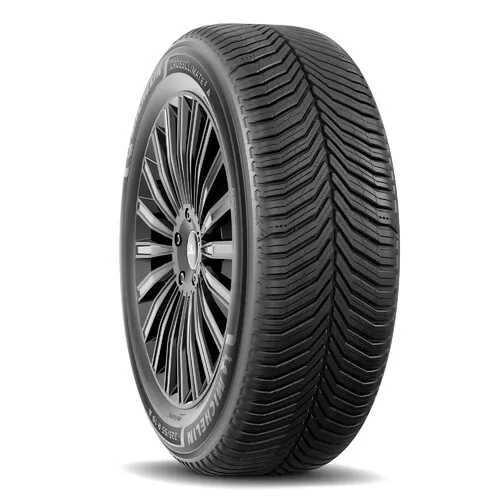
Michelin CrossClimate 3
Vredestein Quatrac
Michelin CrossClimate 3
Vredestein Quatrac
Michelin CrossClimate 3
Vredestein QuatracThis comparison doesn't have a single winner so much as two tyres solving different problems well. The Vredestein Quatrac is the better all-round drive — sharper dry handling, a genuine wet-weather specialist by the numbers, quieter, and it won both head-to-head tests on record. If you live somewhere with mild, wet winters rather than deep snow, and you want a tyre that feels engaging and secure on a daily basis, it's the clear pick, and its Hungarian manufacturing and premium-but-not-flagship pricing make it an easy recommendation for Central European driving conditions specifically.
The Michelin CrossClimate 3 earns its place for a narrower but genuinely important reason: snow and ice performance that independent testers rate as rivalling dedicated winter tyres, combined with the best mileage and lowest running costs in this comparison. For drivers in genuinely harsh winter climates who want one set of tyres year-round rather than a seasonal swap, or for fleet and high-mileage buyers where tread life and fuel economy dominate the total cost of ownership, the CrossClimate 3's trade-offs make sense — accept a real, measured wet-braking deficit (5.1m longer in the test on record) in exchange for winter security and longevity.
The honest recommendation: if snowfall is occasional and rain is the bigger daily risk, buy the Quatrac — the wet-braking gap alone is large enough to matter in an emergency stop. If your winters are genuinely severe and you want to avoid a second seasonal tyre set while keeping running costs down, the CrossClimate 3 is the more defensible choice despite trailing on every other metric measured here.
Compare prices across all available dimensions for these tyres.
VS
VS
VS
VS
VS
VS
VS
VS
VS
VS
Michelin CrossClimate 3 vs GoodYear Vector 4Seasons Gen-3
Michelin CrossClimate 3 vs Continental AllSeasonContact 2
Michelin CrossClimate 3 vs Michelin CrossClimate 2
Michelin CrossClimate 3 vs Pirelli Cinturato All Season SF3
Vredestein Quatrac vs Kleber Quadraxer 3
Vredestein Quatrac vs Vredestein Quatrac Pro+
Vredestein Quatrac vs Vredestein Quatrac Pro
Vredestein Quatrac vs Toyo Celsius AS2