18 shops · 56 ·847+ products

Comparison: GoodYear UltraGrip Performance 3 vs. Michelin ALPIN 7 (2026)

8 mutual test(s) with detailed data

Goodyear combines wet-road confidence with proven wear potential; Michelin answers with standout efficiency and strong snow performance.

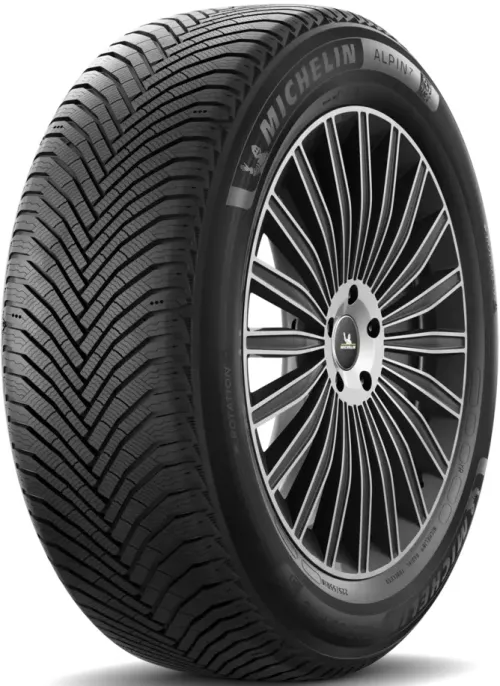
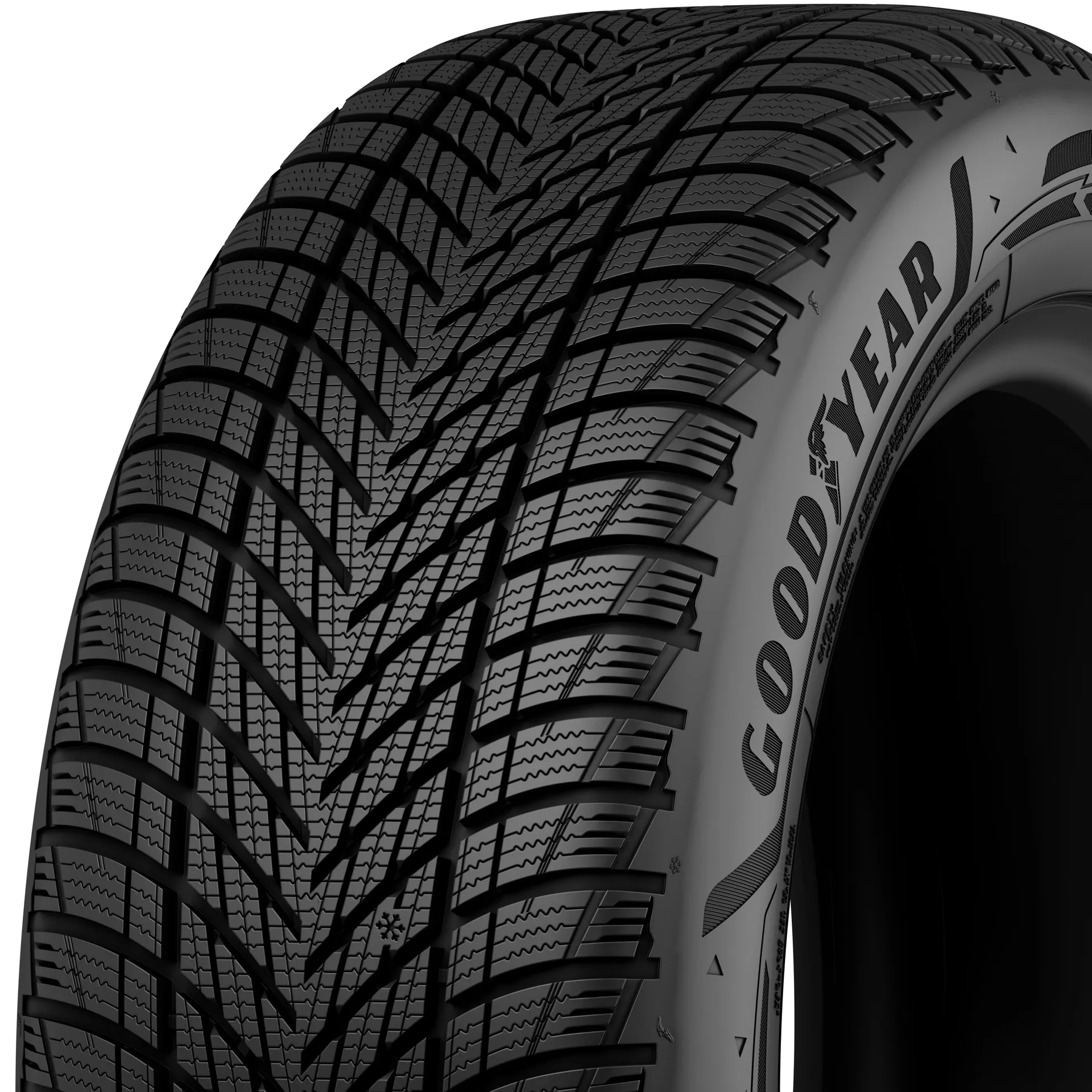
The GoodYear UltraGrip Performance 3 and Michelin ALPIN 7 compete in the premium winter segment, but their strongest arguments differ. The Goodyear combines convincing snow capability with strong wet-road handling and encouraging longevity evidence. The Michelin counters with exceptionally strong rolling-resistance results, comfortable road manners and accomplished snow performance. The biggest distinction is therefore between the Goodyear’s grip-led all-round appeal and the Michelin’s emphasis on winter capability with lower energy losses.

The GoodYear covers 179 listed dimensions across R14–R23, versus 49 across R15–R20 for Michelin, giving it broader fitment coverage. The ALPIN 7 replaces the Michelin ALPIN 6; the supplied product summary describes additional sipes and an evolving tread intended to preserve traction as it wears. Its efficiency and snow results support that direction, although no direct predecessor comparison establishes the size of the improvement. No Goodyear predecessor is identified. Overall ratings favour Goodyear 93/100 to 82/100, but five shared tests split just 3–2, making this a closer contest than those ratings suggest.

GoodYear UltraGrip Performance 3
Good for
Drivers facing mixed rain and snow Buyers prioritizing tested wear performance Drivers valuing wet cornering grip
Not ideal for
Drivers demanding crisp dry handling Buyers prioritizing minimum rolling resistance
Michelin ALPIN 7
Good for
Winter commuters prioritizing energy efficiency Drivers valuing ride comfort Frequent snow driving
Not ideal for
Buyers seeking a low purchase price Drivers demanding responsive wet steering Drivers prioritizing consistent cabin quietness

Test Profile

GoodYear
UltraGrip Performance 3
Michelin
ALPIN 7
Number of tests
29
10
Best position
#1
#1
Average position
3.1
3.4
Latest test
2026
2026
Available sizes
356
64

Performance comparison

Averaged from 8 tests

Wet Performance
Confidence
GoodYear UltraGrip Performance 3
90%
GoodYear
UltraGrip Performance 3
Michelin ALPIN 7
81%
Michelin
ALPIN 7
Wet Braking
GoodYear UltraGrip Performance 3
86%
Michelin ALPIN 7
82%
Wet Handling
GoodYear UltraGrip Performance 3
94%
Michelin ALPIN 7
87%
Wet Circle Cornering
GoodYear UltraGrip Performance 3
95%
Michelin ALPIN 7
84%
Aquaplaning Longitudinal
GoodYear UltraGrip Performance 3
84%
Michelin ALPIN 7
81%
Aquaplaning Cross
GoodYear UltraGrip Performance 3
91%
Michelin ALPIN 7
71%

Average wet braking distances and measured-test counts are also unavailable. The braking scores put Goodyear ahead, 83 against 80.3, but Michelin leads the broader wet category 86.3 to 84.2. Those differing rankings matter: straight-line stopping, cornering and water clearance are separate abilities. Both tyres have a wet-handling detail score of 90.7, while Goodyear leads wet-circle cornering 88.1 to 86.8 and records 99 for objective wet handling. These are supplied scores, not braking distances or percentage advantages in available grip.

Goodyear’s wet-road character nevertheless looks more convincing for drivers who want responsive cornering. Feedback repeatedly identifies strong grip and precise behaviour, whereas Michelin attracts criticism for sluggish steering and pronounced understeer: when pushed, the front tyres tend to run wider than requested. Aquaplaning complicates the picture. Michelin’s aggregate score leads 82 to 78.3, yet reports flag earlier flotation in bends and sensitivity to standing water. Goodyear has both a curved-aquaplaning win and criticism of weaker aquaplaning elsewhere. An owner’s positive experience supports its potential, but came after only 100 miles. In heavy rain, neither has a universal advantage across the supplied evidence; tyre size and test conditions clearly matter, and good wet-asphalt handling should not be mistaken for immunity to deep water.

Dry Performance
Confidence
GoodYear UltraGrip Performance 3
83%
GoodYear
UltraGrip Performance 3
Michelin ALPIN 7
86%
Michelin
ALPIN 7
Dry Braking
GoodYear UltraGrip Performance 3
84%
Michelin ALPIN 7
83%
Dry Handling
GoodYear UltraGrip Performance 3
82%
Michelin ALPIN 7
89%

Average dry braking distances and measured-test counts are not supplied for either tyre, so there is no defensible stopping-distance gap to express in metres or car lengths. The available dry-braking scores favour Michelin, 83.1 against 76.2, while both receive 80.6 for overall dry performance. That combination suggests Michelin deserves consideration when dry stopping performance matters, without proving how much sooner it would stop from any particular speed. Its dry-handling detail score also leads narrowly, 87 against 84.7.

The Goodyear’s limitations become clearer when steering response and ultimate handling are separated from basic grip. Feedback describes strong cornering grip and generally secure responses, yet also slower dry handling, occasional limit-behaviour weaknesses and a last-place dry-handling result. One owner reporting 2,000 miles similarly describes good grip with some twisting sensation in harder corners. Together, these observations suggest that grip remains available even when the tyre feels less immediate or composed under demanding inputs. Michelin’s balanced dry behaviour makes it attractive for measured everyday driving, although there is insufficient steering-specific evidence to call it markedly sharper. Neither dataset establishes a high-speed stability advantage, and Goodyear feedback about sensitivity to load changes argues against equating strong grip with effortless behaviour at the limit.

Snow Performance
Confidence
GoodYear UltraGrip Performance 3
89%
GoodYear
UltraGrip Performance 3
Michelin ALPIN 7
88%
Michelin
ALPIN 7
Snow Braking
GoodYear UltraGrip Performance 3
90%
Michelin ALPIN 7
91%
Snow Traction
GoodYear UltraGrip Performance 3
93%
Michelin ALPIN 7
90%
Snow Handling
GoodYear UltraGrip Performance 3
87%
Michelin ALPIN 7
87%
Snow Circle Cornering
GoodYear UltraGrip Performance 3
85%
Michelin ALPIN 7
83%

No average snow braking distances or measured-test counts are supplied, but both tyres have substantial winter credentials in the feedback. Michelin leads the aggregate snow score 88.7 to 76.7, with detail scores of 91 for handling, 88.6 for braking and 87 for traction. Reports include shortest snow braking in one test and third-place snow traction in another. Goodyear counters with repeated praise for traction and winter ability, a best snow-handling result, and a snow-safety detail score of 91.5. These results support two capable choices rather than a consistent winner in every snow discipline.

Michelin’s reported combination of secure, dynamic handling and cornering reserves should appeal on winding winter roads, where braking, turning and accelerating repeatedly matter more than one isolated score. Goodyear also offers strong traction, but one assessment found weaker deceleration and lateral grip alongside safe, manageable understeer. That distinction matters on packed snow: predictable responses can make a tyre easier to control without making its stopping distance shortest. The Goodyear has an ice-braking detail score of 90.5, but no comparable Michelin figure or actual ice distances are provided. Neither tyre’s 3PMSF marking is explicitly documented here, so severe-weather certification should be checked on the exact fitment; the winter test evidence alone does not establish that marking.

Comfort & Noise
Confidence
GoodYear UltraGrip Performance 3
87%
GoodYear
UltraGrip Performance 3
Michelin ALPIN 7
84%
Michelin
ALPIN 7
Noise Exterior
GoodYear UltraGrip Performance 3
88%
Michelin ALPIN 7
80%
Noise Interior
GoodYear UltraGrip Performance 3
98%
Michelin ALPIN 7
96%
Ride Comfort
GoodYear UltraGrip Performance 3
76%
Michelin ALPIN 7
76%

Michelin looks stronger for ride comfort, scoring 93.2 overall against Goodyear’s 90.7 and receiving a comfort detail score of 98.5. Goodyear feedback about limited inherent damping suggests bumps can feel more pronounced in some applications. Noise reverses the order: Goodyear scores 93.1 against Michelin’s 91.9, with interior-noise detail scores of 97.8 and 95.7 respectively. Michelin’s tenth-place cabin-noise result in one test also cautions against assuming its comfortable ride guarantees superior motorway hush. Goodyear owners give it 9.1/10 across 23 Heureka reviews and 90/100 across 14 TyreReviews entries, although the supplied individual comments do not establish a detailed long-term noise picture.

Michelin’s clearest running-cost advantage is rolling resistance: 95.7 against 73.6, reinforced by lowest-resistance and category-leading feedback. Lower rolling losses mean less energy required to keep moving, but no fuel-consumption difference is supplied to calculate savings. Goodyear also earned low-consumption praise in one test, so the gap need not be equally pronounced in every fitment. The label distribution places all listed Michelins in wet-grip class B, versus roughly 57% B and 43% C for Goodyear. Fuel labels are predominantly C for both, with Michelin showing a larger B share, approximately 30% versus 13%. Exact-size labels remain more useful than these range-wide distributions.

Purchase price and wear prevent an automatic Michelin value verdict. It was the most expensive candidate in one comparison and similarly expensive to Continental in another; no actual prices establish its premium over Goodyear. Goodyear has stronger supplied longevity evidence, including very high projected mileage, low abrasion and a highest-mileage result, although its aggregate mileage score of 69.7 is less impressive than its 86.5 detail score. No kilometre estimates reconcile those measures. Michelin’s evolving tread aims to preserve traction through wear, but no mileage result proves a longer life. Consequently, Goodyear has the better-supported durability case, while Michelin offers the clearer efficiency case; neither has a calculable cost-per-kilometre advantage here.

Economy
Confidence
GoodYear UltraGrip Performance 3
77%
GoodYear
UltraGrip Performance 3
Michelin ALPIN 7
92%
Michelin
ALPIN 7
Rolling Resistance
GoodYear UltraGrip Performance 3
66%
Michelin ALPIN 7
93%
Mileage
GoodYear UltraGrip Performance 3
88%
Michelin ALPIN 7
90%

Performance spider chart

Verdict

The Goodyear UltraGrip Performance 3 is my overall recommendation for mixed winter driving, particularly where wet roads alternate with snow and buyers want strong traction, convincing wet cornering and encouraging wear performance. Its three wins from five shared comparisons support that choice, without making it dominant: results include first against Michelin’s sixth in 215/55 R17, but sixth against Michelin’s fourth in 205/55 R16. Accept its less consistent dry-handling precision, occasional sensitivity near the limit and weaker rolling-resistance score as the principal trade-offs.

Choose the Michelin ALPIN 7 if lower rolling resistance, ride comfort and strong snow braking and handling carry the greatest weight. It is particularly compelling for regular winter mileage where efficiency matters, provided its purchase premium is acceptable. Its snow evidence also makes it a credible choice for frequent snowy journeys; Goodyear’s winter reputation does not erase Michelin’s strengths there. The compromise is less engaging wet steering, some standing-water concerns and inconsistent cabin-noise results. For predominantly rainy winters I lean Goodyear; for comfort and efficiency with serious snow ability, Michelin earns its place.

Tests used in comparison

OrganizationSeasonYearDimension
ADACADAC
Winter
2026185/65 R15View
Auto ExpressAuto Express
Winter
2026205/55 R16View
AutobildAutobild
Winter
2025215/55 R17View
Die ReifentesterDie Reifentester
Winter
2025215/55 R17View
AutoexpressAutoexpress
Winter
2025225/45 R17View
AvDAvD
Winter
2026225/45 R17View
ADACADAC
Winter
2026225/50 R17View
AutobildAutobild
Winter
2025235/50 R19View

Dimensions and prices

Compare prices across all available dimensions for these tyres.

View general comparison

Add to comparison

Popular brands
New comparison

TheTireLab.com

GET

TheTireLab.com

Compare tyres, read test results and find the best prices — all in one app.