Michelin is the safer, longer-lasting premium benchmark; Firestone offers surprising snow grip at a lower price.
These two all-season tyres represent very different philosophies. The Firestone Multiseason 2 is Firestone's attempt to deliver a credible four-season solution at an accessible price point — and on snow, it punches above its weight. The Michelin CrossClimate+, which Michelin positions as the best-selling all-season tyre in Europe and describes as "safety made to last in all weathers," is the premium benchmark against which every rival in this category is ultimately measured. The difference between them is sharpest in the dry and in long-term durability — two areas where the budget-segment gap is most difficult to close.
Multiseason 2
CrossClimate+


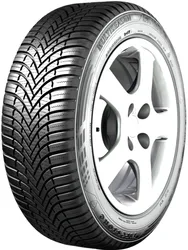
Firestone Multiseason 2
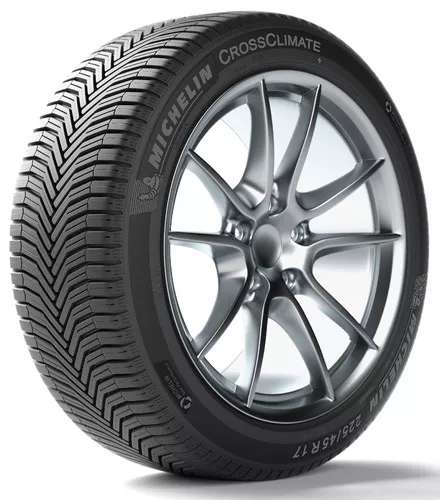
Michelin CrossClimate+
Firestone Multiseason 2
Michelin CrossClimate+
Firestone Multiseason 2
Michelin CrossClimate+
Firestone Multiseason 2
Michelin CrossClimate+
Firestone Multiseason 2
Michelin CrossClimate+Wet braking produced a surprising result in direct comparison: across one shared measured test, the Firestone and Michelin were essentially equal at 49.3 m and 49.7 m respectively — the Firestone marginally ahead by a fraction that falls within measurement variation. However, aquaplaning tells a very different story. The Firestone's aquaplaning score is consistently its weakest area, with curved aquaplaning in particular flagged as a significant limitation across multiple independent tests. Standing water in bends is where the Michelin's more capable compound and tread design create a meaningful gap. The Michelin also leads in wet handling overall, delivering more lateral confidence and progressive feedback on soaked surfaces. For drivers in frequently wet climates, this distinction matters considerably.
Firestone Multiseason 2
Michelin CrossClimate+
Firestone Multiseason 2
Michelin CrossClimate+In the one shared test where both were measured on the same day in the same size, the Michelin stopped from 100 km/h in 39.7 m on dry tarmac versus the Firestone's 41.2 m — a 1.5-metre gap that represents roughly half a car length. That difference reflects a broader pattern: independent testing has repeatedly flagged the Firestone for extended dry braking and a tendency toward understeer, particularly at the limit of adhesion. The Michelin, by contrast, earns consistent praise for its dry handling precision and sharp braking response, and was rated best in class for dry performance in multiple independent group tests. For everyday driving this matters less, but the Michelin's superior dry capability means a meaningful real-world safety advantage in sudden stop situations.
Firestone Multiseason 2
Michelin CrossClimate+
Firestone Multiseason 2
Michelin CrossClimate+
Firestone Multiseason 2
Michelin CrossClimate+
Firestone Multiseason 2
Michelin CrossClimate+Snow is where the Firestone Multiseason 2 makes its strongest case. Its snow traction and snow braking scores are genuinely impressive for a tyre at this price, and real-world testers have confirmed short stopping distances and good traction on fresh snow. The Michelin CrossClimate+ is no slouch in winter conditions — its snow acceleration scores are outstanding and it carries the 3PMSF rating — but interestingly, owner feedback highlights snow performance as a recurring criticism as the CrossClimate+ ages, with some users noting that grip on snow diminishes noticeably with wear. In early life, the Firestone's snow capability is competitive; the Michelin's broader winter balance is more consistent across varied cold-weather scenarios.
Firestone Multiseason 2
Michelin CrossClimate+
Firestone Multiseason 2
Michelin CrossClimate+The Michelin CrossClimate+ is the more refined daily companion. Owners repeatedly cite quietness as one of its standout qualities — mentioned across dozens of reviews — and comfort scores in independent testing place it ahead of the Firestone. The Firestone is not harsh, but it scores lower for both comfort and noise in independent assessments. The more decisive difference is mileage: the Michelin's longevity is exceptional by all-season standards, with mileage scores consistently near the top of the class. The Firestone delivers adequate durability for the price, but its tread life scores are more modest. For the total cost of ownership calculation, the Michelin's dramatically longer service life partially offsets its premium purchase price — though the Firestone's rolling resistance is genuinely competitive and fuel economy over its shorter lifespan is reasonable.
Firestone Multiseason 2
Michelin CrossClimate+
Firestone Multiseason 2
Michelin CrossClimate+If your budget allows it, the Michelin CrossClimate+ is the more complete, more durable, and more confident all-season choice — particularly for drivers who spend significant time on motorways, need reliable wet and dry performance year-round, and want a tyre that delivers consistent behaviour across its full lifespan. Owners with over 10,000 miles consistently rate it highly for its all-round reassurance. The Firestone Multiseason 2 earns its place as a solid budget all-season with genuinely strong snow credentials — if winter capability at a lower price is your primary concern and you're prepared to accept the compromises in dry stopping and aquaplaning, it represents reasonable value. Just be aware that aquaplaning reserves are a real-world limitation, not a minor footnote.
| Organization | Season | Year | Dimension | |
|---|---|---|---|---|
Autobild | All season | 2020 | 205/55 R16 | View |
Compare prices across all available dimensions for these tyres.
VS
VS
VS
VS
VS
VS
VS
VS
VS
VS
Firestone Multiseason 2 vs Michelin CrossClimate 2
Firestone Multiseason 2 vs Falken EuroALL Season AS210
Firestone Multiseason 2 vs Kumho HA32 Solus 4S
Firestone Multiseason 2 vs Goodyear Vector 4Seasons Gen-3
Michelin CrossClimate+ vs Continental AllSeasonContact
Michelin CrossClimate+ vs Goodyear Vector 4Seasons Gen-2
Michelin CrossClimate+ vs Hankook Kinergy 4S2 H750
Michelin CrossClimate+ vs Bridgestone Weather Control A005