18 shops · 56 ·847+ products

Comparison: Sailun Atrezzo ZSR 2 vs. Hankook Ventus Prime 4 (2026)

1 mutual test(s) with detailed data

Same score, opposite strengths: Sailun stops shorter in the wet, Hankook does everything else better.

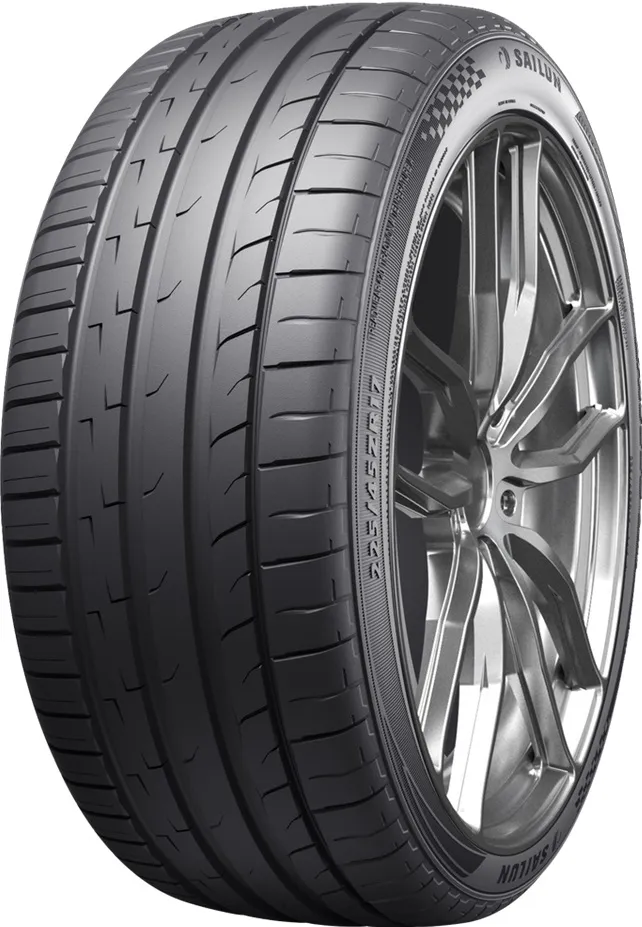
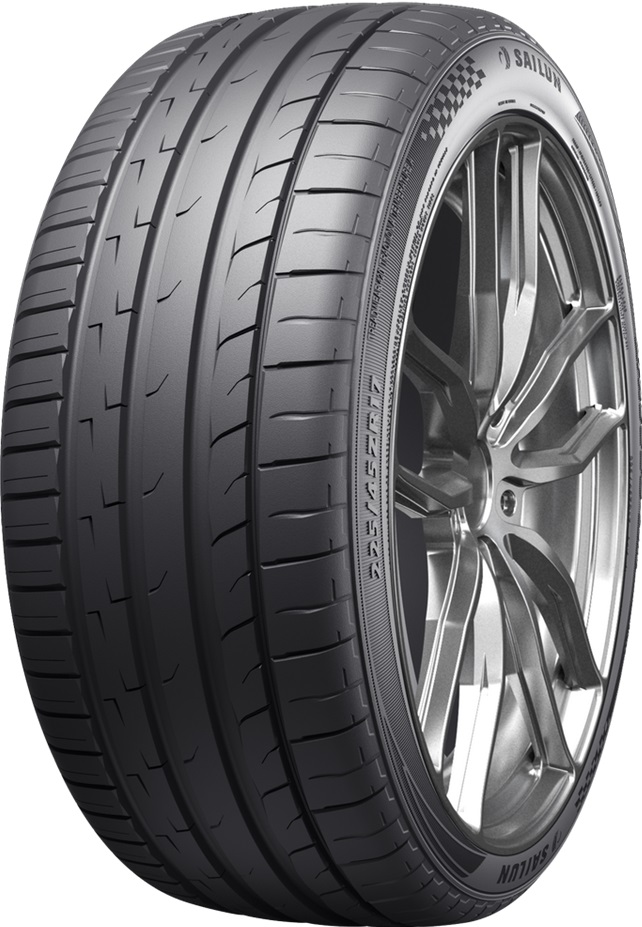
These two summer tyres share an identical overall rating of 76/100, yet they could hardly be more different in origin, intent or character. The Sailun Atrezzo ZSR 2 is a value-segment product from Sailun, a Chinese manufacturer that has steadily pushed into European markets by offering competitive grip figures at aggressively low price points. It carries 73 size variants spanning R16 to R21, targeting mainstream family car owners who want credible safety without paying premium prices. There is no predecessor to benchmark it against — the ZSR 2 establishes its own lineage rather than improving on a known quantity.

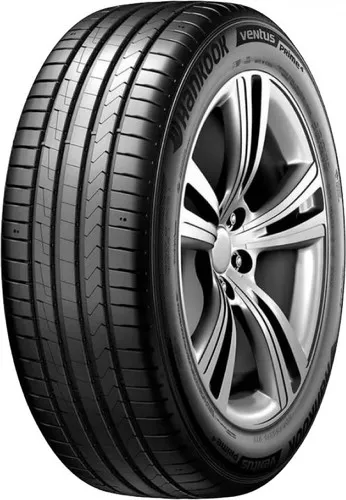
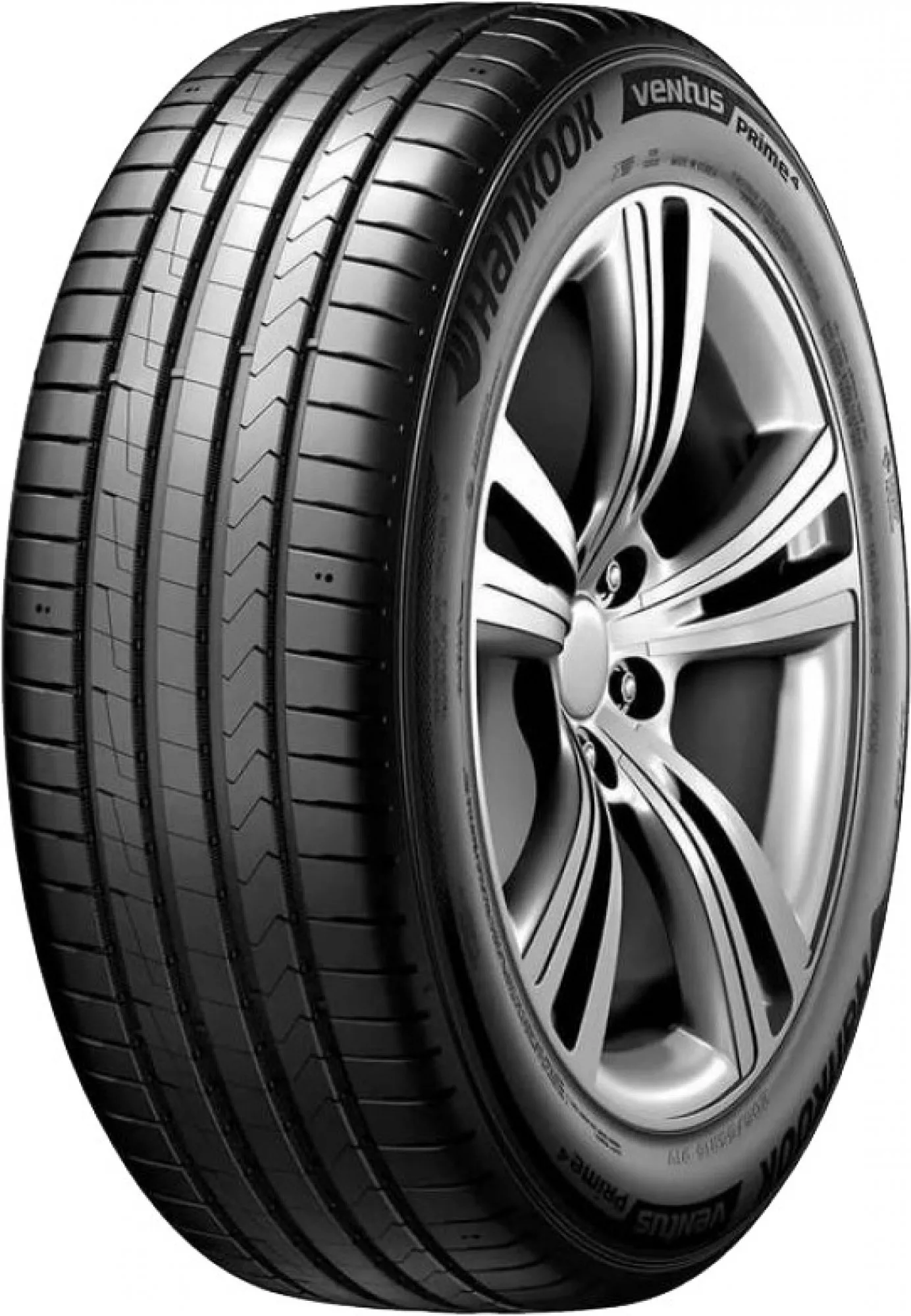
The Hankook Ventus Prime 4 is a very different proposition. Hankook is a South Korean brand with deep roots in European OEM supply and decades of test-winning pedigree, and the Ventus Prime 4 sits at the top of their everyday comfort-performance range — 97 sizes from R13 to R22 underscore just how broad its ambition is. It directly succeeds the well-regarded Hankook Ventus Prime3 K125, a tyre that established the Prime line as a genuinely premium choice for drivers who commute hard and want both refinement and safety margin. The Prime 4 was built to deepen those strengths.

The single biggest difference in character between them is this: the Sailun ZSR 2 is a wet-weather specialist wearing budget clothes, posting a remarkable wet-braking score of 94 — one of the highest in its class — while its dry-braking score of just 76 reveals a real compromise on the surface where most European driving actually happens. The Hankook, by contrast, is the balanced, mature all-rounder: its dry-braking score of 85.6 is genuinely strong, its comfort and noise performance lead by a wide margin, and it achieves all of this at a price that tests have repeatedly called outstanding value for a tyre of its calibre.

Sailun Atrezzo ZSR 2
Good for
Budget-conscious drivers prioritising wet-weather safety High-mileage commuters needing durable tread Drivers in wet or rainy climates Owners wanting maximum grip per pound spent
Not ideal for
Drivers who prioritise short dry stopping distances Those sensitive to road noise on long motorway runs Sporty drivers seeking confident dry-road handling Buyers wanting EU label transparency
Hankook Ventus Prime 4
Good for
Daily drivers wanting balanced all-round performance Comfort-focused motorway commuters Spirited drivers who value dry grip and handling Buyers seeking premium safety at accessible prices
Not ideal for
Extreme budget buyers with minimal spend Very high-mileage drivers prioritising tread longevity Drivers needing the absolute shortest wet braking

Test Profile

Sailun
Atrezzo ZSR 2
Hankook
Ventus Prime 4
Number of tests
3
15
Best position
#9
#2
Average position
10.7
6.1
Latest test
2025
2026
Available sizes
139
176

Performance comparison

Wet Performance
Confidence
Sailun Atrezzo ZSR 2
84%
Sailun
Atrezzo ZSR 2
Hankook Ventus Prime 4
90%
Hankook
Ventus Prime 4
Wet Braking
Sailun Atrezzo ZSR 2
94%
Hankook Ventus Prime 4
98%
Wet Handling
Sailun Atrezzo ZSR 2
98%
Hankook Ventus Prime 4
80%
Wet Circle Cornering
Sailun Atrezzo ZSR 2
81%
Hankook Ventus Prime 4
94%
Aquaplaning Longitudinal
Sailun Atrezzo ZSR 2
71%
Hankook Ventus Prime 4
86%
Aquaplaning Cross
Sailun Atrezzo ZSR 2
78%
Hankook Ventus Prime 4
94%

Wet performance is where the Sailun ZSR 2 stages its most dramatic reversal. Its wet-braking score of 94 is extraordinary for a budget tyre — significantly higher than the Hankook Ventus Prime 4's 81.1. Actual braking distances in metres are not available in the published data, but the 13-point score gap between these two tyres is substantial: on a 0–100 performance index, differences of this magnitude typically correspond to several metres of additional stopping distance from 80 km/h, which in a real emergency is the space that separates a near-miss from a collision. The Sailun's overall wet score of 86.2 also edges the Hankook's 81.4, confirming that wet grip — particularly under hard braking — is where Sailun has concentrated its engineering effort.

The story becomes more nuanced when aquaplaning enters the picture. Both tyres score almost identically here — Sailun at 74.5, Hankook at 74.4 — which means neither has a meaningful advantage when standing water threatens to float the tyre off the road surface. Where they diverge is in wet handling and cornering confidence. The Hankook's wet-handling score of 84.7 and wet-circle cornering of 86.2 indicate a tyre that stays composed and predictable through curves in the rain, which testers confirmed with praise for its gutes Nasshandling (good wet handling, scored 4.4 by AvD 2026). The Sailun's wet-handling objective and cornering data are not published, but the gap between its exceptional wet-braking (94) and its moderate aquaplaning (74.5) suggests a compound tuned for grip under deceleration rather than a rounded wet-weather tyre in the truest sense. Swedish testers at Aftonbladet also highlighted the Hankook's hydroplaning resistance and grip on wet roads as standout strengths, findings that align with its balanced wet sub-scores.

In heavy rain or repeated wet braking — the situations that matter most for safety — the Sailun's wet-braking edge is real and should not be dismissed. For a driver who regularly encounters wet conditions and brakes hard, this is a genuine safety advantage. However, the Hankook's superior wet-handling scores mean that a driver who needs to steer around an obstacle in the rain, rather than simply stop in a straight line, may find the Korean tyre more confidence-inspiring through the full sequence of avoid-and-brake. The Hankook also carries an EU wet grip label of A on 54% of its size range and B on a further 36% — concrete third-party confirmation of strong wet capability across most of its lineup, a transparency the Sailun (with no published EU label data) cannot currently match.

Dry Performance
Confidence
Sailun Atrezzo ZSR 2
86%
Sailun
Atrezzo ZSR 2
Hankook Ventus Prime 4
83%
Hankook
Ventus Prime 4
Dry Braking
Sailun Atrezzo ZSR 2
76%
Hankook Ventus Prime 4
83%
Dry Handling
Sailun Atrezzo ZSR 2
96%
Hankook Ventus Prime 4
82%

On dry tarmac, the Hankook Ventus Prime 4 holds a clear and meaningful advantage. Its dry-braking score of 85.6 outpaces the Sailun ZSR 2's 76 — a gap of nearly ten points that translates directly into shorter stopping distances from motorway speeds. In the one mutual test where both tyres were assessed — the ADAC 2024 evaluation in 215/55 R17 — the Hankook finished 8th out of 16 tyres while the Sailun trailed in 13th, a result consistent with the braking score gap. ADAC testers specifically highlighted the Hankook's gute Trockenleistung (good dry performance, scored 2.4 out of 5), and multiple test panels have noted its short dry stopping distances as a headline strength. The Sailun's dry-braking deficit is not a minor rounding error — it reflects a compound and tread design that has prioritised wet grip over ultimate dry retardation.

Beyond straight-line braking, the Hankook's dry-handling objective score of 97.5 is exceptional, placing it among the very best in timed lap and slalom evaluations. Its dry-handling score of 83.7 points to a tyre that feels precise and confidence-inspiring at real-road speeds — steering response is described by testers as neutral and safe, with none of the vagueness that can afflict budget products at the limit. The Sailun's overall dry score of 86 is actually slightly higher than the Hankook's aggregate of 83.8, but this apparent paradox is explained by the Sailun's stronger performance in certain handling sub-categories even as its braking lags. In practice, for a driver who brakes late for a roundabout or needs to haul the car down from 100 km/h in an emergency, the Hankook's ten-point braking advantage is the figure that matters — it can mean the difference of more than half a car length at speed.

High-speed stability is another area where the Hankook's premium positioning shows. AutoBild testers praised its dynamisches Fahrverhalten auf trockener Piste — dynamic behaviour on dry roads — and owner reports echo this. One Peugeot 206 driver who switched from Continental SportContact 2 reported the Ventus Prime 4 extended the handling limit by an estimated 20 km/h versus their previous tyres, with no tendency to understeer even under aggressive cornering. The Sailun, by comparison, lacks this depth of user and tester feedback on dry dynamics, and its dry-braking score suggests it is designed for competent everyday use rather than spirited driving.

Comfort & Noise
Confidence
Sailun Atrezzo ZSR 2
49%
Sailun
Atrezzo ZSR 2
Hankook Ventus Prime 4
93%
Hankook
Ventus Prime 4
Noise Exterior
Sailun Atrezzo ZSR 2
1%
Hankook Ventus Prime 4
88%
Noise Interior
Sailun Atrezzo ZSR 2
97%
Hankook Ventus Prime 4
97%

Ride comfort and cabin refinement are where the Hankook Ventus Prime 4 establishes its clearest, most consistent advantage. Its comfort score of 80 versus the Sailun's 65.6 is a gap of 14.4 points — not a marginal difference, but a character-defining one. In practice, this shows up as a noticeably smoother ride over broken urban surfaces, better absorption of expansion joints at motorway speeds, and a more planted, settled feel on imperfect B-roads. The noise picture tells a similar story: Hankook's noise score of 77.3 against the Sailun's 65 means the Hankook is appreciably quieter inside the cabin, with exterior pass-by noise also better managed (noise-exterior score 78, noise-interior 77 in objective testing). It is worth noting that in the Motor 2026 test the Hankook was flagged as the loudest tyre in that specific comparison at 75.5 dB — a reminder that across its broad size range, results can vary — but aggregate scores across multiple tests firmly place it ahead of the Sailun for refinement. User feedback reinforces this: owners across a range of vehicles, including a Honda Civic driver with 8,000 km of mixed driving, describe the Ventus Prime 4 as quiet and comfortable, reporting they would buy it again without hesitation.

On rolling resistance and fuel economy, the picture is mixed and worth reading carefully. The Hankook carries an EU fuel efficiency label of C on 52% of sizes and B on 28%, with a performance score of 75 — adequate but not class-leading. Aftonbladet noted high rolling resistance as a weakness, and ADAC's environmental score of 2.5 was merely decent. The Sailun has no published EU label or rolling resistance score, which makes a direct comparison impossible, but its mileage score of 89 is significantly higher than the Hankook's 74.2 — suggesting the Sailun's compound wears more slowly over its service life, which has real cost implications. If the Sailun lasts 20% longer on the tread before needing replacement, that partially offsets its lower purchase-to-premium positioning and any slight fuel disadvantage.

On price and value, the Hankook punches well above its weight for a premium-branded tyre, a point made explicitly by AutoBild: niedriges Preisniveau, sehr gutes Preis-Leistungs-Verhältnis — low price level, very good value for money. The Sailun, being a budget product, will be cheaper still at point of sale. Over the full life of a set, however, the Sailun's superior mileage score narrows the total cost-of-ownership gap considerably, and its strong wet braking means it is not simply a false economy. For a driver who covers high annual mileage and prioritises longevity above all else, the Sailun's tread durability is a genuine selling point. For a driver who values a quiet, refined cabin and is willing to pay a modest premium for it, the Hankook is the more rewarding daily companion by a considerable margin.
Economy
Confidence
Sailun Atrezzo ZSR 2
89%
Sailun
Atrezzo ZSR 2
Hankook Ventus Prime 4
84%
Hankook
Ventus Prime 4
Mileage
Sailun Atrezzo ZSR 2
89%
Hankook Ventus Prime 4
84%

Performance spider chart

Verdict

Both tyres land at 76/100 overall, but they earn that score through fundamentally different strengths — and choosing between them correctly depends entirely on understanding those differences. The Hankook Ventus Prime 4 is the safer, more complete choice for the vast majority of European drivers. Its dry-braking score of 85.6, strong handling on both surfaces, superior comfort and noise refinement, and broad EU A/B wet grip labelling combine to make it genuinely excellent at everything a daily driver demands. It is a tyre that disappears beneath you in the best possible way — quiet, planted, predictable — and the fact that it achieves this at a competitive price makes it one of the best-value options in the premium segment. The single ADAC 2024 head-to-head, where it finished 8th versus the Sailun's 13th, confirms the gap in overall test competence.

The Sailun Atrezzo ZSR 2 is a more specific recommendation, but a justified one in the right context. Its wet-braking score of 94 is its headline achievement and it is a real one — a driver in a wet-climate region such as the UK, northern Germany or Scandinavia who commutes mainly in autumn and winter conditions will find that the Sailun's stopping power on a wet road is genuinely class-leading for its price tier. Its mileage score of 89 also makes it a durable proposition for high-mileage drivers watching the total cost of ownership. The trade-off is stark, however: its dry-braking score of 76 is meaningfully below average, and its comfort and noise scores of 65.6 and 65 respectively mean long motorway journeys in the Sailun will be noticeably less refined than in the Hankook. These are not paper numbers — they translate directly into fatigue on longer drives.

The verdict, then: if you drive a mainstream family car in a mixed climate and want one tyre that does everything well — brakes short in the dry, handles confidently in the wet, rides smoothly and stays quiet — the Hankook Ventus Prime 4 is the right answer, and the premium over the Sailun is money well spent. If your priority is maximum wet-braking safety on a tight budget, or you cover very high mileage and need a long-lasting compound, the Sailun ZSR 2 delivers real value in those specific dimensions and should not be dismissed as merely a false economy. Just go in with clear eyes about what you are trading away in dry stopping performance and daily comfort.

Tests used in comparison

OrganizationSeasonYearDimension
ADACADAC
Summer
2024215/55 R17View

Dimensions and prices

Compare prices across all available dimensions for these tyres.

View general comparison

Add to comparison

Popular brands
New comparison

TheTireLab.com

GET

TheTireLab.com

Compare tyres, read test results and find the best prices — all in one app.