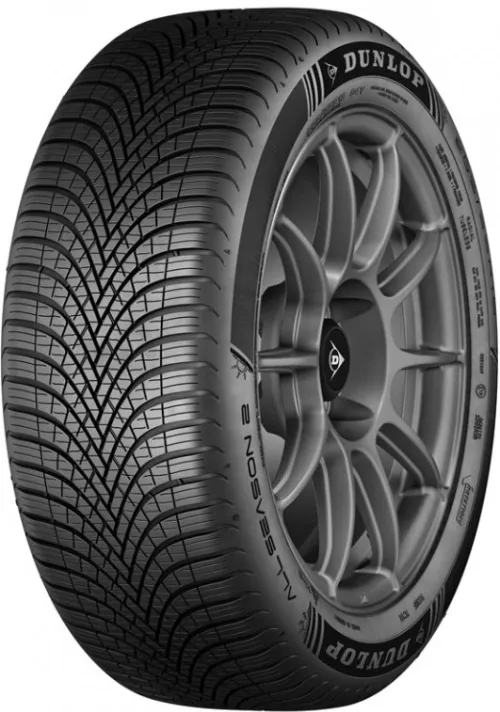
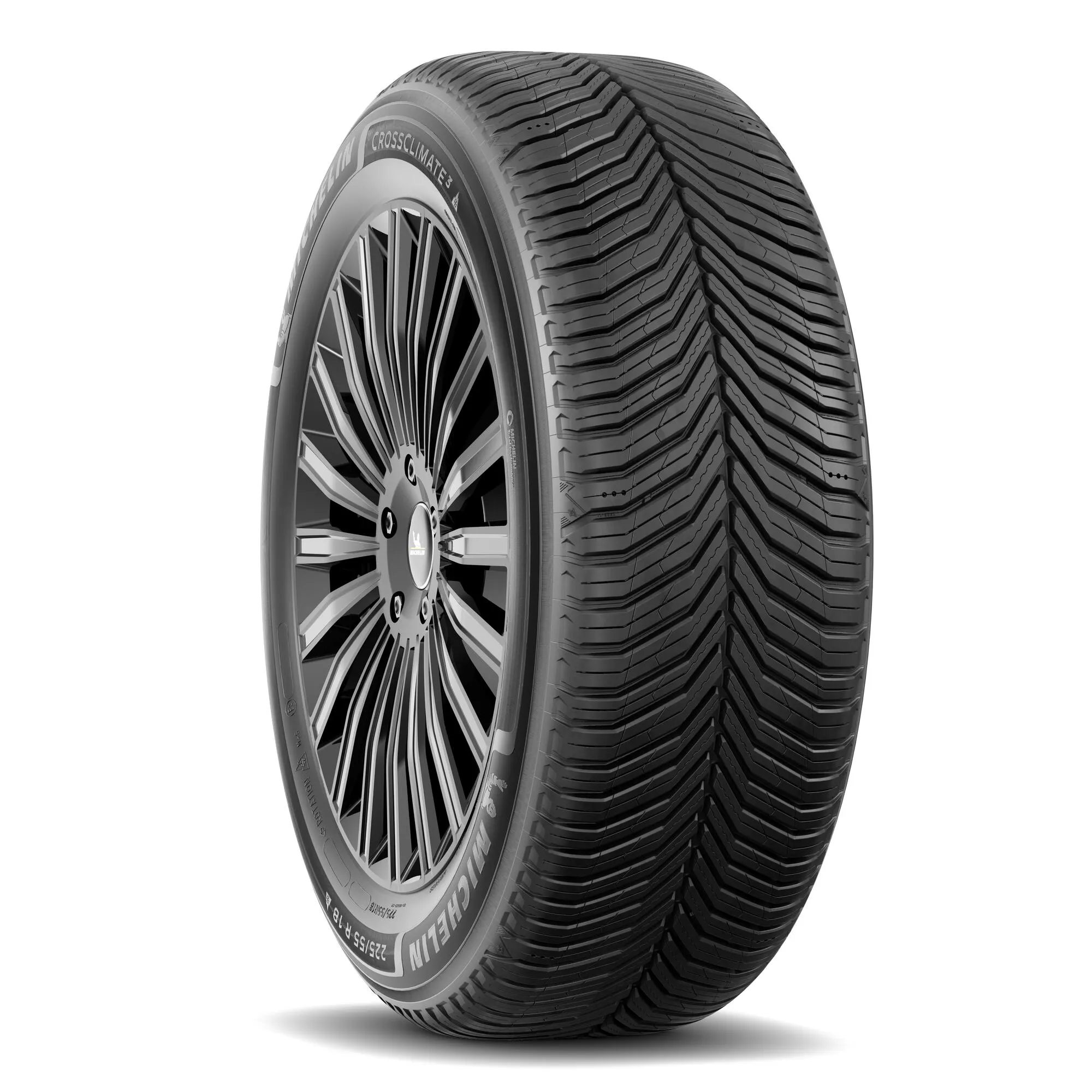
Michelin's near-winter-tyre snow security versus Dunlop's mileage, comfort and value leadership.
Both of these are premium all-season tyres from major manufacturers, but the family resemblance stops there. The Michelin CrossClimate 3 is Michelin's flagship attempt to make the all-season compromise disappear entirely — its scores lean hard into snow security and tread life, and Michelin's own marketing pitches it as an "all season multi-tasker" built to keep you confident whatever the weather. The Dunlop All Season 2, made by a brand now under the Goodyear group umbrella, takes a different route: it prioritises comfort, low noise, rolling resistance and — above all — mileage and running cost, at the expense of outright grip.
Neither tyre has a listed predecessor in this data, so both are being judged as standalone propositions rather than as the latest step in a known lineage. That makes the character gap between them even more interesting: our own overall ratings put the Dunlop marginally ahead at 70/100 versus the Michelin's 69/100, yet in every mutual test the two have actually shared, the CrossClimate 3 came out on top. That tension — a slightly higher overall score for the Dunlop against a clean head-to-head sweep for the Michelin — is the story of this comparison, and it comes down to what each tyre is actually being scored for.
The single biggest difference in character is winter capability. Michelin's testers describe the CrossClimate 3 as a "Schneekönig" — a snow king that can hang with dedicated winter tyres — while the Dunlop, though not without snow ability of its own, is built and marketed more around long-distance value than winter-grade security. Everything else in this comparison flows from that fundamental split in priorities, from Michelin's premium, safety-first pitch to Dunlop's cost-conscious, comfort-oriented one.
CrossClimate 3
All Season 2


Michelin CrossClimate 3
Dunlop All Season 2
Michelin CrossClimate 3
Dunlop All Season 2
Michelin CrossClimate 3
Dunlop All Season 2
Michelin CrossClimate 3
Dunlop All Season 2
Michelin CrossClimate 3
Dunlop All Season 2Wet braking is where the picture gets genuinely close: in the same shared Autobild test, the CrossClimate 3 stopped from wet-braking speed in 49.0m against the Dunlop's 49.2m — a 0.2m gap across the one test where both were measured side by side, which is functionally a dead heat. That's notable because Michelin's official material claims the CrossClimate 3's V-shape tread sculpture improves wet braking distance by 4%, yet against this particular rival the advantage simply isn't there in the numbers.
Zoom out to the broader scores and the story flips: Dunlop actually posts a higher aggregate wet score (73.5 vs Michelin's 67), backed by a strong wet-handling figure of 83.3 in its detailed test averages and an aquaplaning score of 70 that edges out Michelin's 69. That's a genuinely surprising result for a tyre otherwise built around efficiency and mileage, and it's backed by the EU label paradox in this pairing — Michelin actually carries the better official wet-grip class (B across its entire 87-size range versus Dunlop's mostly C-rated 67 sizes), even though the Dunlop scores better in aggregated wet-handling testing.
The catch is consistency. Testers have flagged wet weaknesses on both sides: Autobild's 2025 verdict on the Michelin notes it's "etwas schwächer bei Nässe" (a bit weaker in the wet), while both ADAC 2026 and Autobild 2025 dinged the Dunlop specifically for dry and aquaplaning shortfalls in that test's context, and Autobild 2024 separately noted "verlängerte Nassbremswege" (extended wet braking distances) on the Dunlop. In practice, neither tyre is a wet-weather specialist — the Michelin holds the better label and near-identical braking, the Dunlop holds better handling composure and cornering confidence, and heavy-rain aquaplaning resistance is a genuine weak point flagged on both.
Michelin CrossClimate 3
Dunlop All Season 2
Michelin CrossClimate 3
Dunlop All Season 2In the one Autobild braking-specific test where both tyres were measured on the same tarmac in the same 225/40 R18 size, the CrossClimate 3 stopped in 40.4m against the Dunlop's 42.5m — a 2.1m gap across a single measured braking test, which in real terms is roughly half a car length of extra distance the Dunlop needs to shed the same speed. That single data point lines up with the broader performance scores: Michelin's dry-braking score sits at 73 against Dunlop's 57, and the overall dry score gap (72 vs 66.2) tells the same story from a different angle.
The reason isn't really about compound choice — it's about priorities baked into the tread design. Dunlop's own detailed scores show a respectable dry-handling figure of 75.3, which suggests the All Season 2 is actually reasonably composed and predictable when you're steering it, just not as quick to scrub off speed in a straight line. That's consistent with a tyre engineered around rolling resistance and tread longevity, where a harder, more efficiency-focused compound trades ultimate contact-patch grip for mileage. The CrossClimate 3, by contrast, is tuned to deliver "competent dry handling and braking" — Michelin's own words — without sacrificing the winter performance that's clearly its priority, which is a harder engineering trick to pull off.
This dry advantage shows up directly in the two tyres' only mutual test results: the Michelin finished 11th of 30 in the dedicated braking test versus the Dunlop's 15th, and in a separate 15-tyre Autobild test the CrossClimate 3 placed 7th with a "dobré" (good) verdict against the Dunlop's 12th and merely "uspokojivé" (satisfactory) rating. Two mutual tests, two wins for Michelin — dry performance is where that advantage is most visible.
Michelin CrossClimate 3
Dunlop All Season 2
Michelin CrossClimate 3
Dunlop All Season 2
Michelin CrossClimate 3
Dunlop All Season 2
Michelin CrossClimate 3
Dunlop All Season 2Snow is where this comparison stops being close. Michelin's snow score of 93.3 is extraordinary for an all-season tyre — high enough that Autobild's testers directly compared it to dedicated winter rubber and found it competitive, which is precisely the headline Michelin built its marketing around. The Dunlop's snow score of 80.9 (or 90.5 on its own detailed test average, using a different scoring basis) is genuinely solid for the category, but the 12-point-plus gap on the comparable scale is the largest single performance difference between these two tyres anywhere in the data.
The real-world detail backs this up. ADAC's 2026 testing confirms the Dunlop "can perform well on snow," but Autobild's 2024 test flagged "mäßige Seitenführung auf Schnee" — moderate lateral grip on snow — meaning the All Season 2 can move forward and brake reasonably in the white stuff but loses composure when cornering loads build. The CrossClimate 3 doesn't have that caveat attached anywhere in the tester feedback; its snow story is consistently framed as near-winter-tyre capability, not just adequate all-season coverage.
For anyone who genuinely drives through proper winters — mountain roads, regular snowfall, black ice mornings — this is the deciding factor of the whole comparison, and it points firmly at the Michelin regardless of what the other categories show.
Michelin CrossClimate 3
Dunlop All Season 2
Michelin CrossClimate 3
Dunlop All Season 2Flip the priorities around and the Dunlop starts winning convincingly. Its comfort score of 79 beats the Michelin's 75, but the real gap is in noise: 86.2 for the Dunlop against 75 for the Michelin, an 11-point difference that translates into a noticeably quieter cabin on the Dunlop over a long motorway stint. Rolling resistance follows the same pattern (88.3 vs 84), meaning the All Season 2 is the more relaxed, hushed, efficient tyre to actually live with day to day.
Running costs is where Dunlop's positioning really pays off. Its mileage score is a perfect 100, backed by an 89.7 average across detailed tests and Autobild verdicts calling it a "Langlauf-Champion" — a long-distance champion — with the "beste Kilometerlaufleistung im Test" (best mileage in the test) and top marks in the cost chapter in both 2024 and 2025 testing. Its price-value-ratio average score of 94 is the single highest number anywhere in this data set. Michelin's mileage score of 92 is genuinely strong and its own expert summary leans on "outstanding mileage and long tyre life" too — but Michelin's own listed key weakness is blunt: it's "the highest cost per kilometre among premium all-seasons." So even though both tyres are built for longevity, the Dunlop is the one that actually delivers the lower total cost of ownership.
Real-world voice adds colour here, though it's lopsided. The CrossClimate 3 has 1,189 owner reviews averaging 4.8/5, with 86% five-star ratings and repeated mentions of better fuel economy, confident wet grip, and smooth ride quality from owners who switched from worn summer tyres. The Dunlop, by contrast, has essentially no owner review data yet — just a single placeholder entry noting people are searching for information but haven't reviewed it. That's not a mark against the tyre's engineering, but it does mean buyers are relying entirely on lab and magazine testing rather than accumulated owner experience when choosing the All Season 2.
Michelin CrossClimate 3
Dunlop All Season 2
Michelin CrossClimate 3
Dunlop All Season 2
Michelin CrossClimate 3
Dunlop All Season 2This is a genuine either/or choice depending on what you actually drive through. If you live somewhere with real winters — regular snow, icy mornings, mountain passes — the Michelin CrossClimate 3 is the clear pick. A snow score of 93.3 that testers compare to dedicated winter tyres, combined with a clean 2-0 sweep of every mutual head-to-head test against the Dunlop, means it's the safer, more capable tyre when conditions turn genuinely hostile, and its strong mileage score means you're not sacrificing much longevity to get there. You will pay more per kilometre for that security, and Michelin's own data admits the wet performance isn't class-leading — but for varied, unpredictable, four-season driving, it's the more complete tyre.
If your winters are mild, your priority is comfort and low running costs, and you rack up serious annual mileage, the Dunlop All Season 2 makes a strong counter-argument. It's quieter, more comfortable, more fuel-efficient, and its mileage and price-value scores are the best numbers in this entire comparison — genuine "Langlauf-Champion" territory. Its dry braking and handling trail the Michelin by a meaningful margin, and its snow ability, while real, comes with a noted weakness in cornering grip on snow, so it's not the tyre for anyone facing serious winter conditions.
Put simply: buy the Michelin if snow security and all-weather completeness matter more than the invoice; buy the Dunlop if you want the lowest cost per kilometre, a quieter cabin, and your winters rarely get serious. There's no wrong answer here, just two very different definitions of what an "all-season" tyre should prioritise.
| Organization | Season | Year | Dimension | |
|---|---|---|---|---|
Autobild | All season | 2025 | 225/40 R18 | View |
Compare prices across all available dimensions for these tyres.
VS
VS
VS
VS
VS
VS
VS
VS
VS
VS
Michelin CrossClimate 3 vs GoodYear Vector 4Seasons Gen-3
Michelin CrossClimate 3 vs Continental AllSeasonContact 2
Michelin CrossClimate 3 vs Michelin CrossClimate 2
Michelin CrossClimate 3 vs Pirelli Cinturato All Season SF3
Dunlop All Season 2 vs GoodYear Vector 4Seasons Gen-3
Dunlop All Season 2 vs Pirelli Cinturato All Season SF2
Dunlop All Season 2 vs Hankook Kinergy 4S2 H750
Dunlop All Season 2 vs Continental AllSeasonContact 2