18 shops · 56 ·847+ products

Comparison: Michelin CrossClimate 3 Sport vs. Bridgestone Turanza All Season 6 (2026)

2 mutual test(s) with detailed data

Bridgestone masters wet-road touring; Michelin trades comfort and cost for sharper responses and stronger snow traction.

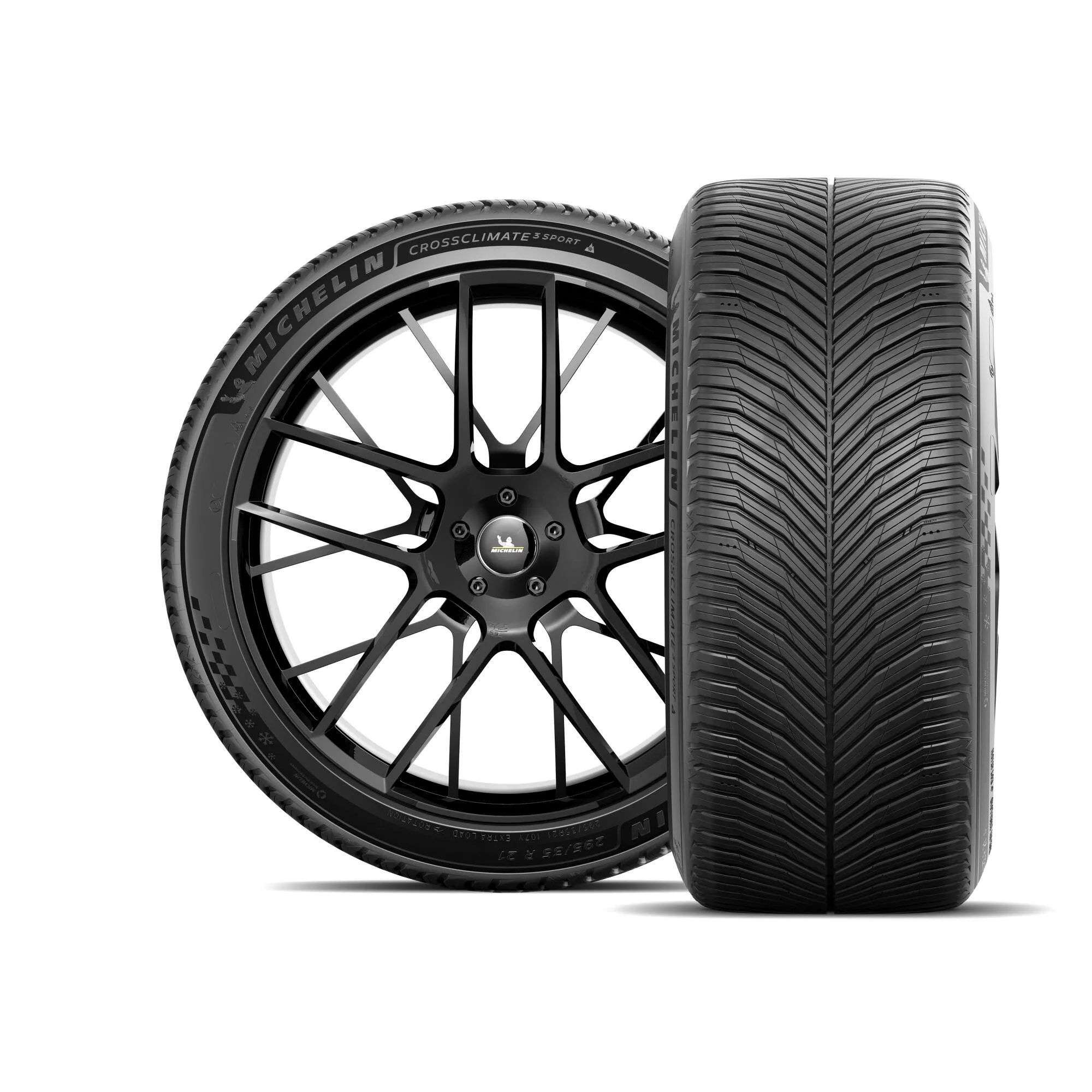
The Michelin CrossClimate 3 Sport is the performance-focused member of Michelin’s all-season family: a premium, 3PMSF-certified tyre for powerful cars, EVs and drivers who still care about steering precision. Its R18–R23 range reinforces that positioning, as does its original-equipment role on the Alpine A390. Michelin describes it as delivering sport-tyre responses in dry, wet and snow, using Thermal Adaptive Tread Compound 2.0 to remain effective across temperatures and Dynamic Response Technology to transmit steering inputs accurately. The evidence largely supports that promise: dry performance scores 88.5/100, snow 87.5 and snow traction 96, while its overall rating is 87/100.

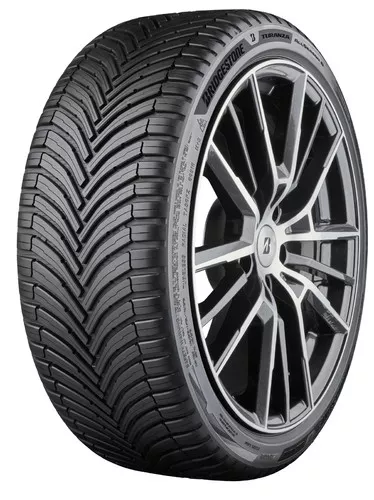
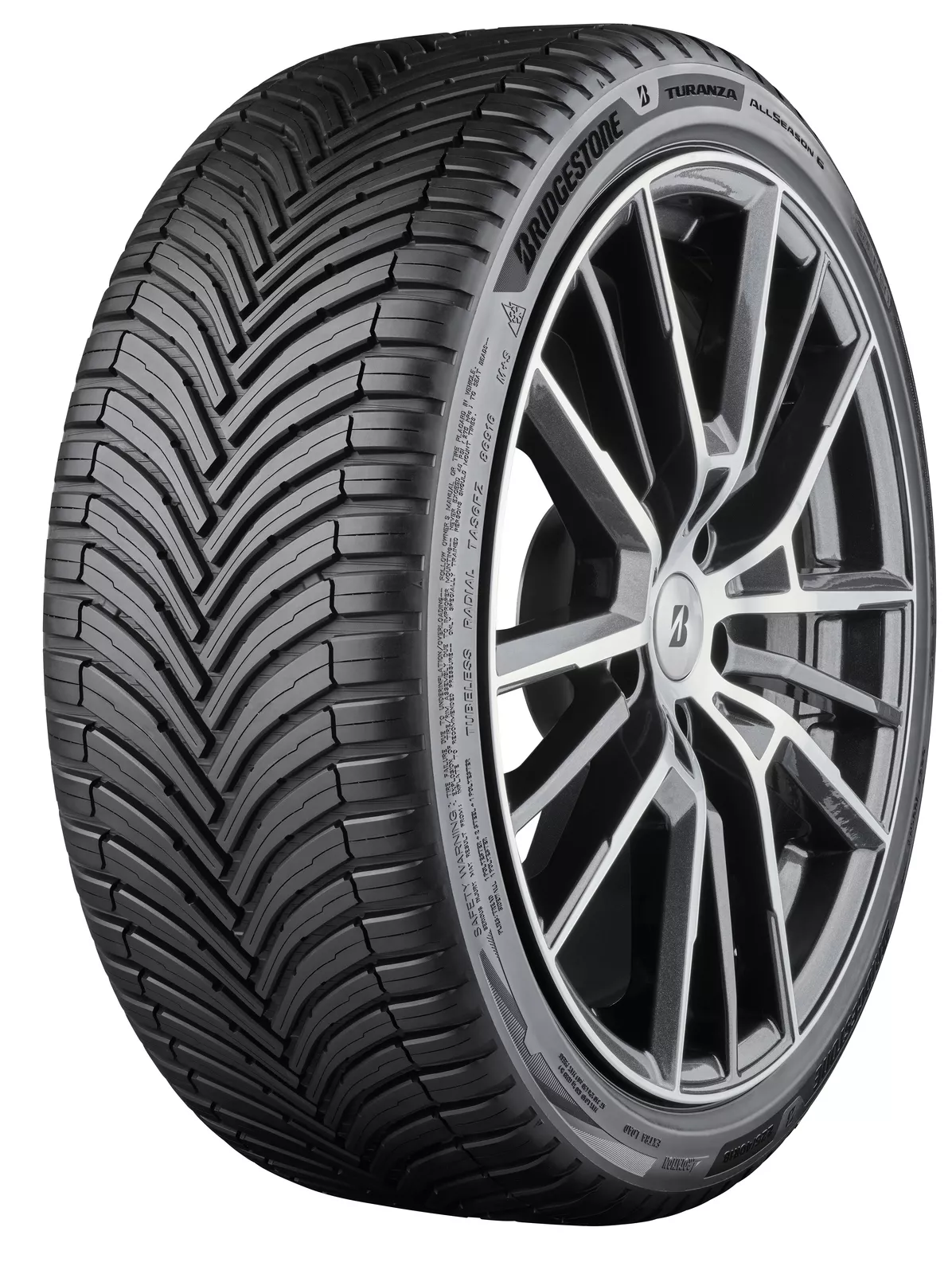
The Bridgestone Turanza All Season 6 takes a broader touring approach. Available in 104 sizes from R16 to R21, it covers far more ordinary family cars, crossovers and executive vehicles. Bridgestone positions it as a premium European-developed touring tyre for conventional cars and EVs, particularly in milder climates where drivers want one dependable set year-round. Its Enliten construction targets safety, durability and sustainability, while selected DriveGuard versions can continue for up to 80km at 80km/h following a puncture. Bridgestone also claims 20% better tread life than the previous generation, although no named predecessor is supplied.

The defining difference is character. Michelin makes the all-season format feel athletic and winter-capable, but asks more in purchase and per-kilometre cost. Bridgestone is the calmer, quieter and more durable all-rounder, with stronger measured wet credentials and broader fitment coverage, though it gives away snow authority and rolling efficiency.

Michelin CrossClimate 3 Sport
Good for
Spirited drivers wanting year-round precision Powerful cars and performance EVs Cold regions with regular snow Drivers prioritising low rolling resistance
Not ideal for
Comfort-first luxury-car drivers Budget-focused high-mileage motorists Drivers sensitive to road noise
Bridgestone Turanza All Season 6
Good for
High-mileage family and company cars Rain-heavy mild climates Motorway drivers prioritising refinement Owners seeking strong lifetime value
Not ideal for
Regular severe-snow users Drivers maximising energy efficiency Hard driving on tight wet roads

Test Profile

Michelin
CrossClimate 3 Sport
Bridgestone
Turanza All Season 6
Number of tests
3
27
Best position
#2
#1
Average position
3.7
3.1
Latest test
2026
2026
Available sizes
63
141

Performance comparison

Averaged from 2 tests

Wet Performance
Confidence
Michelin CrossClimate 3 Sport
84%
Michelin
CrossClimate 3 Sport
Bridgestone Turanza All Season 6
87%
Bridgestone
Turanza All Season 6
Wet Braking
Michelin CrossClimate 3 Sport
89%
Bridgestone Turanza All Season 6
89%
Wet Handling
Michelin CrossClimate 3 Sport
88%
Bridgestone Turanza All Season 6
84%
Wet Circle Cornering
Michelin CrossClimate 3 Sport
86%
Bridgestone Turanza All Season 6
87%
Aquaplaning Longitudinal
Michelin CrossClimate 3 Sport
82%
Bridgestone Turanza All Season 6
93%
Aquaplaning Cross
Michelin CrossClimate 3 Sport
75%
Bridgestone Turanza All Season 6
82%

Across the single shared measured wet-braking test, Michelin averages 47.3m against Bridgestone’s 45.0m. Bridgestone therefore stops 2.3m sooner—approximately half a car length—which is a much more consequential margin than the dry result. The absolute distances should not be mixed with results from different protocols, but additional evidence confirms that conditions matter: Michelin recorded 30.5m in another test, while Bridgestone has recorded both 31.2m and 37.7m. Overall scores still favour Bridgestone, with 90.3 for wet braking and 86.6 for total wet performance, versus Michelin’s 87.5 and 81.8.

Bridgestone also has the stronger aquaplaning profile. Its total aquaplaning score is 83.1 against Michelin’s 78.5, and its longitudinal detail score is 86.1 versus 82. Bridgestone has repeatedly shown good lateral resistance and substantial safety reserves in standing water. On a flooded motorway or a rain-filled wheel track, that translates into a calmer steering wheel and a higher threshold before the tread loses contact. Its 90.3 objective wet-handling score and 87.6 wet-circle score support confident, neutral cornering on cool wet asphalt.

Michelin remains a capable rain tyre, reflected by its predominantly A EU wet-grip labelling versus Bridgestone’s B rating, but the shared braking result and broader wet scores favour Bridgestone. Michelin’s cross-aquaplaning score of 75 is a particular reason to moderate speed in deep water. Bridgestone is not invulnerable: it has felt overloaded in tight wet curves, and one owner reported all four tyres slipping on a wet roundabout after 9,500 miles. That isolated experience argues for monitoring wear and pressures, but does not overturn the larger body of evidence. In sustained heavy rain, Bridgestone supplies the greater reserve; Michelin feels responsive yet demands slightly more caution near the limit.

Dry Performance
Confidence
Michelin CrossClimate 3 Sport
94%
Michelin
CrossClimate 3 Sport
Bridgestone Turanza All Season 6
94%
Bridgestone
Turanza All Season 6
Dry Braking
Michelin CrossClimate 3 Sport
93%
Bridgestone Turanza All Season 6
94%
Dry Handling
Michelin CrossClimate 3 Sport
94%
Bridgestone Turanza All Season 6
93%

Across the one shared test containing measured dry braking, the Michelin averages 38.8m and the Bridgestone 38.1m. That 0.7m advantage is roughly one-sixth of a car length, so it is meaningful without being transformative: at the point the Bridgestone has stopped, the Michelin would still be moving. This result agrees with Bridgestone’s reputation for short dry stops, including a separate 37.7m result, but the wider evidence is less one-sided. Michelin’s dry-braking score is 91.5 against Bridgestone’s 89.3, while some Bridgestone testing produced 38.98m versus a field-best 33.6m. Neither tyre is universally dominant under every test condition.

Michelin’s real dry advantage is subjective precision rather than the shared-test stopping distance. Its 85.5 dry-handling detail score and 88.5 overall dry score accompany repeated evidence of outstanding all-weather dynamics. The reinforced communication promised by Dynamic Response Technology should be most apparent during quick lane changes, fast motorway curves and progressive corner entry: the tyre is designed to turn steering input into an immediate, predictable response. That makes it the more natural choice for a performance car whose driver does not want an all-season tyre to feel soft or detached.

Bridgestone is hardly a dull touring tyre. Its objective dry-handling score reaches 97.7, dry safety 87.5 and overall dry performance 88.4, essentially level with Michelin. Owners reinforce that picture: one driver reported no dry wheelspin from a 215hp Audi A3 over 6,000 miles, while another described near-summer-tyre dry behaviour on a Suzuki Vitara. It feels secure and agile at road speeds, but its winter-capable compound can reach its limit earlier under severe heat or repeated hard inputs. Michelin has the sharper sporting identity; Bridgestone counters with excellent stability, accessible grip and the shorter shared-test stop.

Snow Performance
Confidence
Michelin CrossClimate 3 Sport
87%
Michelin
CrossClimate 3 Sport
Bridgestone Turanza All Season 6
72%
Bridgestone
Turanza All Season 6
Snow Braking
Michelin CrossClimate 3 Sport
90%
Bridgestone Turanza All Season 6
78%
Snow Traction
Michelin CrossClimate 3 Sport
93%
Bridgestone Turanza All Season 6
73%
Snow Handling
Michelin CrossClimate 3 Sport
81%
Bridgestone Turanza All Season 6
75%
Snow Circle Cornering
Michelin CrossClimate 3 Sport
84%
Bridgestone Turanza All Season 6
61%

Michelin is the more convincing severe-weather tyre. It is explicitly 3PMSF and M+S marked, complies with applicable winter-equipment rules, and combines an 87.5 snow score with a class-leading 96 for snow traction. One measured test produced the highest traction force at 2,323N. That extra ability is felt most when pulling away uphill, accelerating from a snowy junction or asking the tyre to regain momentum after slowing: its adaptable compound and tread can generate forward bite without relying as heavily on electronic traction control.

Michelin’s measured snow-braking distance was 28.3m and its snow-braking detail score was 83, so traction is more exceptional than stopping performance. Nevertheless, its 89.5 snow-handling score points to predictable balance on packed snow, where progressive breakaway and the ability to steer while managing throttle matter as much as a single straight-line number. Its strong winter behaviour is especially valuable on a powerful front-wheel-drive car or heavy EV, where torque and mass expose weak all-season designs.

Bridgestone’s snow score is lower at 81.4, and its snow-handling result has fallen as low as 69 points in one assessment, although the aggregated objective snow-handling score is a healthier 85.7. It can manage intermittent snowfall and suits the mild-winter use envisaged by its maker, but repeatedly appears slightly weaker than the leading all-season tyres on snow. With no directly comparable snow-braking distance provided, a numerical stopping claim would be unjustified. For regularly cleared urban roads it remains credible; for frequent alpine journeys, steep untreated roads or sustained packed snow, Michelin provides the clearer safety and control advantage. Neither replaces a dedicated winter tyre in truly extreme conditions.

Comfort & Noise
Confidence
Michelin CrossClimate 3 Sport
76%
Michelin
CrossClimate 3 Sport
Bridgestone Turanza All Season 6
79%
Bridgestone
Turanza All Season 6
Noise Exterior
Michelin CrossClimate 3 Sport
82%
Bridgestone Turanza All Season 6
80%
Ride Comfort
Michelin CrossClimate 3 Sport
69%
Bridgestone Turanza All Season 6
78%

Bridgestone is the refinement winner. It scores 81.4 for comfort and 85 for noise, versus Michelin’s 73.9 and 73.7. It also achieved the lowest measured noise in one comparison and has been rated the best-riding candidate elsewhere. In everyday terms, Bridgestone rounds off expansion joints more gently and creates less background fatigue on long journeys. Some assessments still noted minor comfort and noise compromises, and one owner found it noisier than a summer tyre, but relative to Michelin it is consistently the more polished touring product.

Michelin’s firmer, more audible manner is the price of its immediate responses. Its measured comfort and interior-noise scores of 73 and 72 fit an owner’s report that it was excellent in the wet but noisy on certain surfaces after 6,500 miles. Michelin’s 566-review official rating of 4.8/5 is reassuring, including positive feedback from a Ford Focus ST owner facing rapidly changing Peak District weather, but these reviews are still early-life evidence. Drivers moving from a stiff ultra-high-performance summer tyre may find it acceptable; those expecting luxury-car isolation should prefer Bridgestone.

Running costs reverse part of that advantage. Michelin’s rolling-resistance score is an exceptional 96, backed by the lowest measured result of 7.71kg/t, whereas Bridgestone scores 68 and recorded a field-high 9.05kg/t. Michelin therefore asks less energy from an engine or battery and carries mostly B EU fuel labels, with 21% of sizes rated C. Bridgestone is predominantly C-rated, with 13% D and only 13% B, so it is likely to consume modestly more fuel or electricity.

Longevity, however, strongly favours Bridgestone: its mileage score is 78.5 against Michelin’s 51, and Bridgestone claims 20% improved tread life over its prior generation. Both are premium-priced, but Michelin was recorded as having the highest cost per driven kilometre in one comparison. Bridgestone has also been the cheapest tyre among candidates rated good or exemplary, making it the stronger whole-life value proposition despite higher rolling resistance. Michelin earns back something through efficiency and premium performance, but high-mileage drivers should expect Bridgestone’s longer wear to outweigh a small energy saving.

Economy
Confidence
Michelin CrossClimate 3 Sport
66%
Michelin
CrossClimate 3 Sport
Bridgestone Turanza All Season 6
74%
Bridgestone
Turanza All Season 6
Rolling Resistance
Michelin CrossClimate 3 Sport
96%
Bridgestone Turanza All Season 6
70%
Fuel Efficiency
Michelin CrossClimate 3 Sport
51%
Bridgestone Turanza All Season 6
78%
Mileage
Michelin CrossClimate 3 Sport
51%
Bridgestone Turanza All Season 6
75%

Performance spider chart

Tread pattern comparison

Michelin CrossClimate 3 Sport
Bridgestone Turanza All Season 6
Drag to compare · Scroll to zoom · Double-click for 2×

Verdict

Bridgestone wins this comparison for most drivers. It holds the higher overall rating, 92/100 versus 87/100, stops 2.3m sooner in the shared wet test, resists aquaplaning better, rides more quietly and carries a substantially stronger mileage score. Its 104-size R16–R21 range also makes it relevant to more vehicles. For motorway commuters, family crossovers, company cars and urban EVs in mild or rain-heavy climates, it offers the best blend of safety, refinement and lifetime value. Its dry handling is more capable than the touring label suggests, although drivers should respect its limits in tight wet bends and on snow.

Choose Michelin when performance feel or winter use genuinely matters more than comfort and cost. It is the superior fit for fast cars, powerful EVs and enthusiastic drivers who want crisp steering throughout the year, especially where journeys regularly include cold upland roads or packed snow. Its 2,323N snow-traction result, 96 traction score and 89.5 snow-handling score distinguish it clearly, while exceptionally low rolling resistance benefits fuel economy and electric range.

The recommendation therefore depends on the hardest conditions the tyre will face. Bridgestone is the decisive all-round purchase: quieter, longer-lived and more reassuring in heavy rain. Michelin is the specialist choice hidden inside an all-season category, sacrificing refinement and cost per kilometre to deliver sharper responses and stronger winter mobility. If snow is occasional and annual mileage is high, buy Bridgestone. If snow is routine or preserving a performance car’s character is non-negotiable, Michelin justifies its premium.

Tests used in comparison

OrganizationSeasonYearDimension
AutobildAutobild
All season
2025225/40 R18View
Tyre ReviewsTyre Reviews
All season
2026225/40 R18View

Dimensions and prices

Compare prices across all available dimensions for these tyres.

View general comparison

Add to comparison

Popular brands
New comparison

TheTireLab.com

GET

TheTireLab.com

Compare tyres, read test results and find the best prices — all in one app.