Comparison: Laufenn S Fit EQ vs. Hankook Ventus Prime 4 (2026)
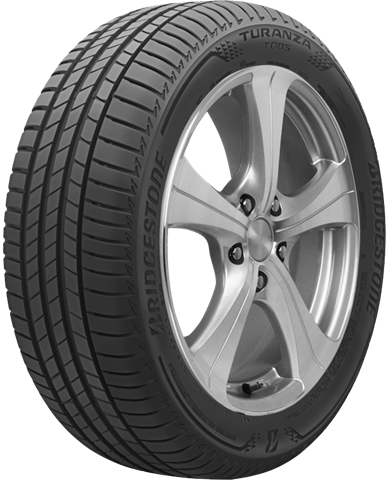
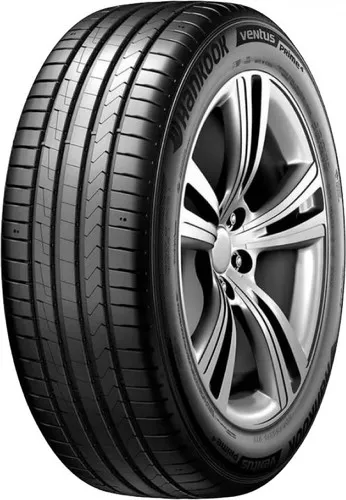
1 mutual test(s) with detailed data
The Hankook wins on every wet metric; the Laufenn's only card is price.
The Laufenn S Fit EQ and the Hankook Ventus Prime 4 occupy very different positions in the summer tyre market, yet share an engineering bloodline that makes their comparison particularly revealing. Laufenn is Hankook's dedicated budget sub-brand, created to serve cost-sensitive buyers who need a recognisable standard of build quality without the premium price tag. The S Fit EQ is a straightforward value proposition: a conventional summer tyre aimed at drivers of smaller hatchbacks and compact saloons who prioritise keeping costs down, available in a single R16 rim size in our database — underscoring its narrowly targeted positioning. The Laufenn brand may not carry the same weight as its parent, but the shared engineering DNA shows through — up to a point.
The Hankook Ventus Prime 4 is a mainstream premium offering from Hankook, the South Korean manufacturer now firmly established in Europe's mid-premium segment. It succeeds the Ventus Prime3 K125 and is available across a vast range — 97 dimensions spanning R13 to R22 rims — covering everything from urban runabouts to executive saloons. Hankook positions it as an everyday tyre that refuses to compromise on safety, and the test record backs that claim: multiple organisations across 2024–2026 have awarded it top-tier verdicts across wet and dry disciplines alike, with our own rating placing it at 76/100 against the S Fit EQ's unrated status.
The single biggest character difference between these two summer tyres comes down to wet-road confidence. On dry tarmac, the S Fit EQ acquits itself surprisingly well for a budget tyre. But in the rain — and particularly when standing water threatens aquaplaning — the gap between budget and premium becomes stark and consequential. One shared test result captures it precisely: in AutoBild's 2022 comparison of 21 summer tyres in 215/55 R17, the Hankook finished second overall with an "exemplary" verdict, while the Laufenn placed 15th as merely "acceptable." That separation tells the whole story.
 S Fit EQ
 Ventus Prime 4


 Laufenn S Fit EQHankook Ventus Prime 4Laufenn S Fit EQHankook Ventus Prime 4Laufenn S Fit EQHankook Ventus Prime 4Laufenn S Fit EQHankook Ventus Prime 4Laufenn S Fit EQHankook Ventus Prime 4
This is where the comparison becomes critically important from a safety standpoint. The Hankook Ventus Prime 4's wet-braking score of 81.1 versus the Laufenn S Fit EQ's 72.7 represents a substantial deficit — but the wet handling and cornering gaps are even more telling: 84.7 versus 57.7 for wet handling, and 86.2 versus 56.0 for wet-circle cornering. These are not marginal statistical variations. A wet handling gap of 27 points reflects a fundamental difference in how much lateral grip each tyre generates on a soaked surface, which translates directly to the driver's ability to maintain control through a rain-slicked roundabout or sweeping corner.
The aquaplaning figures reinforce the picture: 74.4 for the Hankook versus 57.7 for the Laufenn. Aquaplaning resistance is largely a function of tread void ratio and the speed at which drainage channels can evacuate standing water; the S Fit EQ's architecture simply struggles to clear water fast enough at higher speeds, lowering the threshold at which the tyre begins to skim rather than bite. AutoBild 2022 did credit the Laufenn with "safe aquaplaning characteristics," suggesting it is not recklessly poor in normal rainfall, but the score differential versus the Ventus Prime 4 — nearly 17 points — indicates the Hankook provides a considerably larger safety buffer when standing water is involved. Aftonbladet's 2025 test similarly highlighted the VP4's hydroplaning resistance, wet grip, and wet handling as key strengths.
In heavy rain and on wet motorways, the Ventus Prime 4 is a substantially more reassuring companion. Its neutral, progressive breakaway on wet circuits has been highlighted by the AvD, ADAC, AutoBild, and Aftonbladet across multiple independent tests, consistently earning it places near the top of wet-performance rankings. The S Fit EQ carries materially higher risk in the exact conditions — an emergency stop in a sudden downpour, an unexpected flooded patch — where compound quality and tread design matter most. The ADAC 2026 did note that even the Ventus Prime 4 showed some weakness in wet performance relative to the very best in its test, but that criticism lands in a completely different tier to the Laufenn's wet shortcomings.
Laufenn S Fit EQHankook Ventus Prime 4Laufenn S Fit EQHankook Ventus Prime 4On dry roads, the comparison is more nuanced than the segment gap might suggest. The Hankook Ventus Prime 4 leads in dry braking with a score of 85.6, against the Laufenn S Fit EQ's 78.7 — a meaningful gap, but one that still leaves the Laufenn performing respectably for its price class. The Hankook's dry handling scores are more emphatic: 83.7 in subjective assessment and a remarkable 97.5 in objective testing, reflecting a tyre that feels planted, neutral, and progressive as grip builds towards its limit. AutoBild 2024 praised the Ventus Prime 4 specifically for "dynamic driving behaviour on wet and dry surfaces and short dry braking distances," and the AvD 2026 test confirmed solid dry handling. The S Fit EQ managed a dry handling score of 78.3, and AutoBild 2022 credited it with genuinely short dry braking distances — one of its few outright positives in a tough field.
What separates them more clearly is character at the limit. The Ventus Prime 4 offers a linearity through the steering that allows a driver to feel grip building progressively — it communicates well before breakaway arrives, giving confidence for lane changes, motorway exits taken at pace, and emergency avoidance manoeuvres. The S Fit EQ, while capable under moderate loads, lacks that progressive feedback. It is engineered to handle ordinary daily conditions competently, not to reward enthusiasm or offer reassurance in sudden-response scenarios. The AvD 2026 noted that the Ventus Prime 4's dry braking was actually below the test average — a mild caution — but in absolute terms, a score of 85.6 still outguns the Laufenn by a clear margin.
For the majority of dry-road use — motorway cruising, urban stop-start, routine cornering — the Laufenn's dry scores mean it is far from inadequate. The driver who rarely pushes near the traction limit on a warm summer's day will find the S Fit EQ entirely sufficient. But any situation demanding a sudden emergency stop from speed, a high-load lane change, or spirited driving on a flowing B-road will expose a meaningful gap in reserve capability. The Hankook simply has more to give when the driver needs it most.
Laufenn S Fit EQHankook Ventus Prime 4Laufenn S Fit EQHankook Ventus Prime 4Hankook markets the Ventus Prime 4 as a refined, comfort-oriented everyday tyre, and the numbers back this up: a comfort score of 80 versus the Laufenn's 62.7, and a noise score of 77.3 against 62.7. Real-world owners confirm the lab findings — multiple users with 5,000–10,000 km on the VP4 note how quiet and smooth it runs on mixed road surfaces, with AutoBild 2024 specifically listing quiet pass-by noise as a highlight. A Honda Civic owner summarised it bluntly after 8,000 km: "The Prime 4 is quiet and performs exemplary in dry and wet conditions — I would buy it again." The S Fit EQ drew no equivalent praise for refinement, and its noise score of 62.7 aligns with a tyre that becomes noticeable on longer motorway runs. One test even clocked the Hankook at 75.5 dB interior noise — flagged as the loudest in a Motor 2026 field — a reminder that even premium tyres aren't exempt from trade-offs, though this sits within normal parameters.
Rolling resistance tells a more complex story. The Ventus Prime 4 scores 75 to the Laufenn's 71.7 — a Hankook advantage — though some individual tests flagged higher rolling resistance as a weakness in specific size configurations, and Aftonbladet 2025 noted it explicitly. The VP4's EU fuel label is predominantly C-grade (about 52% of variants), with around 28% achieving a B — reasonable but not class-leading. The Laufenn's EU label data is absent from our records, making a precise comparison impossible, but its rolling resistance score of 71.7 suggests it offers no meaningful advantage here either.
The most decisive long-term cost factor is tread longevity. The Laufenn scores just 51 for mileage against the Hankook's 74.2 — a gap of over 23 points that translates to the VP4 lasting considerably longer in regular use. AutoBild flagged moderate mileage as a Laufenn weakness in both 2022 and 2024 testing; this is a consistent finding, not an anomaly. When the Laufenn's lower purchase price is divided over a shorter service life — and combined with no fuel economy advantage — the initial saving begins to erode. AutoBild 2024 called the Ventus Prime 4's price-to-performance ratio "very good," and our expert summary rates it as premium safety at an affordable price. On a cost-per-kilometre basis, the Hankook is likely the shrewder long-term investment for most drivers.
Laufenn S Fit EQHankook Ventus Prime 4Laufenn S Fit EQHankook Ventus Prime 4For the strictly budget-constrained buyer who drives primarily on dry summer roads, covers relatively low annual mileage, and treats tyre replacement as a cost to minimise above all else, the Laufenn S Fit EQ offers a coherent proposition. Its dry performance is genuinely adequate for everyday use, its ride is acceptable, and the engineering ties to Hankook mean it is not built to fail. Some owners who have matched it directly to Hankook compounds — noting tread pattern and compound similarities to the Hankook H452 — report pleasant surprise at the value on offer, particularly on calm summer roads. Under those conditions, the S Fit EQ earns its place.
However, for any driver who experiences regular rain, uses their car at higher speeds, carries passengers regularly, or simply values the safety headroom that a wet emergency stop demands, the Hankook Ventus Prime 4 is the clear and unambiguous recommendation. The wet handling gap — 84.7 versus 57.7 — is not a number to dismiss. It represents a difference in lateral grip on wet asphalt that a driver will feel in every rain-soaked roundabout and emergency braking event. The VP4's 91/100 average from 37 real-world owners, versus the Laufenn's 56/100 from 14, mirrors the test-lab findings with striking consistency.
The Ventus Prime 4 also wins on longevity, noise, comfort and aquaplaning safety — and over a full tyre life, the Hankook's higher initial cost is meaningfully offset by its longer replacement interval and lower fuel consumption. The S Fit EQ has a narrow but real niche: fair-weather, low-mileage driving where price sensitivity genuinely overrides all other considerations. Everyone else — the family driver, the motorway commuter, the driver in a climate where summer showers are routine — should step up to the Ventus Prime 4. Safety margins are not a luxury.
| Organization | Season | Year | Dimension | |
|---|---|---|---|---|
 Autobild Autobild | Summer | 2022 | 215/55 R17 | View |
Compare prices across all available dimensions for these tyres.
 VS
VS
 VSVSVS
 VSVS
VSVS VSVSVSVS





