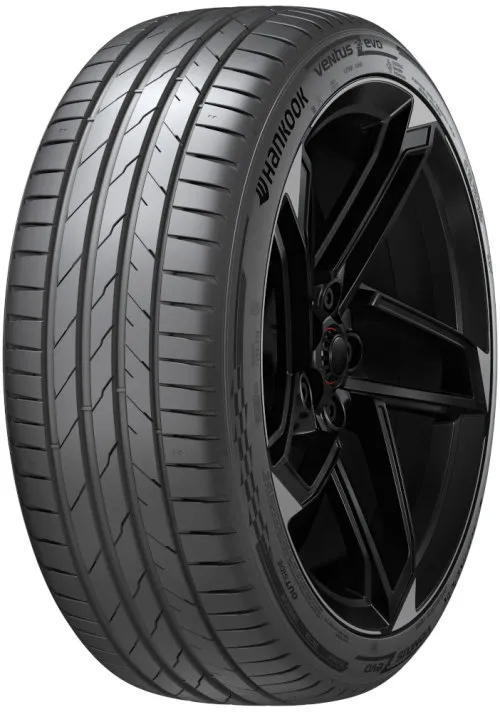
The Hankook Ventus Evo swept all four mutual tests with class-leading wet braking and grip.
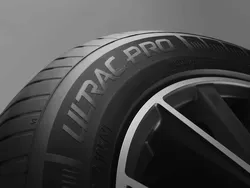
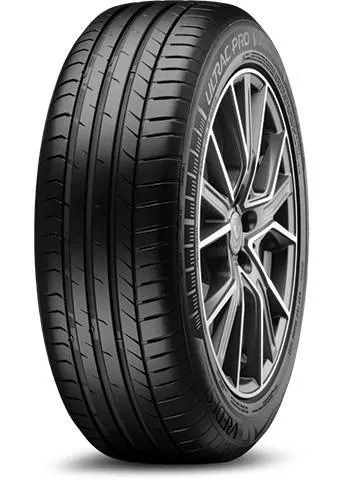
When two summer tyres carry the same premium label but finish a country mile apart on the test sheet, you know there is a real story to tell. The Hankook Ventus Evo arrives as the latest evolution from Hankook of South Korea, and on our scoring it earns a remarkable 99/100. Sitting across from it is the Vredestein Ultrac Pro from the Dutch brand Vredestein (now part of Apollo Tyres), an attractive, Italdesign-styled all-rounder that scores a more modest 76/100. Both are aimed squarely at modern SUVs and larger passenger cars, but they answer the brief in very different ways.
The head-to-head numbers set the tone immediately. Across four mutual magazine tests, the Hankook won all four and the Vredestein won none, with no draws. In the Auto Bild 2026 255/45 R19 group test of nine tyres the Ventus Evo took first place while the Ultrac Pro finished third; in a separate Autobild 2026 245/45 R19 test of twenty tyres the gap widened to first versus ninth. That does not make the Vredestein a bad tyre, but it does frame this as a clear favourite against a likeable underdog.
The Hankook is sold in 119 dimensions spanning R17 to R22, while the Vredestein offers 79 sizes from R18 right up to a substantial R24, leaning even harder into the big-wheel SUV market. Below we break down dry, wet and comfort performance, then weigh up running costs and value before reaching a verdict.
Ventus Evo
Ultrac Pro


Averaged from 2 tests
Hankook Ventus Evo
Vredestein Ultrac Pro
Hankook Ventus Evo
Vredestein Ultrac Pro
Hankook Ventus Evo
Vredestein Ultrac Pro
Hankook Ventus Evo
Vredestein Ultrac Pro
Hankook Ventus Evo
Vredestein Ultrac ProWet weather is where the Ventus Evo truly separates itself, and where Hankook clearly concentrated its development effort. The tyre scores 87.6 for overall wet performance against the Vredestein's 76.5, and its standout figure is a class-leading wet-braking score of 90. Independent testers recorded the best wet braking in the entire field at 27.66 metres, and Auto Bild crowned it overall test winner specifically on the strength of its wet properties. A new wet-grip compound using specialised performance resins optimises hysteresis to deliver grip across a wide temperature range.
The measured wet stopping distances are decisive. Averaged over two tests the Hankook needed just 27.2 metres to stop, while the Vredestein required 30 metres. The 2025 225/40 R18 braking test is the most striking single result: 27.4m for the Ventus Evo against 31.2m for the Ultrac Pro, a difference of nearly four metres that could be the gap between stopping safely and a collision. The Hankook also leads in standing water, posting the highest straight aquaplaning speed in test at 78.81 km/h and topping wet circle cornering with a 93.3 detail score.
The Vredestein is solid rather than spectacular in the wet. Its real strength is safety margin against aquaplaning, with testers repeatedly highlighting large reserves and noting good behaviour on wet roads in ADAC and Autobild evaluations. However, it was explicitly placed only mid-pack for wet braking, and its 70.8 wet-braking score and 76.3 wet-handling score confirm that under hard braking and at the limit it cannot match the Hankook's composure.
Hankook Ventus Evo
Vredestein Ultrac Pro
Hankook Ventus Evo
Vredestein Ultrac ProOn dry roads the Hankook Ventus Evo is the stronger and more confident performer. It posts a dry performance score of 89.7 against the Vredestein's 74.4, a sizeable margin that shows up in the detail scores too. The Ventus Evo records a dry-handling rating of 92.7 and dry braking of 86.8, while the Ultrac Pro returns 75.7 for handling and 73.2 for braking. German testers described the Hankook as a genuine driving-dynamics specialist with excellent handling on both dry and wet surfaces and the shortest dry braking distances in one Autobild evaluation, helped by a flat side profile that, per the manufacturer, increases cornering stiffness for superior high-speed stability.
The hard braking data backs this up. Across two tests measuring dry stopping distances, the Ventus Evo averaged 33.4 metres versus 34.6 metres for the Ultrac Pro. In the individual Autobild 2026 245/45 R19 braking run the Hankook stopped in 32.8m to the Vredestein's 34.2m, and in the 2025 225/40 R18 test it was 34m against 35m. Over a metre saved on every emergency stop is exactly the sort of margin that matters when a child steps out.
Crucially, the Vredestein is far from disgraced here. Multiple testers called it a dry-weather specialist ("Trockenkünstler", "Trockenexperte") with harmonious, balanced behaviour, and user reviewers love it: a BMW 325d owner praised "endless grip" on twisty roads, and a Jaguar XF owner enjoyed a soft yet sporty feel. Its main flaw is a slight delay in steering response, so it feels a touch less sharp and immediate than the eager, sporty Hankook when you push hard.
Hankook Ventus Evo
Vredestein Ultrac ProComfort and refinement bring the two tyres closer together, though the Hankook still edges ahead. The Ventus Evo scores 84.5 for comfort to the Vredestein's 80.3, and importantly it is exceptionally quiet outside, recording a very low 70.7 dB exterior noise and an 87.5 noise score. Tie-bars on the shoulder blocks create a closed structure that suppresses noise during normal driving. The Vredestein answers with an 83.8 noise score and was actually crowned the quietest candidate in one Sportscars test field at 70.9 dB, so on the road both are genuinely refined; user reviewers single out the Ultrac Pro's compliant, soft ride over poor surfaces.
Running costs are where the picture flips. The Hankook's biggest and only notable weakness is rolling resistance, scoring just 76 with a measured 8.76 kg/t that testers placed near the bottom of the field, which means marginally higher fuel use. The Vredestein turns this into a headline strength, posting the lowest rolling resistance in several tests, a 77.5 score, and high fuel-saving potential. Its EU label data was not published here, and the Hankook carries strong EU ratings of mostly A for wet grip and predominantly C for fuel economy.
Mileage is the Vredestein's Achilles heel and a clear win for Hankook. The Ventus Evo scores 77.5 for mileage, with the maker claiming distributed wear extends life by over 30 percent versus the previous model, whereas the Ultrac Pro manages only 53, with testers repeatedly flagging "short tread life" and merely satisfactory predicted longevity, plus a heavier construction. On value, both are praised for fair pricing (the Vredestein around 740 euros per set), but the Hankook offers premium performance for slightly below a premium price, making it the stronger long-term buy despite its thirstier rolling resistance.
Hankook Ventus Evo
Vredestein Ultrac Pro
Hankook Ventus Evo
Vredestein Ultrac ProThis is a comprehensive win for the Hankook Ventus Evo. It swept all four mutual tests, owns the best wet braking in test, the highest aquaplaning speed, shorter dry and wet stopping distances, sharper handling, longer mileage and lower exterior noise. Its single meaningful compromise is higher rolling resistance, a fair price to pay for a tyre that is otherwise close to flawless and fully earns its 99/100. If you want the safest, most complete summer tyre here, this is it.
The Vredestein Ultrac Pro should not be dismissed. It is a genuinely likeable, well-balanced all-rounder with strong dry composure, excellent aquaplaning reserves, class-leading low rolling resistance, a quiet cabin and striking Italdesign looks that owners adore. Its weaknesses are honest and specific: a slight steering-response delay, mid-pack wet braking and notably short tread life that drags down its long-term value.
Choose the Hankook for outright safety, sporty dynamics and durability, especially if you cover serious annual mileage. Choose the Vredestein if low fuel consumption, big-wheel size availability up to R24 and a comfortable, characterful ride matter more to you than the last word in wet stopping power. For most buyers, though, the Ventus Evo is the smarter and safer choice.
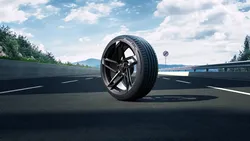
Compare prices across all available dimensions for these tyres.
VS
VS
VS
VS
VS
VS
VS
VS
VS
VS
Hankook Ventus Evo vs Continental PremiumContact 7
Hankook Ventus Evo vs Goodyear Eagle F1 Asymmetric 6
Hankook Ventus Evo vs Kumho Ecsta Sport (PS72)
Hankook Ventus Evo vs Bridgestone Potenza Sport Evo
Vredestein Ultrac Pro vs Bridgestone Potenza Sport Evo
Vredestein Ultrac Pro vs Goodyear Eagle F1 Asymmetric 6
Vredestein Ultrac Pro vs Continental SportContact 7
Vredestein Ultrac Pro vs Goodyear Eagle F1 Supersport