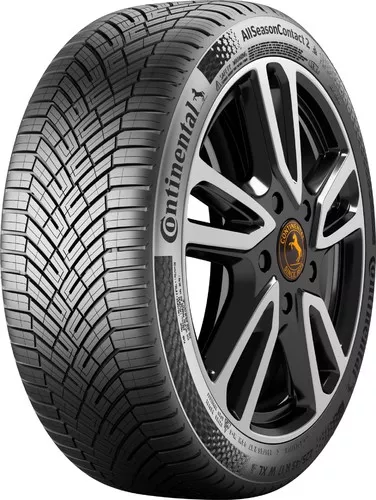
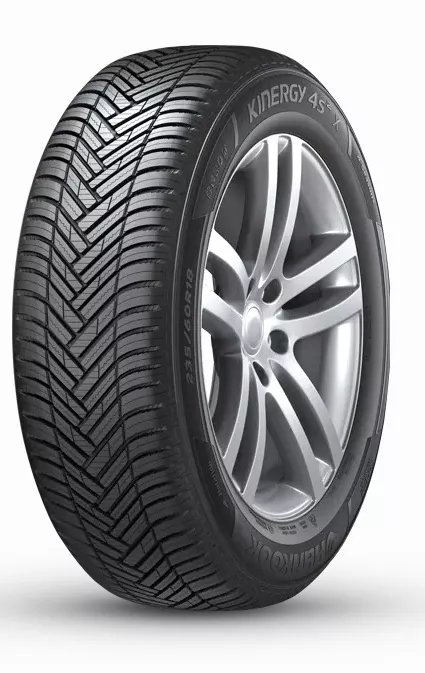
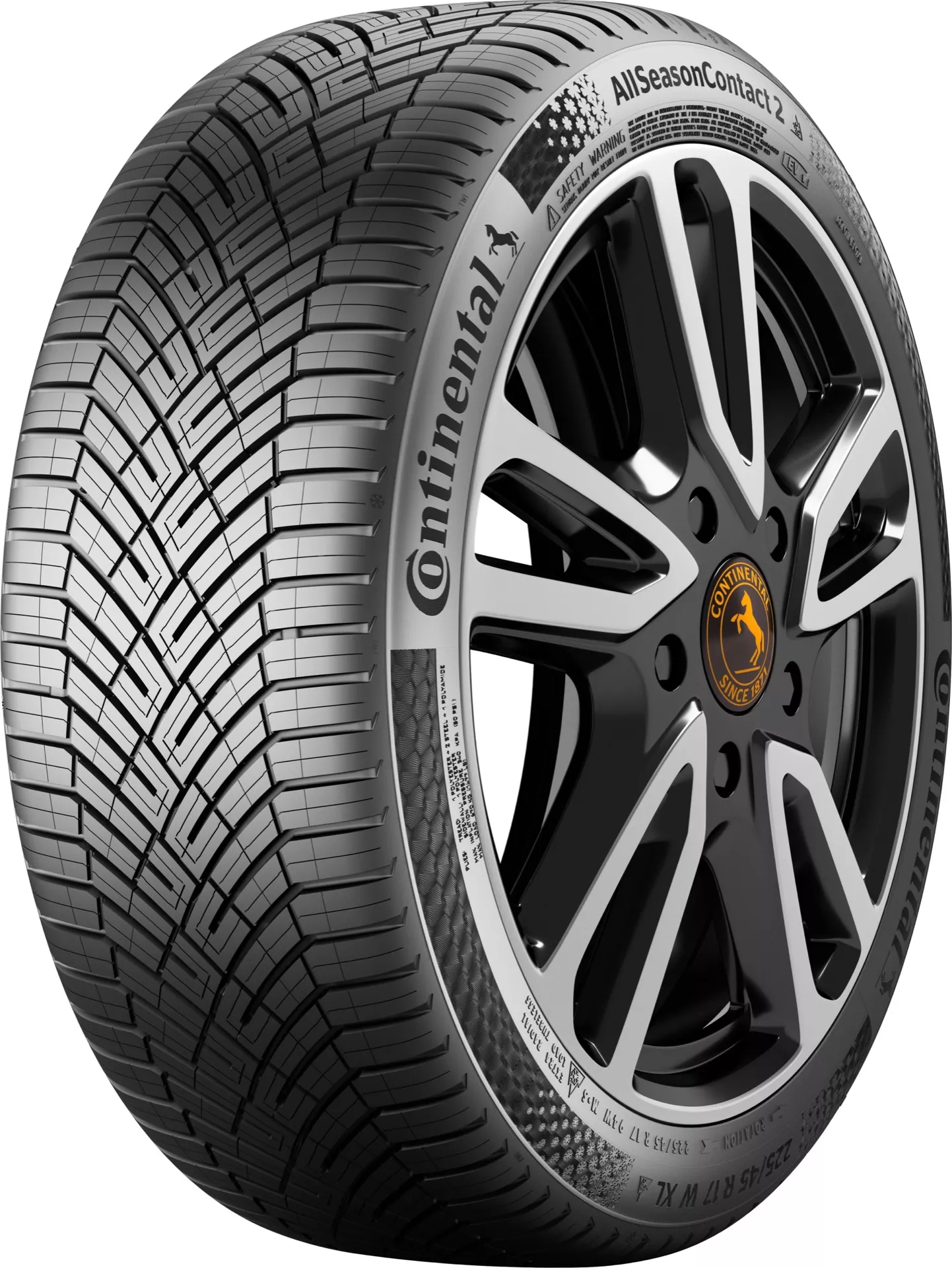
Continental dominates wet grip and refinement; Hankook fights back with aquaplaning resistance and price.
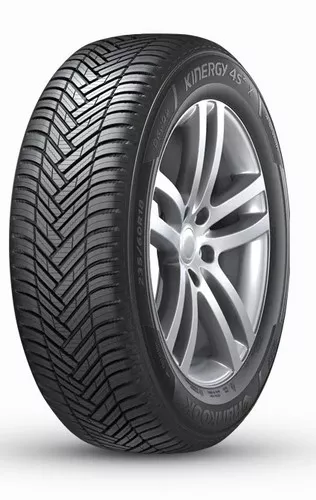
The all-season tyre market has never been more competitive, and these two represent genuinely different philosophies about how to get the job done. The Hankook Kinergy 4S2 X H750A is the SUV-and-crossover-specific arm of Hankook's upper-middle-class all-season range, covering 31 dimensions across R17 to R22 rims. It's a tyre built on a compelling premise: that a Korean brand can deliver the kind of balanced, confidence-inspiring performance that once required paying a European premium — and do it at a price that makes a genuine dent in the household budget. Hankook's own summary is almost disarmingly honest about this, describing it as "rare proof that it could be done." The Continental AllSeasonContact 2, meanwhile, is the full-fat premium answer from one of Europe's most respected tyre makers. It succeeds the original AllSeasonContact and arrives with substantially wider ambitions: 131 dimensions spanning R15 to R22, manufactured in the Czech Republic, and pitched squarely at buyers for whom fuel economy, refinement and longevity matter as much as safety scores. Continental positions it as a vehicle that "leans a bit towards mileage" — a deliberate strategic choice that pays dividends over a tyre's full service life.
The single biggest character difference between these two becomes clear the moment you look at the performance data in depth. The Hankook is a genuinely rounded all-rounder with a particular gift for snow traction and a price point that undercuts the Continental meaningfully. The Continental is a more sophisticated, quieter, more fuel-efficient tyre with clearly superior wet braking and dry handling dynamics — but it is the most expensive in its class. In the one shared test on record, an Autobild 2025 assessment on 215/50 R18, the Continental finished first overall while the Hankook came fifth. That result, while a snapshot, captures the competitive relationship between them well: both are credible all-season choices, but the Continental operates at a higher ceiling.
Kinergy 4S2 X H750A
AllSeasonContact 2


Hankook Kinergy 4S2 X H750A
Continental AllSeasonContact 2
Hankook Kinergy 4S2 X H750A
Continental AllSeasonContact 2
Hankook Kinergy 4S2 X H750A
Continental AllSeasonContact 2
Hankook Kinergy 4S2 X H750A
Continental AllSeasonContact 2Wet performance is where the gap between these two competitors crystallises most clearly, and where the Continental AllSeasonContact 2 earns its premium pricing most convincingly. The Continental's wet braking score averages 88.5 against the Hankook's 83.6 — a five-point difference that, on a wet motorway emergency stop or an unexpected hazard on a country road in autumn rain, represents a meaningful number of metres. Across the available test detail scores, the Continental averages 86.5 in wet braking assessments while the Hankook averages 83.6 across its test appearances. The Aftonbladet 2025 assessment specifically called out the Continental as delivering the best braking grip on cold, wet asphalt — the conditions that claim the most lives in northern European winters and shoulder seasons. Real-world owners of the AllSeasonContact 2 corroborate this: one Hyundai Ioniq driver who replaced summer EcoContact 6 rubber noted that the wet performance improvement was the standout change, calling the AllSeasonContact 2 "far superior" in rain to its predecessor. These are the kinds of testimonials that carry weight precisely because they come from daily use rather than controlled testing conditions.
Wet handling paints the same picture. The Continental's wet handling score is 91.6 in the averaged test detail data, versus 86.2 for the Hankook — a gap of more than five points that shows up in reduced understeer on wet circuit work, more linear cornering behaviour, and a higher threshold before the tyre begins to push wide. Wet circle cornering scores follow the same pattern: 88 for the Continental against 83 for the Hankook. Continental positions the AllSeasonContact 2 with "above average wet handling with short wet braking distances" at the centre of its marketing, and the test data across multiple organisations supports that claim comprehensively. The one area where the Hankook fights back on wet performance is aquaplaning resistance: Hankook's overall aquaplaning score is 85, with a cross-aquaplaning average of 86.3, versus the Continental's 80 overall. The Aftonbladet 2025 test went as far as to say the Continental "aquaplanes easily" — a blunt criticism that appears across multiple evaluation programmes, with Tyre Reviews 2024 also listing low aquaplaning resistance as the Continental's headline negative. This matters in heavy, standing-water conditions: the Hankook's tread is better at channelling water away at high speed, giving it a clear advantage at motorway speeds in heavy rainfall. For drivers who regularly encounter flooded roads or heavy downpours, that trade-off is worth taking seriously.
Hankook Kinergy 4S2 X H750A
Continental AllSeasonContact 2
Hankook Kinergy 4S2 X H750A
Continental AllSeasonContact 2On dry tarmac, the gap between these two is more pronounced than it might initially appear. The Continental AllSeasonContact 2 carries a dry performance score of 84.9 against the Hankook's 78.8 — a six-point margin that translates into meaningfully different experiences behind the wheel. The most striking single number is the Continental's average dry handling objective score of 98.5 across its test appearances, compared to the Hankook's 80.4. That 18-point difference is enormous in context: it tells you the Continental delivers dry handling that sits at the very top of the all-season category, with test programmes able to measure its composure through objective instrumented runs with a confidence that simply doesn't apply to the Hankook. Steering response is more direct, body roll is better controlled, and on the approach to the limits of grip — which all-season tyres rarely need to reach in everyday use, but which testers systematically explore — the Continental provides far more warning and far more progressive behaviour. Its EU label carries a B fuel grade, overwhelmingly (72% of dimensions), which reflects a compound tuned for efficiency without sacrificing dry-road mechanical grip.
The dry braking picture is more nuanced and, frankly, more surprising. Continental's dry braking score is 76.5, against Hankook's 77.2 — the Hankook is marginally stronger here on the score metric, and this aligns with the known characteristic of the Continental, which draws criticism across multiple test sessions for extended dry braking distances. The Hankook also has this weakness — "slightly longer braking distances on dry roads" is its only significant technical negative — but it appears to be slightly less acute. Without a comprehensive set of measured distances in metres to average across tests, it is important to note that neither tyre should be described as strong on dry braking; it is the category weakness of both designs. Where they diverge sharply is in mid-corner balance and high-speed stability. The Continental's dry handling score puts it in a different league in dynamic driving, and the direct steering feedback noted across multiple tests gives confident drivers a much clearer picture of what's happening at the contact patch. The Hankook is safe and predictable on dry roads but does not reward the engaged driver in the same way.
Hankook Kinergy 4S2 X H750A
Continental AllSeasonContact 2
Hankook Kinergy 4S2 X H750A
Continental AllSeasonContact 2
Hankook Kinergy 4S2 X H750A
Continental AllSeasonContact 2
Hankook Kinergy 4S2 X H750A
Continental AllSeasonContact 2Both of these tyres carry the Three-Peak Mountain Snowflake symbol, and both deliver genuinely capable winter performance — which is what separates the serious all-season category from the compromise products at the lower end of the market. The headline numbers are close: Continental scores 85.1 on snow overall, Hankook 83. But the detail tells a more layered story. Hankook's snow traction score in the averaged test data is 88.2, its snow braking 87.3, and snow circle cornering 83.7 — a strong set of numbers that explains why Tyre Reviews 2025 called the Kinergy 4S2 X "the best in snow overall" in that specific test. On traction from a standing start and under controlled braking on packed snow, the Hankook's compound and sipe geometry deliver excellent bite. For drivers in regions with regular snowfall who need a tyre that can get them moving and stopped on a white morning without drama, the Hankook's snow credentials are genuinely impressive for a non-premium product.
The Continental AllSeasonContact 2 scores differently across the snow disciplines, with particular strength in the handling and cornering metrics. Snow handling objective averages 96, snow circle cornering 91.7, and snow handling 87.1 — all of these exceed the Hankook's equivalent scores. What this translates to is better balance and predictability through snow-covered bends: the Continental is more stable on a challenging winter mountain road or a snow-covered roundabout, with less tendency to push wide mid-corner. Snow traction (87) is essentially matched between the two. Tyre Reviews 2024 called out the Continental as achieving best snow traction and best ice performance in its round, reinforcing that the AllSeasonContact 2 is a legitimate winter performer and not simply a warm-weather tyre that has been certified on snow. For drivers in Alpine or Nordic climates who face both packed snow and icy conditions, the Continental's overall winter package — particularly its ice handling — edges ahead of the Hankook, while the Hankook's snow braking performance makes it the stronger choice for drivers who prioritise stopping in urban snow over cornering on mountain roads.
Hankook Kinergy 4S2 X H750A
Continental AllSeasonContact 2
Hankook Kinergy 4S2 X H750A
Continental AllSeasonContact 2This is the area of most extreme divergence between the two tyres, and it reflects a deliberate design philosophy at Continental that the AllSeasonContact 2's creators were not shy about pursuing. The Continental achieves a perfect score of 100 on both comfort and noise in the performance scoring framework — an extraordinary achievement that reflects consistent class-leading results across multiple independent tests. Its interior noise average in the test detail data is 97, which means that in controlled cabin noise measurements, it sits at or very near the top of every group it enters. The Hankook's noise score is 79 — creditable, and described as "leises Abrollgeräusch" (quiet rolling noise) in earlier testing — but clearly outclassed. Real-world feedback on the AllSeasonContact 2 is emphatic on this point: an Audi A3 PHEV owner reported that the tyre made the car "basically silent in fully electric mode," which is about as strong an endorsement of refinement as you will find. A Volkswagen Passat owner who switched from summer Hankook Ventus Prime 4 rubber described the Continental as "significantly softer" and explicitly welcomed the comfort improvement. These are not exceptional cases — they reflect a tyre that has been engineered with refinement as a first-order priority.
Rolling resistance and running costs are where the Continental's premium pricing makes its strongest long-term argument. The Continental scores 85.5 on rolling resistance against the Hankook's 73.5 — a 12-point gap that is enormous in this category, and which shows up directly in the EU fuel label: the Continental achieves an A grade on 4% of its dimensions and a B grade on 72%, making it predominantly a B-rated fuel-economy tyre. The Hankook carries a C fuel label. On a car covering 20,000 kilometres a year, the difference in fuel consumption between a B and C-rated tyre at motorway speeds can amount to tens of litres annually — money that partially offsets the Continental's higher purchase price over the life of the tyre. The Continental also earns the highest mileage score in the dataset (86.3), with Tyre Reviews 2024 identifying it as both the "lowest wear on test" and the "best value tyre on test" — a verdict that specifically accounts for the higher purchase cost being amortised over more kilometres. The Hankook's treadwear data is less comprehensively documented across test programmes, but its price advantage at point of sale is significant and well-established. For drivers who buy tyres on sticker price and change them frequently, the Hankook wins. For drivers who calculate total cost of ownership including fuel and tyre longevity, the Continental is competitive despite its premium positioning. It is worth noting, however, that the Continental is described as "the most expensive of all candidates in the test" in the Autobild 2025 evaluation — so the premium is real and buyers should factor it into their decision with open eyes.
Hankook Kinergy 4S2 X H750A
Continental AllSeasonContact 2These are two genuinely capable all-season tyres that suit different buyers, and the choice between them is not as simple as "budget versus premium." The Continental AllSeasonContact 2 is the stronger tyre in the metrics that matter most in everyday driving: wet braking, wet handling, dry handling dynamics, cabin noise and rolling resistance. If you drive a modern family car or SUV on mixed roads year-round and you want the tyre that will stop shortest in an autumn rainstorm, make the least noise on the motorway, and return the best fuel economy, the Continental is the clearer choice. Its ice performance and snow cornering ability also edge ahead of the Hankook, making it particularly suitable for Alpine and Nordic climates where conditions regularly become severe. The one mutual test between them — Autobild 2025 on 215/50 R18 — delivered a first-place result for the Continental versus fifth for the Hankook, and that outcome is consistent with the overall shape of the data.
The Hankook Kinergy 4S2 X H750A is not a second-rate product, however, and for specific buyers it is the right choice. Its aquaplaning resistance is measurably better than the Continental's, which matters in the standing-water conditions of heavy summer thunderstorms or poorly-drained roads. Its snow braking performance is excellent — Tyre Reviews 2025 rated it best in snow overall — which makes it a strong choice for drivers in regions with regular snowfall who do a lot of urban winter driving. Its comfort score in the averaged test data is 94, showing that it is genuinely refined despite falling short of the Continental's extraordinary noise scores. And its price point is substantially lower. For a driver covering moderate annual mileage on a tighter budget who encounters regular snow, the Hankook delivers remarkable value for money. For EV and hybrid drivers where rolling resistance directly affects range and running costs, or for drivers who prioritise wet safety above all else, the Continental's better fuel label and superior wet braking performance justify the additional outlay. Neither tyre will disappoint in everyday use — the question is which compromises you can live with and how long you plan to keep them fitted.
| Organization | Season | Year | Dimension | |
|---|---|---|---|---|
Autobild | All season | 2025 | 215/50 R18 | View |
Compare prices across all available dimensions for these tyres.
VS
VS
VS
VS
VS
VS
VS
VS
VS
VS
Hankook Kinergy 4S2 X H750A vs Bridgestone Turanza All Season 6
Hankook Kinergy 4S2 X H750A vs Hankook ION FlexClimate
Hankook Kinergy 4S2 X H750A vs Hankook Kinergy 4S2 H750
Continental AllSeasonContact 2 vs Bridgestone Turanza All Season 6
Continental AllSeasonContact 2 vs Pirelli Cinturato All Season SF3
Continental AllSeasonContact 2 vs Goodyear Vector 4Seasons Gen-3
Continental AllSeasonContact 2 vs Vredestein Quatrac