Goodyear buys comfort, longevity and quiet; Nokian buys sharper braking, grip and pace.
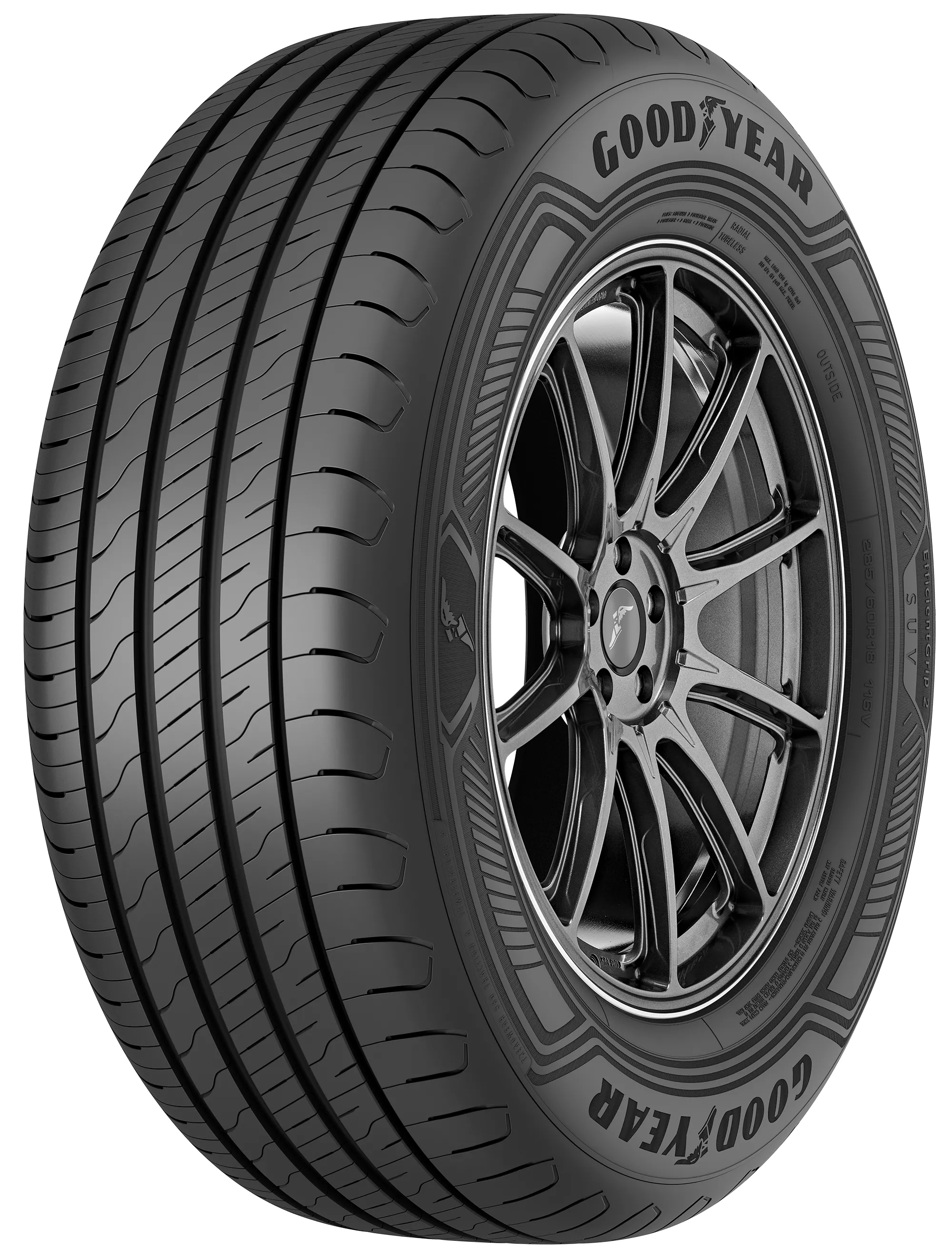
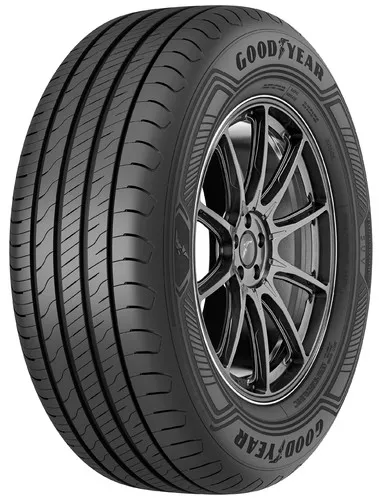
These two tyres share a tread pattern category, summer rubber for crossovers and SUVs, but they could hardly be more different in temperament. The Goodyear Efficientgrip 2 SUV is exactly what its name promises: a comfort and efficiency focused premium tyre built to make a heavy crossover feel quiet, planted and unstressed on the daily commute. It replaces the original Efficientgrip SUV and carries Goodyear's familiar lean towards low noise, long life and effortless rolling. It sits firmly in the premium segment, spans a broad R16 to R22 fitment with 44 dimensions, and is made in Slovenia. Its target driver is the family SUV owner who values refinement and running costs over outright sporting bite.
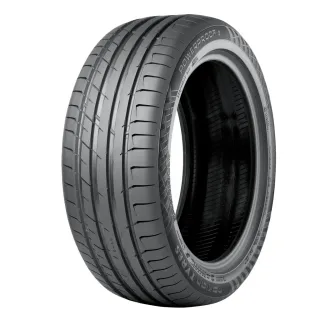
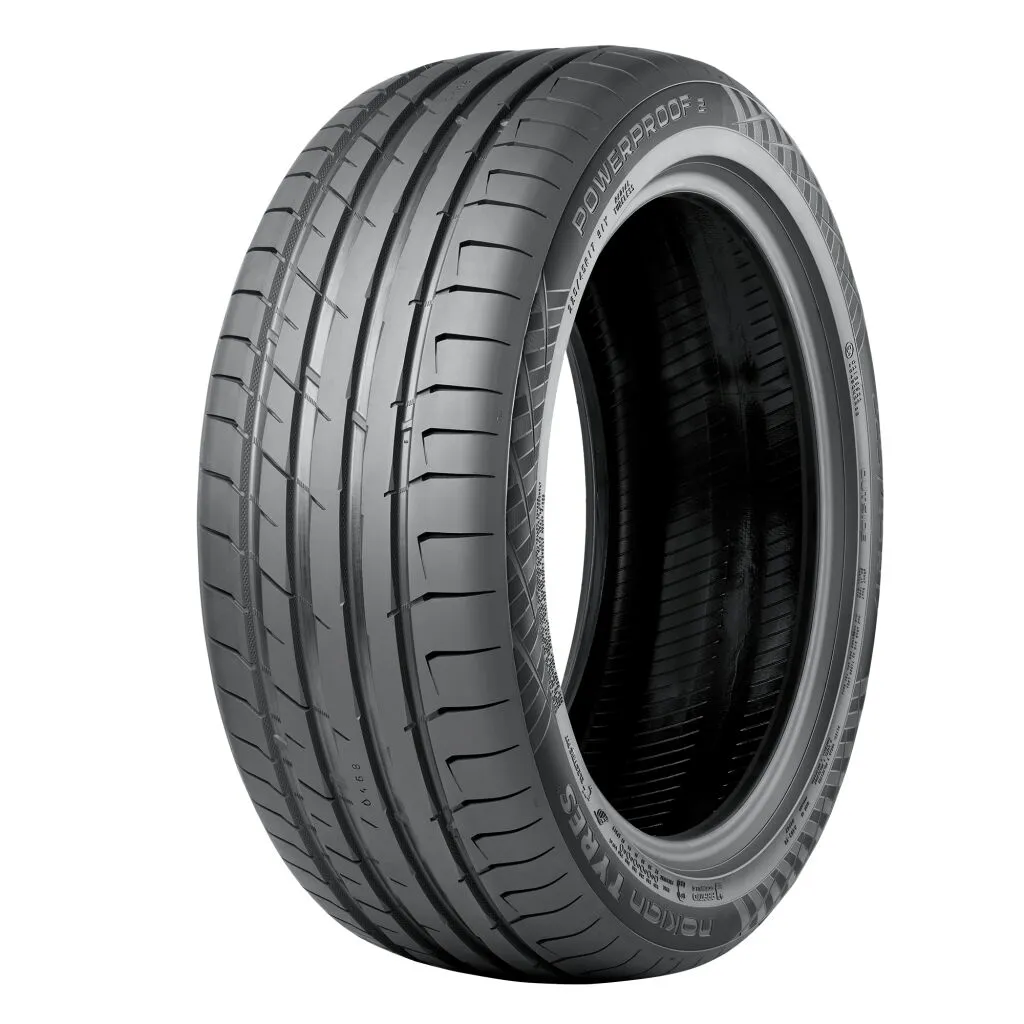
The Nokian Powerproof 2 comes at the same vehicles from the opposite direction. It is Nokian's flagship ultra-high-performance summer tyre, the second generation of the Powerproof line, built in Finland with a fresh asymmetric tread and new compound aimed squarely at demanding drivers who want sharp steering, short braking and high-speed composure. Positioned in the upper-middle segment with a deep 75-dimension range from R16 to R21, it is the tyre you fit when you have a powerful SUV or a sporty crossover and you actually intend to drive it.
The single biggest difference in character, then, is intent. The Goodyear is engineered to isolate you from the road; the Nokian is engineered to connect you to it. That fundamental split, comfort-and-efficiency versus sport-and-precision, explains almost every number that follows, and it is why a straight head-to-head needs honesty about what each tyre is even trying to do.
Efficientgrip 2 SUV
Powerproof 2


Goodyear Efficientgrip 2 SUV
Nokian Powerproof 2
Goodyear Efficientgrip 2 SUV
Nokian Powerproof 2
Goodyear Efficientgrip 2 SUV
Nokian Powerproof 2
Goodyear Efficientgrip 2 SUV
Nokian Powerproof 2
Goodyear Efficientgrip 2 SUV
Nokian Powerproof 2Wet is where this comparison gets genuinely interesting, because both tyres are good but they earn it differently. Again there is no clean multi-test average to quote (one mutual test only), so the EU labels and test commentary carry the load. On paper the Goodyear claims an A wet-grip rating across 98 percent of its lineup, and the Nokian posts a clean A wet-grip label across the board. In the shared Motor 2026 test the Nokian took the win partly on the strength of the shortest wet braking in the field at 29.7 metres, while the Goodyear answered with the single best wet cornering result, a perfect 25.0 of 25 points for first place in that discipline.
That tension runs through the scores. The Goodyear edges the composite wet rating (84.5 versus 80.2) and posts a higher wet-braking score (86.3 versus 83.5) plus stronger aquaplaning resistance (81.8 versus 76.3). Its wet handling detail score is an excellent 88.3, and across Autobild's 2022, 2023 and 2025 outings it was repeatedly cited for short wet braking, good aquaplaning reserves and harmonious wet behaviour. The Nokian, meanwhile, owns wet cornering: its wet-circle-cornering detail score of 87.5 beats the Goodyear's 82.4, and Die Reifentester 2026 logged class-leading lateral aquaplaning with a 10 percent advantage plus strong wet braking around 34.0 metres.
The honest read is that the Goodyear is the more rounded, safer-feeling tyre in heavy standing water and straight-line wet braking, while the Nokian is the more confident, grippier tyre carrying speed through wet bends. One caveat on the Nokian: ACE 2026 noted it was the earliest to lose longitudinal aquaplaning contact (around 80.1 km/h), so its straight-line flood reserves are good but not its strongest suit.
Goodyear Efficientgrip 2 SUV
Nokian Powerproof 2
Goodyear Efficientgrip 2 SUV
Nokian Powerproof 2Head-to-head test overlap here is thin: these two have met in only one common test, Motor 2026 on 235/55 R18, so there is no robust multi-test average braking figure to lean on. We have to read the broader picture from performance scores and individual test feedback rather than a clean stopping-distance table, and that single shared test is itself revealing. In it the Goodyear actually recorded the weaker dry braking, around 36.3 metres for sixth place in its group, while the Nokian was the overall test winner. Translate that roughly into the real world and you are talking close to a full car length of difference in a hard stop from 100 km/h, with the sporty Nokian pulling up shorter.
The performance scores back this up. Nokian's dry handling sits at 82.5 with dry braking at 80, and testers repeatedly praised its dynamic, precise dry behaviour: Autobild 2026 called it a braking specialist on both wet and dry with dynamic dry handling, and the Powerproof 2's whole design brief is steering precision and high-speed stability. The Goodyear scores a higher composite dry rating (84.1 versus 75.6) and strong dry handling (86), which reflects its balance and security rather than sharpness. The catch, and Goodyear's own data admits it, is that its steering is less responsive and its dry braking can trail in the toughest company.
So why the split? The Nokian's UHP compound and stiffer, sportier construction give it more ultimate grip and a crisper turn-in, ideal when you push. The Goodyear's softer, comfort-tuned carcass delivers wonderfully linear, predictable, fatigue-free dry handling that feels secure all day but never eggs you on. For ordinary driving the Goodyear feels more than composed; for genuine pace and the shortest dry stops, the Nokian is the stronger tool.
Goodyear Efficientgrip 2 SUV
Nokian Powerproof 2This is the section where the two tyres separate most decisively, and it is no contest. The Goodyear Efficientgrip 2 SUV is a comfort and refinement champion: a 92.3 comfort score and an outstanding 96.9 noise score, with an exterior-noise detail figure of 90.7. Owners feel it immediately. One driver on a Peugeot 3008 called it incredibly comfortable with extremely successful road absorption, another praised it as very quiet over 5000 motorway miles. The Nokian, true to its UHP brief, trails badly here: a 66.5 comfort score and a 64.8 noise score, with testers (Die Reifentester 2026) explicitly flagging noticeably louder cabin noise and after-vibration on poor surfaces. Nokian itself admits to slight highway road noise. If refinement matters, the Goodyear wins by a country mile.
On running costs the picture is more nuanced but still favours the Goodyear for most buyers. Mileage and longevity are a Goodyear strong suit: a 96 mileage score versus the Nokian's 69, and Autobild 2025 singled it out as the best tyre with outstanding mileage in the cost chapter. Rolling resistance is the one area the Nokian fights back: it scores 80.8 against the Goodyear's 78, and ACE 2026 rated the Nokian as having the best rolling resistance in test, with a B fuel label across its range. The Goodyear's fuel label is mixed (mostly B and C with some A grades), so on pure economy the Nokian is marginally more efficient per kilometre.
Value, though, comes down to the whole life of the tyre. The Goodyear costs more up front (Motor 2026 flagged its high price, around 603 zloty), and Autobild has repeatedly noted its premium price level. The Nokian also carries premium pricing. But the Goodyear's vastly superior expected mileage means it amortises that cost over far more kilometres, and its top-tier cost ranking in independent testing suggests it returns more value over its service life despite the higher sticker. The Nokian's slim rolling-resistance edge does not offset wearing out noticeably sooner. For a high-mileage family SUV, the Goodyear is the cheaper tyre to own.
Goodyear Efficientgrip 2 SUV
Nokian Powerproof 2The recommendation writes itself once you are honest about who you are. If you drive a family SUV or crossover and your priorities are a quiet, comfortable cabin, long tread life and low running costs, buy the Goodyear Efficientgrip 2 SUV. It is the better all-rounder for normal life: serene refinement, class-leading mileage, the best wet cornering grip in its shared test, strong aquaplaning reserves and reassuringly predictable handling. The trade-offs are a higher purchase price and steering that prioritises security over sharpness, plus a dry-braking result that can trail the sportiest rivals. For the vast majority of SUV owners those are easy compromises to accept. Goodyear's broader strength as a brand is exactly this kind of balanced premium engineering, and you can read more on the Goodyear brand page.
If, on the other hand, you have a powerful or sporting SUV, you live somewhere warm and dry-to-mixed, and you genuinely enjoy driving, the Nokian Powerproof 2 is the more rewarding choice. It delivers the shortest braking, the sharpest steering, the best wet cornering bite and the best rolling resistance in test, and it won the one head-to-head outing these tyres shared. The price you pay is real: a noticeably louder, firmer, less refined ride and shorter expected tread life. Nokian's Finnish UHP pedigree is well worth exploring on the Nokian brand page if performance is your north star.
The bottom line: the Goodyear is the smarter buy for comfort, economy and the daily grind, while the Nokian is the enthusiast's pick for outright dynamics. Pick the one that matches how you actually drive, not how you imagine you might, and neither will disappoint within its remit.
| Organization | Season | Year | Dimension | |
|---|---|---|---|---|
Motor | Summer | 2026 | 235/55 R18 | View |
Compare prices across all available dimensions for these tyres.
VS
VS
VS
VS
VS
VS
VS
VS
VS
VS