18 shops · 56 ·847+ products

Comparison: Continental PremiumContact 7 vs. Sailun Atrezzo ZSR 2 (2026)

2 mutual test(s) with detailed data

Sailun delivers startling value and mileage; Continental adds the control, consistency and evidence worthy of a premium tyre.

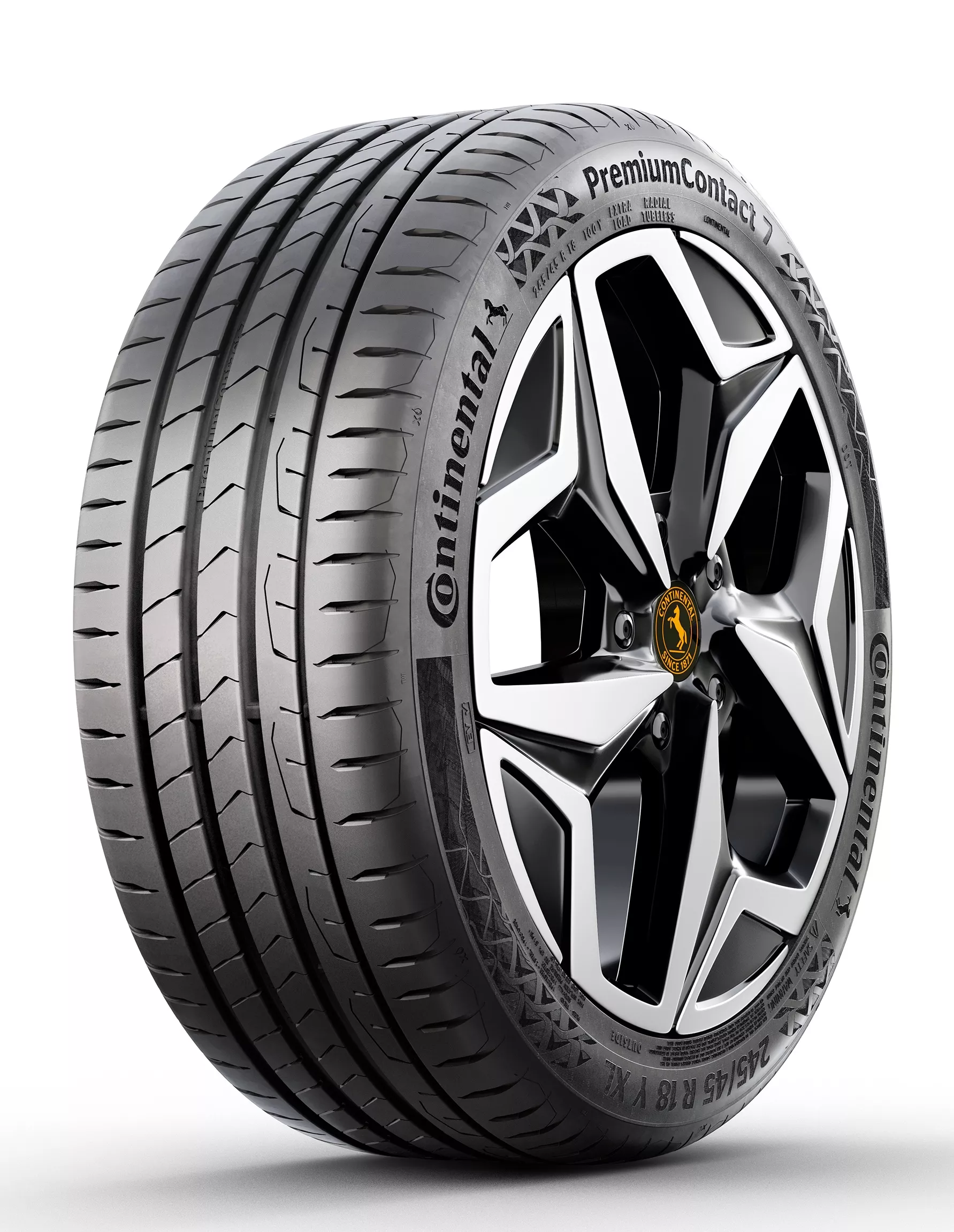
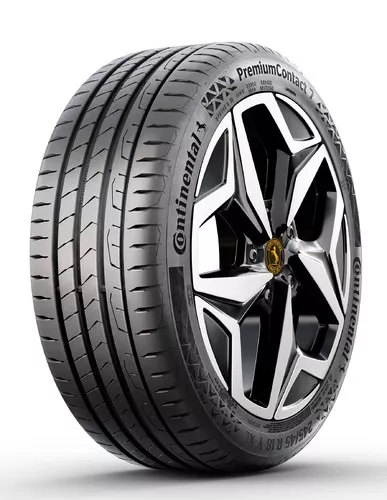
The Continental PremiumContact 7 is a premium summer tyre positioned as a safety-led all-rounder for family cars, saloons, hot hatches and electric vehicles. Available in 51 sizes from R16 to R21, it replaces the Continental PremiumContact 6 and carries a formidable 98/100 overall rating. Continental describes it as combining outstanding comfort, reliable safety and improved mileage. The evidence strongly confirms the safety claim: it has won all three shared tests here and repeatedly delivers excellent braking and handling on both wet and dry roads.

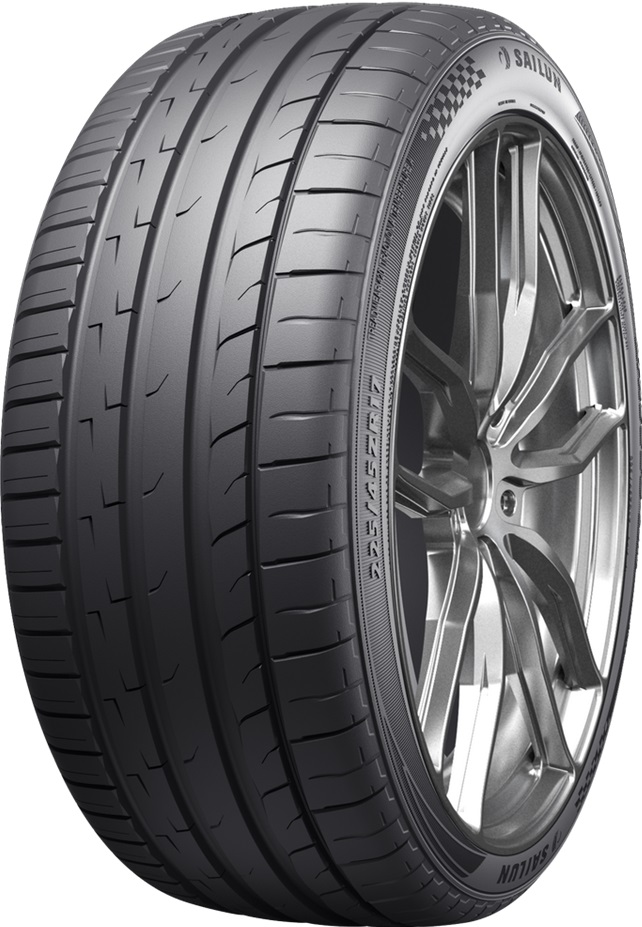
The Sailun Atrezzo ZSR 2 occupies the low-cost end of the same broad market. Its 73-size range, also spanning R16 to R21, gives Sailun wider fitment coverage than Continental in the supplied data. Its 76/100 rating is respectable for a budget tyre, while dry and wet performance scores of 86 and 86.2 show that inexpensive does not automatically mean incapable. There is no supplied predecessor, official positioning statement or owner-review evidence, however, so its longer-term character is less thoroughly documented.

The biggest difference is depth of ability. Sailun can produce competitive headline grip—occasionally even beating Continental in a single braking discipline—but the PremiumContact 7 combines braking, steering precision, handling balance, limit behaviour and real-world validation far more consistently. Sailun is the value-minded alternative; Continental is the tyre for drivers unwilling to economise on the quality of the car’s reactions.

Continental PremiumContact 7
Good for
Safety-focused family and EV drivers Frequent wet-weather motorway travel Drivers valuing precise steering Powerful road cars
Not ideal for
Buyers seeking the lowest price Drivers prioritising rolling resistance Noise-sensitive motorists on coarse roads
Sailun Atrezzo ZSR 2
Good for
Budget-conscious everyday motorists Drivers prioritising tyre mileage Older cars needing affordable fitments Moderate-speed commuting
Not ideal for
Demanding high-speed enthusiasts Drivers wanting proven limit behaviour Buyers prioritising maximum refinement Heavy-rain drivers seeking strongest evidence

Test Profile

Continental
PremiumContact 7
Sailun
Atrezzo ZSR 2
Number of tests
31
3
Best position
#1
#9
Average position
2.3
10.7
Latest test
2026
2025
Available sizes
69
139

Performance comparison

Averaged from 2 tests

Wet Performance
Confidence
Continental PremiumContact 7
65%
Continental
PremiumContact 7
Sailun Atrezzo ZSR 2
84%
Sailun
Atrezzo ZSR 2
Wet Braking
Continental PremiumContact 7
44%
Sailun Atrezzo ZSR 2
94%
Wet Handling
Continental PremiumContact 7
35%
Sailun Atrezzo ZSR 2
98%
Wet Circle Cornering
Continental PremiumContact 7
68%
Sailun Atrezzo ZSR 2
81%
Aquaplaning Longitudinal
Continental PremiumContact 7
88%
Sailun Atrezzo ZSR 2
71%
Aquaplaning Cross
Continental PremiumContact 7
91%
Sailun Atrezzo ZSR 2
78%

Across the single shared test with measured wet braking, the Continental averages 28.3 metres and the Sailun 28.7 metres. Continental’s 0.4-metre advantage is only around a tenth of a car length, yet in an emergency it can be the difference between stopping short and making contact at residual speed. Sailun’s wet-braking score is actually higher—94 versus Continental’s 88.4—showing why conclusions should not rest on one aggregated score. In the directly comparable braking measurement, Continental was ahead, and its much broader test record supports that result.

The PremiumContact 7’s wet strength extends beyond stopping distance. It scores 98.3 for objective wet handling, 94 for measured wet handling and 88.5 for wet-circle cornering. It has also recorded a best wet-handling time of 67.70 seconds, another measured wet stop of 25.1 metres with a 1.2-metre advantage over that field, and a separate 47.1-metre class-leading result under a different test protocol. These figures cannot be compared directly because speeds, sizes and surfaces differ, but together they show repeatability. Drivers can expect neutral reactions, decisive front-axle bite and substantial safety reserves when braking or changing direction on a soaked road.

Aquaplaning is more nuanced. Continental’s overall aquaplaning score is 78.1 versus Sailun’s 74.5, and one test recorded an excellent 83.8 km/h in the longitudinal discipline. Other evaluations placed Continental only sixth or criticised its curved-aquaplaning performance. It is therefore strong rather than invulnerable in standing water. Sailun’s 74.5 suggests credible drainage, but there are no supplied tester observations separating straight-line and cornering behaviour. In sustained heavy rain, Continental remains the more convincing choice because braking, handling and limit control are all independently supported; Sailun’s encouraging scores come with greater uncertainty about how progressively it behaves when grip finally disappears.

Dry Performance
Confidence
Continental PremiumContact 7
37%
Continental
PremiumContact 7
Sailun Atrezzo ZSR 2
86%
Sailun
Atrezzo ZSR 2
Dry Braking
Continental PremiumContact 7
34%
Sailun Atrezzo ZSR 2
76%
Dry Handling
Continental PremiumContact 7
40%
Sailun Atrezzo ZSR 2
96%

Across the one shared test with measured dry braking, the Sailun averages 34.3 metres against 34.6 metres for the Continental. That 0.3-metre Sailun advantage is less than one tenth of a typical car length, but it is genuine and important: the budget tyre can generate highly competitive straight-line dry grip under that test’s conditions. It also explains why the tyres’ overall dry scores are close, at 86 for Sailun and 87.5 for Continental. This is not a comparison between a capable premium tyre and an obviously poor budget product.

Braking is only one part of dry performance, though. Continental’s detailed results reveal objective dry handling at 99, measured dry handling at 87.8 and steering reaction at 92.3. Its adaptive tread is designed to preserve precise responses as conditions and loads change, while the RedChili compound is intended to provide braking performance without needing a prolonged warm-up. Test feedback repeatedly describes quick turn-in, accurate steering, neutral balance, strong country-road behaviour and generous reserves near the limit. The driver therefore receives clearer information when loading the front axle and more time to correct a tightening line or abrupt manoeuvre.

No equivalent handling-detail scores or tester comments are supplied for the Sailun, so its 0.3-metre braking win should not be stretched into a claim of superior overall dry dynamics. The broader evidence points the other way: Continental finished ahead in all three mutual comparisons, including fourth versus tenth in the 13-tyre 225/40 R18 test and first versus thirteenth in the 16-tyre 215/55 R17 test. Sailun’s strong dry score suggests ample everyday grip, but Continental is the more substantiated choice for fast motorway travel, demanding roads and drivers who care about steering fidelity as much as emergency stopping.

Comfort & Noise
Confidence
Continental PremiumContact 7
75%
Continental
PremiumContact 7
Sailun Atrezzo ZSR 2
49%
Sailun
Atrezzo ZSR 2
Noise Exterior
Continental PremiumContact 7
82%
Sailun Atrezzo ZSR 2
1%
Noise Interior
Continental PremiumContact 7
68%
Sailun Atrezzo ZSR 2
97%

Continental records 70.2 for comfort and 71.4 for noise, compared with Sailun’s 65.6 and 65. Testers found the PremiumContact 7 comfortable over surface imperfections and quiet in one cabin-noise assessment, while several owners also praised its ride and refinement. One owner replacing Michelin Primacy 4 tyres reported markedly better bump absorption and road feedback. The picture is not uniformly serene: other tests measured below-average noise or louder pass-by sound, and one dissatisfied owner considered the cabin noise intrusive enough to replace the tyres after a month. Continental is generally composed, but it should not be bought as a dedicated silence specialist.

Sailun trails modestly on the supplied comfort and noise scores, indicating a less polished ride-and-sound package, although the absence of owner reviews and detailed measurements prevents a confident diagnosis of whether tread roar, impact harshness or both cause the deficit. Continental’s adaptive construction and premium positioning plausibly contribute to its more rounded refinement, but its primary advantage is the way comfort coexists with accurate steering. Sailun may still be perfectly acceptable on ordinary commuting routes; the evidence simply gives less reason to expect the same isolation and consistency across coarse asphalt, expansion joints and higher motorway speeds.

Running costs reverse part of the argument. Sailun’s mileage score is an excellent 89, comfortably above Continental’s 74.6, making durability its clearest documented strength. Continental is described as having good or above-average mileage, but its rolling-resistance score is only 69.9, and one measurement of 8.33 kg/t placed it near the bottom of that field. Its EU fuel label is predominantly C—81 percent of listed fitments—with 19 percent rated B, while all listed wet-grip fitments are rated A. No equivalent EU-label figures are supplied for Sailun, so its fuel consumption cannot be quantified responsibly. Continental also carried the highest quoted test price at €317 per set. Sailun is therefore likely to offer the stronger purchase-price and mileage proposition, whereas Continental asks buyers to pay more—and potentially accept slightly higher energy use—for better-supported safety and chassis behaviour. Continental’s optional puncture-sealing technology can seal 80 percent of tread-area punctures where fitted, adding practical value, especially for EV users, but availability will depend on the exact specification.

Economy
Confidence
Continental PremiumContact 7
80%
Continental
PremiumContact 7
Sailun Atrezzo ZSR 2
89%
Sailun
Atrezzo ZSR 2
Rolling Resistance
Continental PremiumContact 7
86%
Mileage
Continental PremiumContact 7
73%
Sailun Atrezzo ZSR 2
89%

Performance spider chart

Verdict

The Continental PremiumContact 7 is the clear overall recommendation. It won all three direct comparisons, has substantially richer evidence behind its wet and dry behaviour, and combines short stopping distances with precise steering, neutral handling and generous reserves at the limit. It is the better fit for family cars, powerful saloons, hot hatches and EVs, particularly where frequent rain, motorway speeds or unpredictable temperatures make consistency more valuable than the lowest purchase price. Its 98/100 rating against Sailun’s 76/100 accurately reflects that broader competence.

Choose the Sailun Atrezzo ZSR 2 when budget and mileage dominate the decision. Its 34.3-metre dry stop beat Continental by 0.3 metres in the sole shared braking test, its wet score is strong, and its 89 mileage rating promises attractive life-cycle value. That makes it a credible option for moderate-mileage family driving, older vehicles and motorists who generally operate within ordinary road speeds. The trade-off is not an obvious absence of grip; it is less proof of steering quality, aquaplaning behaviour, refinement and consistency across conditions.

Continental is expensive, not exceptionally efficient and potentially noisier than its comfort-focused marketing suggests. Sailun may last longer and leaves more money in the buyer’s pocket. Nevertheless, tyres are safety equipment before they are consumables, and Continental’s small braking advantage in the wet is reinforced by superior handling evidence and repeat victories. Unless the premium price is genuinely prohibitive, the PremiumContact 7 is the more complete and reassuring tyre.

Tests used in comparison

OrganizationSeasonYearDimension
ADACADAC
Summer
2024215/55 R17View
AutobildAutobild
Summer
2025225/40 R18View

Dimensions and prices

Compare prices across all available dimensions for these tyres.

View general comparison

Add to comparison

Popular brands
New comparison

TheTireLab.com

GET

TheTireLab.com

Compare tyres, read test results and find the best prices — all in one app.