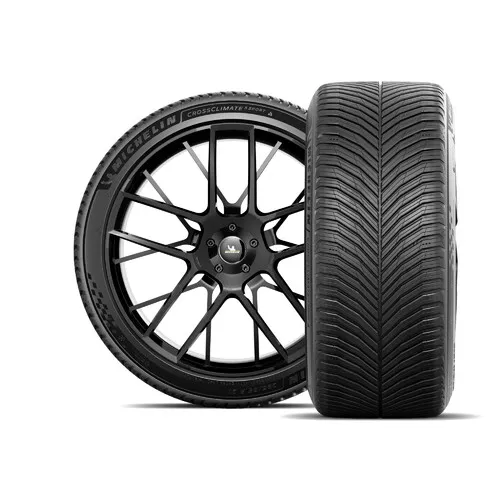
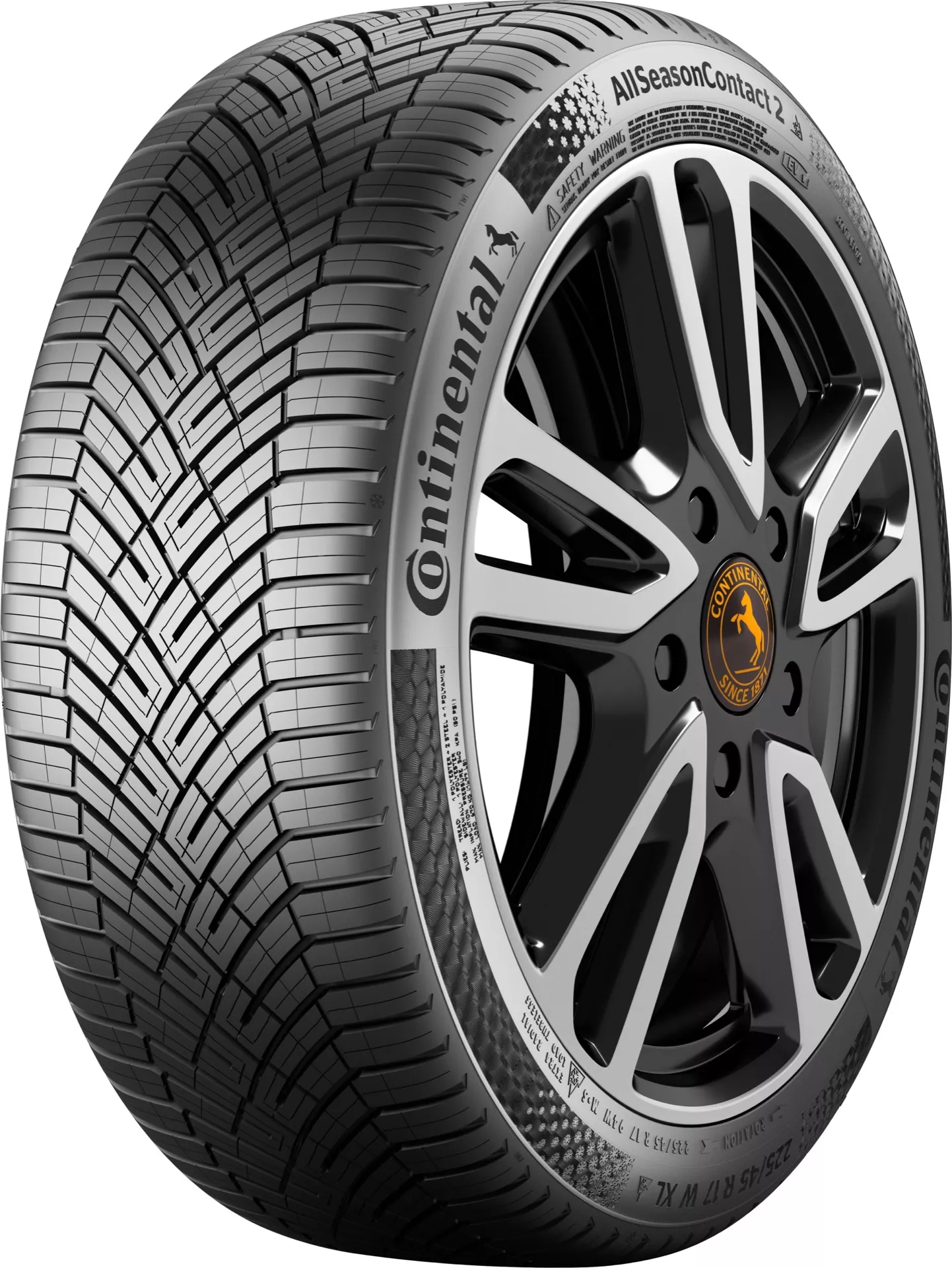
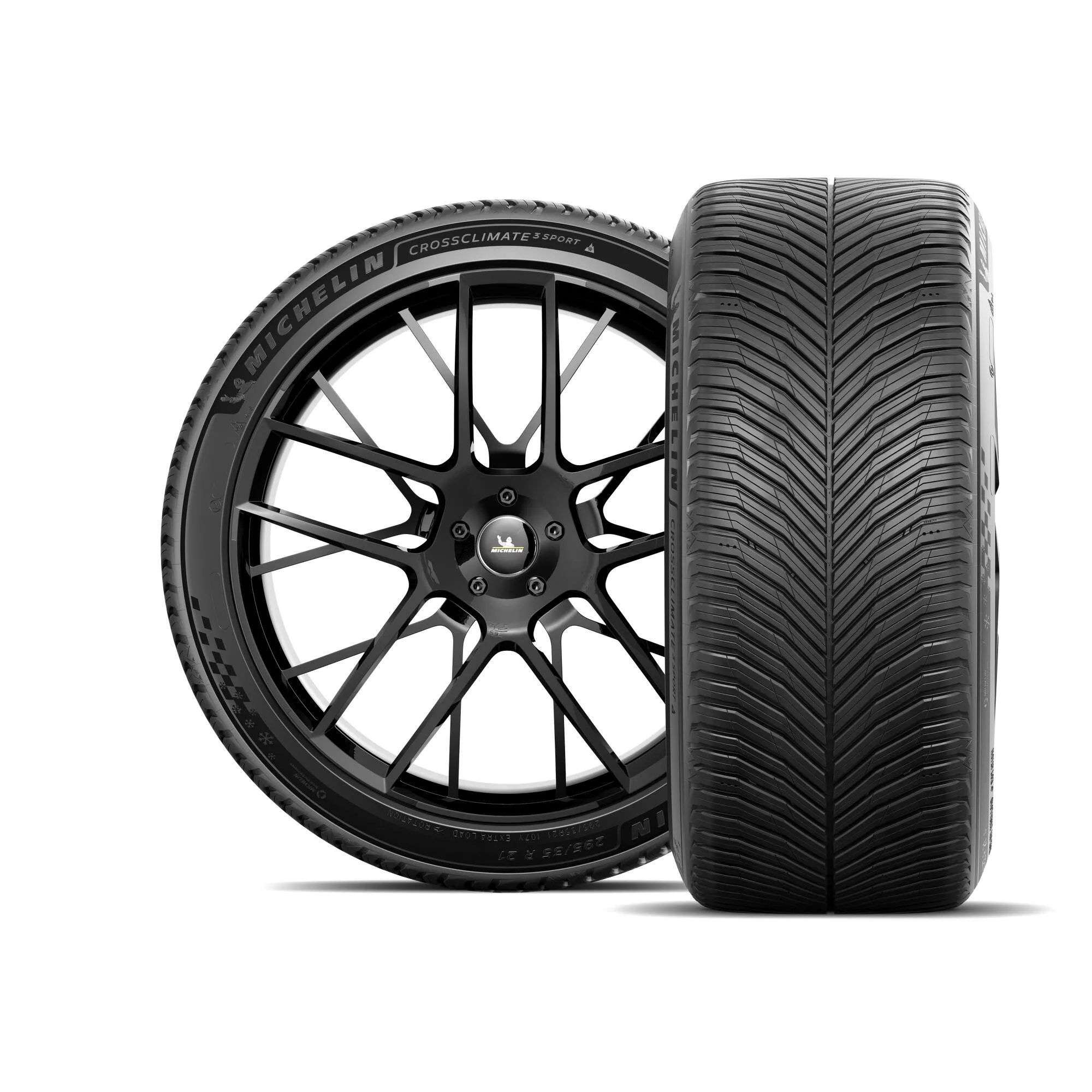
Continental wins on wet, snow, comfort and mileage; Michelin wins on dry precision and sporty feel.
Both of these tyres chase the same promise — one set of rubber for every season — but they arrive at it from opposite ends of their makers' philosophies. The Continental AllSeasonContact 2 is the methodical engineer's answer: successor to the original Continental AllSeasonContact, it leans deliberately toward mileage and all-round balance because, as Continental's own testers note, all-season tyres rarely get driven hard on a track day. The Michelin CrossClimate 3 Sport takes the opposite bet. It's the sportier branch of Michelin's CrossClimate family, engineered explicitly for high-performance cars — it's factory-fit on the Alpine A390 — and its whole pitch is that an all-season tyre doesn't have to feel like a compromise when the road turns twisty.
That difference in intent shows up everywhere in the data. Continental's own materials describe the AllSeasonContact 2's Chili Blend Compound and adaptive V-shaped tread as tools for balanced, year-round grip and efficiency, and the independent scores back that up: strong wet braking, excellent snow traction, and class-leading mileage. Michelin's messaging for the CrossClimate 3 Sport is almost entirely about dry precision and steering feedback — its Dynamic Response Technology and Thermal Adaptive Tread Compound 2.0 are pitched at drivers who want sports-car responsiveness first and all-weather usability second. Both are premium, both wear a 3PMSF snowflake, but they are built for different priorities on the same wheel.
The single biggest character gap: Continental is the safety-first, low-running-cost all-rounder; Michelin is the sharper, sportier tyre that trades away some wet-weather margin and tread life for dry composure. Everything below traces back to that split.
AllSeasonContact 2
CrossClimate 3 Sport


Continental AllSeasonContact 2
Michelin CrossClimate 3 Sport
Continental AllSeasonContact 2
Michelin CrossClimate 3 Sport
Continental AllSeasonContact 2
Michelin CrossClimate 3 Sport
Continental AllSeasonContact 2
Michelin CrossClimate 3 Sport
Continental AllSeasonContact 2
Michelin CrossClimate 3 SportFlip to wet roads and the advantage reverses decisively. The AllSeasonContact 2 carries a wet-braking score of 88.5 against the Michelin's 77, and in the same shared Autobild braking test the Continental stopped in 44.9m compared to the CrossClimate 3 Sport's 47.3m — a 2.4m gap that grows in significance the wetter and colder the road gets, since Continental's Chili Blend Compound is specifically engineered to hold grip as temperatures drop. Swedish testers at Aftonbladet went further, naming the AllSeasonContact 2 the best in its group for braking grip on cold, wet asphalt.
This isn't a narrow win — it's structural. Continental's aquaplaning score sits at 80 and its wet-handling-objective average across tests is 87, both solid, while Michelin's aquaplaning figure of 77 and wet score of 77.9 point to a tyre that's simply been tuned with more emphasis on dry sharpness than ultimate wet security. Tyre Reviews' 2024 test of the Continental called out best-in-test wet handling with short wet braking distances and "sportily safe" behaviour on wet surfaces — language you don't typically expect from a tyre that also leads on mileage. Real owners confirm the same pattern: drivers switching from summer tyres describe the AllSeasonContact 2 as "far superior" in wet conditions and note fantastic grip even on a torque-heavy plug-in hybrid.
The Continental's one acknowledged soft spot is cornering aquaplaning — Autobild flagged "leichte Schwächen im Kurven-Aquaplaning," and Aftonbladet similarly noted it can aquaplane more readily than braking grip alone would suggest. Even so, in a straight wet-braking contest, and across the broader test dataset, the AllSeasonContact 2 is the more confidence-inspiring tyre when the weather turns genuinely bad.
Continental AllSeasonContact 2
Michelin CrossClimate 3 Sport
Continental AllSeasonContact 2
Michelin CrossClimate 3 SportOn dry tarmac, the CrossClimate 3 Sport is the stronger tyre, and the numbers say so clearly. Its dry-braking score of 91 comfortably beats the AllSeasonContact 2's 76.5, and in the one head-to-head braking test both tyres shared — Autobild's 2025 225/40 R18 evaluation — the Michelin stopped in 38.8m against the Continental's 41.5m. That's a gap of nearly three metres, roughly two-thirds of a car length, in a braking event from higher speed — the kind of margin that matters if you're braking hard into a bend or reacting to a sudden hazard.
The reason isn't just compound choice. Continental's own testers flag "slightly extended dry braking distances" and "understeer tendencies on the limit" as the AllSeasonContact 2's clearest weak points, a trade-off it accepts in exchange for the mileage and winter capability it prioritises elsewhere — Autobild's German testers still called its dry safety reserves good and its steering direct, but conceded it can't match a sport-focused rival stop-for-stop. Michelin, by contrast, built the CrossClimate 3 Sport around exactly this scenario: Autobild's review of it praises "überragende Fahrdynamik" — outstanding dynamic handling — across varying conditions, and owners echo that in customer feedback, with drivers moving from Michelin's own Pilot 5 UHP summer tyre reporting the CrossClimate 3 Sport feels "much better" and more stable and reassuring in corners.
None of this means the Continental is unsafe in the dry — its dry-handling-objective score of 98.5 in test averages is very high, and testers repeatedly describe it as balanced and sporty-feeling for an all-season design. But if dry precision and shorter stopping distances are the priority, especially in a performance-oriented car, the CrossClimate 3 Sport has the clearer edge and the data to prove it.
Continental AllSeasonContact 2
Michelin CrossClimate 3 Sport
Continental AllSeasonContact 2
Michelin CrossClimate 3 Sport
Continental AllSeasonContact 2
Michelin CrossClimate 3 Sport
Continental AllSeasonContact 2
Michelin CrossClimate 3 SportBoth tyres are 3PMSF-certified and built to handle real winter conditions rather than just cold rain, but here again the Continental pulls ahead on the numbers: a snow score of 85.1 versus the Michelin's 86.7 is close on paper, yet the deeper test detail tells a more one-sided story — Continental's snow-handling-objective average sits at 96 and its snow-circle-cornering at 91.7, figures that Tyre Reviews' 2024 test translated into "best snow traction" and "best in ice overall" honours outright. Autobild's 2024 test likewise singled out the AllSeasonContact 2 for a strong showing in snow and ice with short braking distances and good grip.
Michelin doesn't ignore winter — Autobild's 2025 review specifically praised the CrossClimate 3 Sport as "stark im Wintereinsatz" (strong in winter use), and one verified owner review mentions it performing especially well in snow on a Volkswagen Passat. But with less independent snow-specific test detail available and a marketing narrative that leans more heavily on dry sport handling than on winter security, it reads as capable rather than class-leading in the snow. For drivers in regions with real winter weather — not just cold rain — the Continental's specialisation shows through as the safer bet.
Continental AllSeasonContact 2
Michelin CrossClimate 3 Sport
Continental AllSeasonContact 2
Michelin CrossClimate 3 SportComfort and noise are where the gap widens furthest. The AllSeasonContact 2 posts maximum scores of 100 for both comfort and noise in the test dataset, and testers back this up specifically — Autobild called its rolling noise quiet and its rolling resistance low enough to deliver real fuel-saving potential, while one owner reports their plug-in hybrid Audi A3 became "basically silent" in electric mode on these tyres, and another switching from a summer tyre on a Hyundai Ioniq found them quieter despite still being "a bit on the noisy side" relative to expectations. The CrossClimate 3 Sport, by comparison, scores 75 for both comfort and noise — respectable, and Michelin's own customer reviews rate the ride "comfortable" and note it's quieter than the Pilot Sport 5 it often replaces, but it's simply not tuned to the same refinement ceiling as the Continental.
Running costs tell an equally clear story, and it's arguably the Continental's strongest single argument. Its mileage score of 86.3 dwarfs the Michelin's 51, and Continental's own expert summary explicitly credits the tyre's design strategy of leaning into mileage rather than sportiness. That translates directly into cost per kilometre — and tellingly, Autobild's 2025 test flagged the CrossClimate 3 Sport as carrying the highest cost per kilometre driven of every candidate in that test, the clearest single piece of evidence that its sportier compound wears faster. Rolling resistance actually favours Michelin on paper (92 vs Continental's 85.5, with an A-grade EU wet-grip label against Continental's B), so fuel efficiency per mile may be marginally better on the Michelin, but that's offset by needing a replacement set sooner.
Put together: the Continental is the tyre that quietly saves you money and hassle over its lifetime, while the Michelin asks a premium — in both purchase-adjacent running costs and outright price positioning — for its sportier dry character. Both carry strong review scores from owners (Michelin's 4.8/5 across 491 reviews, Continental's 89/100 from 11 verified reviews), so satisfaction is high with either, but for anyone tracking cost-per-mile, Continental's mileage advantage is hard to ignore.
Continental AllSeasonContact 2
Michelin CrossClimate 3 Sport
Continental AllSeasonContact 2
Michelin CrossClimate 3 Sport
Continental AllSeasonContact 2
Michelin CrossClimate 3 SportChoose the Continental AllSeasonContact 2 if you want the most complete, low-drama all-season tyre for genuine year-round use — long commutes through cold, wet winters, mixed motorway and back-road driving, and a priority on safety margin over outright sportiness. Its shorter wet braking, stronger snow and ice traction, near-silent cabin noise, and class-leading mileage make it the tyre you can fit and largely forget about, and the test record — from ADAC's best overall grade to multiple outright test wins across AvD, ACE/ARBOE, Auto Zeitung and Tyre Reviews — backs that reputation up consistently rather than in one isolated result.
Choose the Michelin CrossClimate 3 Sport if you're driving something with genuine performance intent — an Alpine, a hot hatch, a sporty EV — and you want an all-season tyre that doesn't dull the steering or blunt dry-weather composure the way many all-weather tyres do. Its dry braking and handling are genuinely a step up, it still carries a legitimate 3PMSF snow rating for occasional winter use, and owner feedback consistently praises its stability and feedback compared with dedicated summer UHP rubber. The trade-offs are real, though: weaker wet braking and aquaplaning margins, and — per Autobild's own cost analysis — the highest running cost per kilometre of its test field.
In short: this isn't really a contest with one winner, it's a fork based on what you drive and where. Family cars, EVs used for daily commuting, and anyone in a genuinely wet or snowy climate should lean Continental. Performance-oriented drivers who want an all-season tyre that still feels sharp on a dry back road, and who are prepared to pay more per mile for that feel, should lean Michelin.
| Organization | Season | Year | Dimension | |
|---|---|---|---|---|
Autobild | All season | 2025 | 225/40 R18 | View |
Compare prices across all available dimensions for these tyres.
VS
VS
VS
VS
VS
VS
VS
VS
VS
VS
Continental AllSeasonContact 2 vs Bridgestone Turanza All Season 6
Continental AllSeasonContact 2 vs Pirelli Cinturato All Season SF3
Continental AllSeasonContact 2 vs Goodyear Vector 4Seasons Gen-3
Continental AllSeasonContact 2 vs Vredestein Quatrac
Michelin CrossClimate 3 Sport vs Dunlop All Season 2
Michelin CrossClimate 3 Sport vs Michelin CrossClimate 3
Michelin CrossClimate 3 Sport vs Bridgestone Turanza All Season 6
Michelin CrossClimate 3 Sport vs Hankook Kinergy 4S2 H750B