Comparison: Viking Fourtech vs. Michelin CrossClimate 2 (2026)
Also compare with
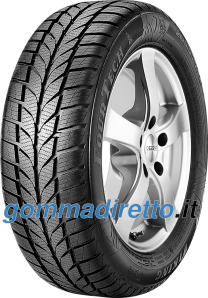
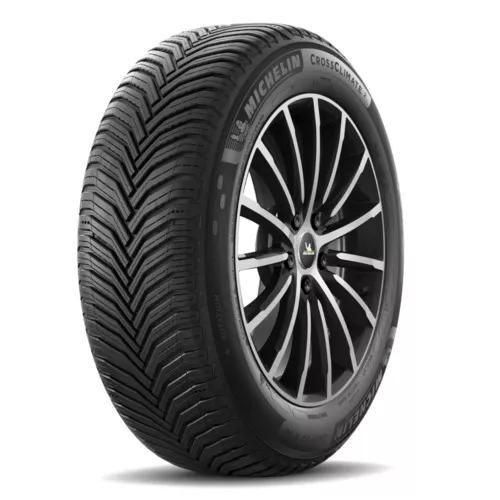
On paper this looks like a mismatch, and in most of the ways that matter it is — but the reasons why are worth unpacking properly. The Viking Fourtech is a lowcost allround tyre from a budget brand with no listed predecessor or successor; it exists to get a car through four seasons cheaply, full stop. The Michelin CrossClimate 2, meanwhile, is the tyre that effectively invented the modern premium all-season category and then perfected it — it succeeds the original Michelin CrossClimate, and it wears the segment's benchmark status with a 92/100 rating against the Viking's 0/100.
The character gap is total. Viking built the Fourtech to be inoffensive and affordable across dry, wet and snow without excelling anywhere — its own scores (dry 59, wet 70.2, snow 70.7) describe a tyre that gets by rather than impresses, and its rock-bottom dry-braking score of 47 is the tell. Michelin built the CrossClimate 2 around Thermal Adaptive Tread Compound technology specifically to close the gap between summer-tyre dry sharpness and winter-tyre snow security in a single product, and the brand's own marketing claim of "safer driving all year round" is backed almost point for point by independent test data, particularly on snow and in dry braking.
The single biggest difference in character: the Fourtech is a tyre you tolerate, the CrossClimate 2 is a tyre owners actively rave about. That shows up starkly in real-world feedback — Michelin's Heureka score sits at 9.7/10 across 66 reviews with praise for quiet running, wet grip and comfort, while Viking's TyreReviews average lands at just 54/100 from a small pool of five reviews, with owners openly calling it "a very big compromise."
", "dry": "The two tyres met head-to-head in exactly one measured braking test — Autobild's 2021 225/50 R17 evaluation — and the result is stark: the CrossClimate 2 stopped in 37.6m against the Fourtech's 43.5m. That's a 5.9m gap from the same speed, roughly a car and a half's length of extra tarmac the Viking eats up before it stops, and in a real emergency stop that difference is the line between clipping a hazard and missing it entirely. It's no fluke either — the CrossClimate 2 finished 1st out of 32 tyres in that same test, while the Fourtech placed 13th.
The wider scoring picture confirms this isn't a one-off. Michelin's dry-braking performance score sits at 91.6, nearly double the Fourtech's 47, and its average test detail score for dry handling is a startling 96.3 — genuinely elite territory, with testers repeatedly noting "sichere und präzise Eigenschaften im Grenzbereich auf trockener Fahrbahn" (secure, precise behaviour at the limit on dry roads) and short dry braking distances test after test. The Fourtech's own dry score of just 59 tells the opposite story, and owner feedback backs it up bluntly: one reviewer running both winter and summer tyres alongside the Fourtech described dry braking as "longer" and summed up hot-weather handling as "almost like you drive on winter tyre."
The mechanism here is straightforward compound engineering. Michelin's Thermal Adaptive compound is tuned to stay pliable and grippy as road temperature rises, feeding that dry-handling score and steering directness that testers single out repeatedly. The Fourtech, as a budget all-season compound with no dry-specific optimisation, simply doesn't have the contact-patch chemistry to compete — it's built to survive across conditions, not to lead in any single one, and dry tarmac is where that compromise is most exposed.
", "wet": "Wet braking flips the script, if only slightly. In the same shared Autobild test, the Fourtech actually stopped shorter on wet tarmac — 52.6m versus the CrossClimate 2's 53.9m, a narrow 1.3m advantage for the budget tyre. It's a genuinely surprising result and one of the very few areas where the Viking holds its own, and it lines up with Michelin's own acknowledged weak spot: testers across multiple evaluations flag "leichte Schwächen auf nasser Fahrbahn" and "leicht verlängerte Bremswege auf nasser Fahrbahn" for the CrossClimate 2, and Tyre Reviews specifically calls out "long wet braking" as a genuine shortcoming.
But one test result doesn't overturn the broader picture, and the CrossClimate 2's wet-handling detail score of 92.5 and overall wet performance score of 71.8 (against the Fourtech's 70.2) show that braking distance alone isn't the whole story of wet-weather safety. Aquaplaning is where Michelin pulls clearly ahead in the scoring — though interestingly the Fourtech's aquaplaning score of 86.5 actually outpaces the CrossClimate 2's 76.7, and testers have flagged "leichte Schwächen im Aquaplaningverhalten" for the Michelin as a genuine, repeated criticism rather than a one-off.
What this means in practice is nuanced: the CrossClimate 2 is the more composed, confidence-inspiring tyre through a wet corner or a sweeping wet motorway bend thanks to its handling precision, and owners back this up — one Kia Sorento driver called it "exceptional... good grip in the wet," and Michelin's customer feedback flags "excellent wet grip and stability" eight times independently. The Fourtech's shorter wet stopping distance in isolated testing is a genuine data point worth respecting, but paired with its middling handling score and average aquaplaning behaviour relative to premium rivals, it doesn't add up to a wet-weather tyre you'd trust over the Michelin when the rain is heavy and sustained.
", "snow": "This is where the CrossClimate 2 stops being merely competitive and starts embarrassing dedicated winter tyres. Its snow score of 92.3 dwarfs the Fourtech's 70.7, and the detail figures are even more emphatic: 98.5 for objective snow handling, 95 for measured snow handling, 91.6 for snow traction and 89.5 for snow braking. Autobild's testers didn't mince words here — one 2025 evaluation found the CrossClimate 2 "schneidet als bester Kandidat im Schnee besser ab als der mitgetestete Winterreifen," meaning it out-performed an actual winter tyre in the same test. That's an extraordinary claim for an all-season product, and it's repeated across multiple test cycles, with testers consistently praising "außergewöhnlich gute Performance auf Eis und Schnee."
The Fourtech is not disgraced on snow by any means — its 70.7 score is actually its strongest discipline relative to its other results, and real owners genuinely notice this: one Skoda Roomster driver wrote they were "surprised" by grip in snow, and a Kia Rio owner said snow performance "surprised me... it handled much better than expected." For a budget tyre, that's a meaningful compliment and shows Viking prioritised cold-weather usability sensibly given its price point.
But the gap to the CrossClimate 2 remains enormous, and it isn't just about numbers — it's about what the tyre is engineered to do. Michelin's V-shaped tread architecture and 3PMSF certification are purpose-built to bite into snow and ice with genuine winter-tyre-grade traction, and owners in serious snow climates confirm it works as advertised: a Ford Focus driver called the difference between the CrossClimate 2 and a regular all-season "night and day," while another owner running a Kia Sorento through a Salt Lake City winter said they "couldn't get stuck even in deep snow." For anyone facing real winter conditions, this isn't a close contest.
", "comfort": "Comfort scores are closer than almost anything else in this comparison — Fourtech at 76, CrossClimate 2 at 73 — but that number needs context, because Michelin's owner feedback tells a richer story than the raw figure suggests. Cabin quietness is the single most repeated praise point in Michelin's customer data, mentioned twelve times independently, alongside "high ride comfort and shock absorption" cited six times. The Fourtech's noise score of 76 versus the CrossClimate 2's 69.4 actually favours the Viking on paper, though real-world reports on the budget tyre are mixed — one owner specifically flagged noise "in heavy rain" as the tyre's chief negative, suggesting the Fourtech's comfort is more conditional and less consistently engineered than the number implies.
Running costs are where the story becomes genuinely interesting, and where Michelin's premium price starts to look more justified than the segment label suggests. The Fourtech posts a startling rolling-resistance score of 96 against the CrossClimate 2's 87.2 — on paper a clear win for the Viking on fuel economy — but that's undercut by its mileage score of just 65 against Michelin's 77.4, and ADAC's testing of the CrossClimate 2 specifically noted "geringster Abrieb im Test" (lowest wear in the test) alongside "hohe prognostizierte Laufleistung" (high predicted mileage). Michelin's own EU fuel labels span mostly C and B ratings with some A-rated sizes, and its wet grip label sits at a strong B — respectable figures for a tyre this focused on winter capability.
The real financial calculation favours Michelin more than the sticker price suggests, even though Tyre Reviews and Autobild both flag its "hoher Preis" and note that average wear against a high purchase price makes it "expensive per km." Set against a Fourtech that owners report losing pressure within months and suffering sidewall bumps well under 10,000km — one owner had to replace a tyre after a bump appeared around 7,000km with no obvious cause — the Michelin's higher upfront cost buys demonstrably more consistent durability, plus a tyre that simply performs competently everywhere rather than needing to be babied. For most owners covering meaningful annual mileage, the CrossClimate 2 works out as the smarter long-term spend despite costing more on day one.
", "verdict": "The head-to-head record settles this cleanly: across the two tests where these tyres have actually met, the CrossClimate 2 won both, and the underlying data explains exactly why. This isn't a case of two tyres trading strengths in a close fight — it's a budget product built to be adequate everywhere versus a premium product engineered to genuinely excel in dry braking, snow security and overall confidence, with only a narrow, isolated wet-braking result and a slightly better rolling-resistance figure to show for the Fourtech's side of the ledger.
If your budget is genuinely tight and you're covering modest annual mileage on a smaller, lighter car where outright safety margins matter less, the Viking Fourtech will get the job done — it's cheap, it's surprisingly capable in snow for its price point, and owners generally rate it as fair value, even if durability and dry-weather composure are clear weak points you need to accept going in.
For nearly everyone else — anyone driving meaningful annual mileage, anyone in a region that sees real winter weather, and especially anyone who values dry-road emergency braking performance or a quiet, refined cabin — the Michelin CrossClimate 2 is the clear, evidence-backed choice. Its higher price is real, and its wet-braking distances and aquaplaning behaviour aren't quite as flawless as its marketing implies, but against a genuine budget rival it isn't just better, it's in an entirely different class.
", "claim": "CrossClimate 2 dominates in dry braking and snow; Fourtech only wins on price and one wet test.", "good_for": { "Viking Fourtech": ["Budget-conscious owners with modest annual mileage", "Smaller, lighter cars in mild climates", "Drivers wanting acceptable snow grip cheaply"], "Michelin CrossClimate 2": ["Drivers facing genuine winter conditions", "High-mileage drivers wanting long-term value", "Those prioritising dry-road emergency braking", "Comfort and noise-sensitive daily drivers"] }, "not_for": { "Viking Fourtech": ["Drivers needing strong dry-road braking", "High-mileage or durability-focused owners", "Anyone wanting consistent build quality"], "Michelin CrossClimate 2": ["Absolute budget-first buyers", "Those wanting the shortest possible wet braking"] } }

These tyres were not tested together in the same test. The scores below are aggregated from different independent tests, so direct comparison should be taken with caution.
 Viking FourtechMichelin CrossClimate 2Viking FourtechMichelin CrossClimate 2Viking FourtechMichelin CrossClimate 2Viking FourtechMichelin CrossClimate 2Viking FourtechMichelin CrossClimate 2Viking FourtechMichelin CrossClimate 2Viking FourtechMichelin CrossClimate 2Viking FourtechMichelin CrossClimate 2Viking FourtechMichelin CrossClimate 2Viking FourtechMichelin CrossClimate 2Viking FourtechMichelin CrossClimate 2Viking FourtechMichelin CrossClimate 2Viking FourtechMichelin CrossClimate 2Viking FourtechMichelin CrossClimate 2Viking FourtechMichelin CrossClimate 2Viking FourtechMichelin CrossClimate 2Viking FourtechMichelin CrossClimate 2Viking FourtechMichelin CrossClimate 2Viking FourtechMichelin CrossClimate 2Viking FourtechMichelin CrossClimate 2Viking FourtechMichelin CrossClimate 2
Compare prices across all available dimensions for these tyres.
 VSVS
VSVS VSVS
VSVS
 VSVSVS
 VS
VS VSVS
VSVS Viking Fourtech vs Giti AllSeason AS1
 Viking Fourtech vs Nexen N Blue 4 Season
 Viking Fourtech vs Maxxis Premitra AS AP3Viking Fourtech vs Goodyear Vector 4Seasons Gen-3Michelin CrossClimate 2 vs Bridgestone Weather Control A005 EVOMichelin CrossClimate 2 vs Continental AllSeasonContact
 Michelin CrossClimate 2 vs Vredestein Quatrac ProMichelin CrossClimate 2 vs Goodyear Vector 4Seasons Gen-3