Comparison: Hankook ION FlexClimate vs. Michelin CrossClimate 2 (2026)
Also compare with
The Hankook ION FlexClimate is Hankook's answer to a very modern problem: how do you build an all-season tyre that copes with the instant torque, extra weight and near-silent cabin of an EV, without sacrificing the all-weather versatility drivers expect? Sitting in the upper-middle segment, it's explicitly engineered around electric and plug-in hybrid vehicles, with Aramid belt reinforcement for high-speed shape retention, Grip Boost Technology for cornering stiffness, and sound-absorbing foam to compensate for the fact that an EV cabin has no engine noise to mask tyre roar. It's a tyre built from the ground up for a specific, growing type of driver.
The Michelin CrossClimate 2 plays a different game. As successor to the original CrossClimate — the tyre that essentially invented the modern \"summer-pattern all-season\" category — it sits in Michelin's premium tier and is pitched at drivers who want one set of tyres to cover everything from dry motorway cruising to a surprise snowstorm, on any car, EV included. Michelin's own marketing line is \"everyday confidence... from the first to the last mile,\" and with 94 size options across a 15–21 inch wheel range, it's built for mass-market breadth rather than EV specialism.
The single biggest character difference is where each tyre spends its performance budget. The Hankook, scoring an excellent 96/100 in our rating, is the more rounded all-weather performer — strong in both dry and wet, with genuinely impressive aquaplaning resistance (92.5) — but it's clearly the weaker of the two on snow (74.8) for an all-season tyre. The Michelin, at 92/100, inverts that trade-off almost completely: snow performance so strong it reportedly beats a dedicated winter tyre in testing, at the cost of being the distinctly weaker tyre in the wet.
", "dry": "Neither tyre has published metre-for-metre dry braking data from a shared test, so the clearest comparison comes from performance scores built on dry-braking and dry-handling testing. The Hankook posts a dry score of 90 with a dry-braking score of 90, essentially matching the Michelin's dry-braking figure of 91.6, though the Michelin's overall dry score (87.2) trails the Hankook's slightly. In practice, that means both tyres stop from speed on a dry road in a very similar distance — this isn't a category where either tyre is giving away meaningful car lengths to the other.
Where they diverge is in handling character rather than outright stopping power. Michelin's average test-detail scores show a remarkable dry-handling-objective figure of 96.3, among the best in its class, reflecting the V-Ramp tread block design engineered specifically to maximise ground contact under dry braking and cornering loads. Owner reviews back this up directly, with drivers describing \"sharp response for quick manoeuvres\" and confident, precise track-holding on dry roads — testament to a tread pattern that, despite being built around winter and wet capability, doesn't feel compromised when the road is bone dry.
The Hankook's dry strength comes from a different design philosophy: Grip Boost Technology increases cornering stiffness by a claimed 20% when combined with its Aramid Hybrid reinforcement belt, a feature specifically aimed at controlling the extra mass and torque of an EV through corners. AUTOBILD's 2025 testers praised this directly, noting the ION FlexClimate delivers \"balanced performance at the highest level\" with dynamics that don't sacrifice driving enjoyment — in the shared three-tyre EV test, it beat the Michelin outright, finishing 1st ("very good") against the Michelin's 2nd ("good"). For drivers who want a tyre that feels alert and precise on dry tarmac specifically under EV loading, the Hankook has a slight practical edge.
", "wet": "This is where the gap between the two becomes hard to ignore. The Hankook's wet score sits at 89.7 with a wet-braking score of 90 — essentially on par with its dry performance — while the Michelin's wet score drops to 71.8, with a wet-braking score of just 75.3. That roughly 15-point gap in wet braking alone is significant: it's the kind of margin that shows up as several extra metres of stopping distance on a soaked road, exactly the scenario where it matters most.
Michelin is upfront that this is the CrossClimate 2's weak point — our own key-weaknesses note flags "understeer and longer braking distances on the wet" as a defined trait, and the test record agrees: ADAC's 2026 and 2024 tests both flag "slight weaknesses on wet roads," Autobild 2024 notes "slightly extended braking distances in the wet," and Tyre Reviews 2024 was blunter still, citing "long wet braking." That's not to say the CrossClimate 2 is unsafe in the rain — its aquaplaning score of 76.7 is still solid, and owner reviews frequently praise "excellent wet grip and stability" — but relative to its own snow and dry credentials, and relative to the Hankook, wet grip is clearly the compromise Michelin accepted to achieve that class-leading snow performance.
The Hankook, by contrast, posts an aquaplaning score of 92.5 — genuinely excellent, and among the strongest figures in this comparison — reflecting a tread designed to clear water efficiently under the higher mass of an EV. Combined with its wet-braking score of 90, this makes the ION FlexClimate the more confidence-inspiring tyre the moment the road turns wet, whether that's heavy motorway spray or standing water in a corner. For drivers in genuinely rain-heavy climates, this is arguably the most consequential difference between the two tyres.
", "snow": "Snow is the Michelin's headline strength and it shows up everywhere in the data. Its snow score of 92.3 is outstanding for an all-season tyre, and the average test-detail figures go further still: snow-handling-objective at 98.5, snow-handling-measured at 95, snow-circle-cornering at 92.8, and snow-braking at 89.5. AUTOBILD's 2025 testers made the standout claim directly — the CrossClimate 2 "performs better in snow than the winter tyre tested alongside it," a genuinely rare result for a tyre that also has to work as a summer-capable all-rounder. Real-world reviews echo this: one Kia Sorento owner reported it "couldn't get stuck even in deep snow" after a full Salt Lake City winter, and a Ford Focus owner described handling slush and hill starts "with ease."
The Hankook ION FlexClimate is 3PMSF and M+S certified too, so it's legally and functionally a genuine all-season tyre for snow-affected regions, but its snow score of 74.8 puts it a clear step behind the Michelin — roughly 17-18 points lower on our scale, which is a meaningful real-world gap in traction and control on packed snow or ice. That's a deliberate trade-off in Hankook's engineering brief: the ION FlexClimate's priorities were EV-specific handling, wet grip and noise control, and snow capability appears to have been the area where compromises were made to achieve those other gains.
For drivers who see serious winter weather — genuine snowfall and icy mornings rather than the occasional light dusting — the Michelin CrossClimate 2 is unambiguously the safer choice, to the point of rivalling dedicated winter rubber. The Hankook remains usable and certified for those conditions, but it's better suited to milder, wetter winters than to sustained snow and ice.
", "comfort": "Refinement tells an interesting story because the numbers and the brand engineering both point the same direction, yet in opposite ways from what the wet/snow split might suggest. The Hankook posts a comfort score of 77.5 and a noise score of 81, both comfortably ahead of the Michelin's 73 and 69.4. That's a product of deliberate design: Hankook's i Sound Absorber and Quiet Flex technologies use internal foam to cut cavity noise by up to 6dBA, while a zig-zag tread pattern shape trims pattern noise by a further 1dBA — engineering that matters enormously on an EV, where there's no engine noise to mask what the tyres are doing. AUTOBILD's testers confirmed the result feels coherent on the road, praising the ION FlexClimate's balanced, secure character across weather types without sacrificing driving enjoyment.
The Michelin isn't uncomfortable by any means — plenty of owner reviews describe it as "quiet" with "reduced cabin noise" and praise its shock absorption, and Autobild's 2024 test specifically noted "angenehm leiser Abrollkomfort" (pleasantly quiet rolling comfort) — but relative to the Hankook's purpose-built refinement, and relative to its own scores, comfort and noise are not the CrossClimate 2's strongest suits. A handful of owners do note "a slightly firmer ride" on certain cars, consistent with a tyre whose stiffness is tuned as much for dry and snow precision as for cabin isolation.
On running costs, the Michelin has the edge in efficiency but a real weakness in longevity value. Its rolling-resistance score of 87.2 is strong and its EU fuel labels reach as high as A-17 on some sizes, and ADAC's 2024 test specifically praised its "geringster Abrieb im Test" (lowest wear in the test) alongside low weight and low fuel consumption. But that's contradicted elsewhere: our own key-weaknesses note flags "high per-kilometer price as the treadlife is only average," and Tyre Reviews 2024 was pointed about it — "high purchase price with average wear means expensive per km." The Hankook's rolling-resistance score of 84 is close behind, and its own Opti Cure Technology is specifically engineered for top-tier low-rolling-resistance performance plus up to 8% improved electric efficiency via its ProCoupling Compound — a meaningful figure for EV owners watching range. Its Round Even Technology, designed to counter the roughly 20% faster, more uneven wear EVs typically inflict on tyres, also directly targets the CrossClimate 2's weak point on treadlife-per-cost.
", "verdict": "The data points to two excellent all-season tyres with genuinely different priorities rather than one simply beating the other — and the one head-to-head result available, AUTOBILD's 2025 EV-focused three-tyre test, saw the Hankook take 1st ("very good") over the Michelin's 2nd ("good"), reinforcing that in a direct EV-relevant contest, the ION FlexClimate has the edge. Choose the Hankook ION FlexClimate if you drive an EV or plug-in hybrid and want a tyre engineered specifically for that use case — strong wet grip, excellent aquaplaning resistance, low cabin noise, and efficiency gains tuned for electric powertrains, all backed by our highest rating in this comparison at 96/100.
Choose the Michelin CrossClimate 2 if you live somewhere winters bring real snow and ice, and you want a single tyre that can credibly substitute for a dedicated winter set — its snow scores are simply in a different league, and thousands of owner reviews (9,957 and counting, at a 4.7/5 average) back up that reputation with real-world snow and slush stories. You'll trade away some wet-road composure and pay more per kilometre given its only-average treadlife, but for winter security it remains the class benchmark.
For drivers without a strong seasonal skew — mild, wet climates, EV or hybrid ownership, or a priority on quiet, efficient daily driving — the Hankook is the more balanced and arguably better-engineered choice today. For drivers who genuinely need snow and ice performance above all else, the Michelin's specialism is hard to match, even if it means accepting the weaker wet-weather and value trade-offs that come with it.
", "claim": "Hankook wins on wet grip, noise and EV efficiency; Michelin remains the snow and ice specialist.", "good_for": { "Hankook ION FlexClimate": [ "EV and plug-in hybrid owners", "Drivers in wet, rainy climates", "Noise-sensitive daily commuters", "Balanced all-weather dry and wet grip" ], "Michelin CrossClimate 2": [ "Drivers in genuine snow and ice regions", "Those wanting one tyre instead of winters", "Dry-handling precision seekers", "Long-term reliability and safety reputation" ] }, "not_for": { "Hankook ION FlexClimate": [ "Drivers facing sustained heavy snowfall", "Those wanting winter-tyre-level ice grip" ], "Michelin CrossClimate 2": [ "Drivers prioritising outright wet braking", "Cost-per-km-sensitive high-mileage drivers", "Those wanting the quietest possible cabin" ] } }

These tyres were not tested together in the same test. The scores below are aggregated from different independent tests, so direct comparison should be taken with caution.
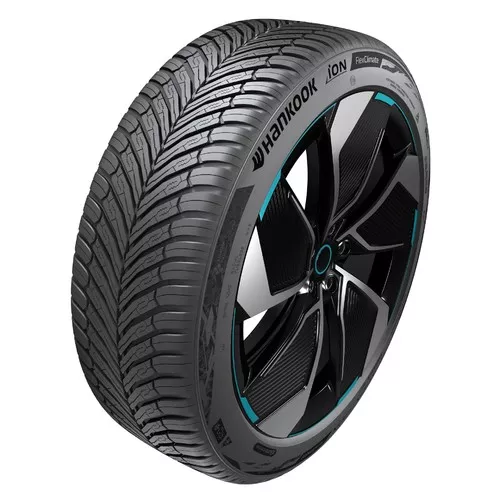
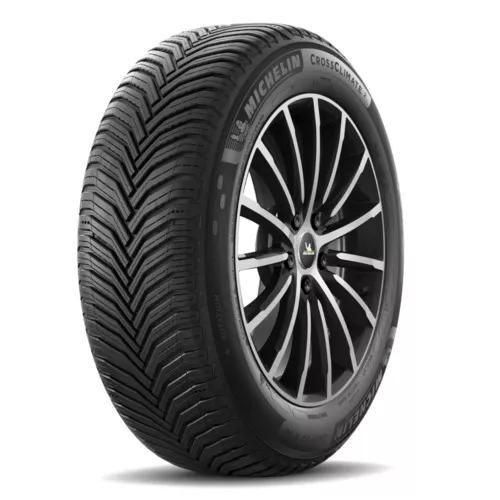 Hankook ION FlexClimateMichelin CrossClimate 2Hankook ION FlexClimateMichelin CrossClimate 2Hankook ION FlexClimateMichelin CrossClimate 2Hankook ION FlexClimateMichelin CrossClimate 2Hankook ION FlexClimateMichelin CrossClimate 2Hankook ION FlexClimateMichelin CrossClimate 2Hankook ION FlexClimateMichelin CrossClimate 2Hankook ION FlexClimateMichelin CrossClimate 2Hankook ION FlexClimateMichelin CrossClimate 2Hankook ION FlexClimateMichelin CrossClimate 2Hankook ION FlexClimateMichelin CrossClimate 2Hankook ION FlexClimateMichelin CrossClimate 2Hankook ION FlexClimateMichelin CrossClimate 2Hankook ION FlexClimateMichelin CrossClimate 2Hankook ION FlexClimateMichelin CrossClimate 2Hankook ION FlexClimateMichelin CrossClimate 2Hankook ION FlexClimateMichelin CrossClimate 2
Compare prices across all available dimensions for these tyres.
| Organization | Season | Year | Dimension | |
|---|---|---|---|---|
 AUTOBILD AUTOBILD | All season | 2025 | 245/45 R19 | View |
 VSVS
VSVS VSVS
VSVS
 VSVSVSVS
 VSVS
VSVS






